
Views: 263 Author: shandong Allstar Grinding Ball Publish Time: 2026-11-25 Origin: Site


Content Menu
● What Causes Uneven Grinding Media Wear in Cement Mills?
● Normal Wear vs. Abnormal Grinding Ball Wear
● 1. Media Metallurgy Does Not Match the Grinding Duty
>> Hardness Alone Does Not Explain Performance
>> Forged vs. Cast Grinding Balls Requires a Chamber-Specific Decision
● 2. Incorrect Ball-Size Distribution Creates Uneven Grinding Conditions
● 3. Worn Liners Change Ball Movement and Contact Conditions
● 4. Diaphragm Problems Disturb Material Flow
● 5. Feed Changes Alter the Wear Environment
● 6. Unstable Operation Can Magnify Existing Problems
● A Practical Six-Step Investigation for Uneven Media Wear
>> Step 1: Establish a Comparable Baseline
>> Step 2: Plan a Safe Internal Inspection
>> Step 4: Separate the Damage Types
>> Step 5: Check the Whole Grinding System
>> Step 6: Validate the Correction
● Measure Media Consumption Without Distorting the Result
● Build a Defensible OEM Media Trial
● Request a Cement Grinding Media Quotation From ALLSTAR
>> Why do grinding balls wear faster in one cement mill chamber?
>> Does higher hardness always reduce grinding media consumption?
>> Can worn liners cause uneven grinding ball wear?
>> How often should cement grinding balls be sorted?
>> What should we send a supplier when reporting abnormal wear?
>> Are forged balls better than cast balls for cement mills?
At SHANDONG ALLSTAR GRINDING BALL CO., LTD., we believe a useful answer to "What causes uneven grinding media wear in cement mills?" must go beyond blaming the balls. Uneven wear can result from an unsuitable media specification, an unbalanced ball charge, worn liners, restricted material flow, or changing feed conditions.
We manufacture grinding balls, forged steel balls, cast steel balls, grinding rods, and cylpebs for mining, cement, and power applications, with OEM services for overseas brands, wholesalers, and manufacturers. For cement customers, the purchasing question should not simply be which ball lasts longest. It should be which media performs reliably in a particular mill chamber.
This guide focuses on horizontal cement ball mills. It explains how to recognize abnormal wear, investigate likely causes, and compare corrective actions without confusing media quality with process problems.
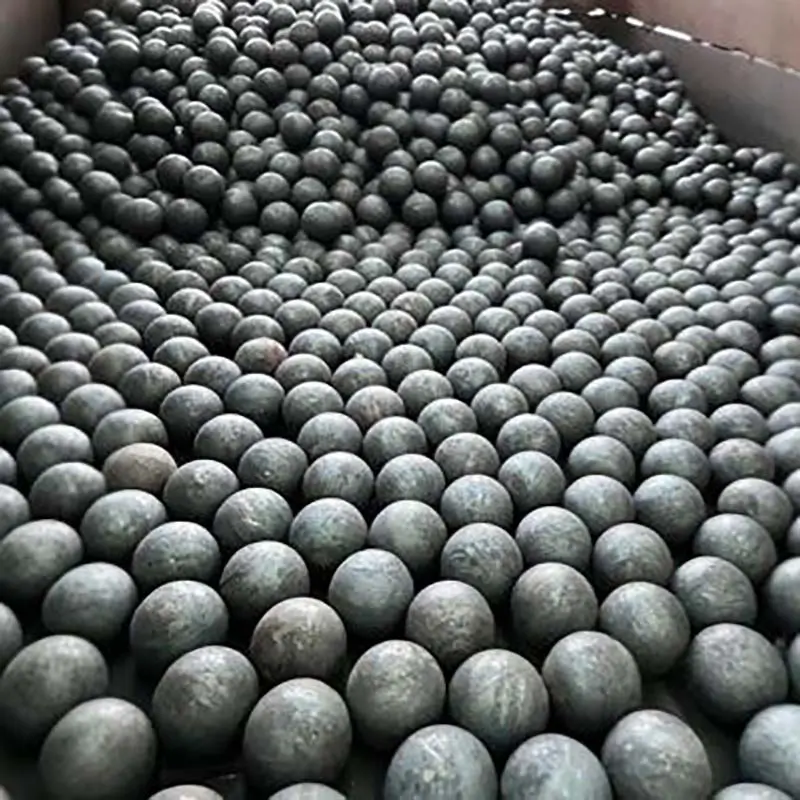
The main causes are mismatches between grinding media, mill internals, feed characteristics, and operating conditions. Several often occur together.
| Potential cause | What operators may observe | First investigation |
|---|---|---|
| Unsuitable alloy or heat treatment | Rapid wear, cracking, or surface damage | Compare batch metallurgy and operating duty |
| Incorrect ball-size distribution | Excessive small balls or inefficient coarse grinding | Measure the charge by size and mass |
| Worn or unsuitable liners | Changed charge movement and localized damage | Inspect liner profile against design |
| Restricted diaphragm flow | Material accumulation or chamber imbalance | Check slots, blockage, and diaphragm condition |
| Changing feed characteristics | Wear shifts after a clinker or additive change | Review feed size, composition, and abrasiveness |
| Unstable operation | Damage associated with low-feed periods | Compare operating logs and shutdown findings |
A wear pattern suggests a direction for investigation; it does not prove a single cause.
Grinding media naturally becomes smaller during service. Different chambers also perform different duties, so identical wear rates throughout a mill are not a realistic target.
In a typical two-compartment cement mill, the first chamber handles coarser material and needs effective impact. The second chamber emphasizes finer grinding through pressure and friction.
Normal differences can therefore include different ball sizes, different wear rates between chambers, and a deliberately graded charge.
More concerning signs include:
- Repeatedly broken balls or large fragments.
- Widespread peeling, spalling, or deep surface pits.
- Strong differences between comparable production batches.
- Rapid loss of useful ball sizes.
- Rising media consumption without a corresponding production change.
The objective is predictable wear and stable grinding performance—not identical wear on every ball.
A hardness reading is useful, but it is not a complete specification.
Grinding balls must resist abrasion while tolerating the impact conditions inside their intended chamber. Alloy composition, heat treatment, microstructure, internal soundness, and ball diameter all influence that balance.
A hard ball can still perform poorly if it contains defects or lacks adequate resistance to fracture. Conversely, choosing a softer product simply to avoid breakage can increase abrasive wear.
When comparing suppliers, request evidence relevant to the proposed product:
- Chemical composition.
- Surface and cross-sectional hardness results.
- Microstructural examination.
- Applicable impact or breakage testing.
- Batch identification and traceability.
Agree on sampling methods and acceptance criteria before ordering. Test results are meaningful only when buyers understand how they were obtained.
Neither "forged" nor "cast" automatically means better performance.
High-chromium cast media is widely offered for cement grinding, while forged media can be appropriate where its properties match the application. Selection should consider abrasion, impact exposure, feed characteristics, and mill configuration.
For an ALLSTAR inquiry, specify the chamber and operating conditions rather than requesting a material category alone. That creates a stronger starting point for a technically relevant quotation.
A mill charge changes continuously as balls wear down and replacement media is added.
If replenishment does not maintain the intended size distribution, the charge can drift away from its original design. Too little effective coarse media can weaken coarse-particle breakage. An unsuitable fine-media distribution can reduce fine-grinding efficiency.
The solution is not automatically to add larger balls.
First, establish:
1. The current mass of media in each chamber.
2. The proportion of each measured size class.
3. The amount of broken or unusable media.
4. The relationship between feed size and available ball sizes.
5. The history of top-up additions.
Sorting equipment can separate balls by size and determine mass fractions. Those measurements provide a better basis for replenishment than visual estimates.
Set sorting intervals according to actual charge deterioration, inspection findings, and production needs—not an assumed universal schedule.
Mill liners do more than protect the shell. Their profiles help transfer energy to the charge and influence how balls move.
When liner geometry changes through wear, charge motion can change as well. An unsuitable profile may also create a mismatch between installed ball sizes and the intended grinding action.
In the second compartment, classifying liners help distribute larger balls toward the beginning of the grinding path and smaller balls toward the discharge end. Deterioration can interfere with that intended arrangement.
Before replacing a media supplier, inspect:
- Remaining liner profile.
- Broken, loose, or displaced components.
- Compatibility with ball size and mill speed.
- Localized impact marks.
- Whether the installed lining matches the current application.
Assess the liner and media together. A media-only change may leave the underlying mechanical problem unresolved.
Intermediate diaphragms regulate material transfer between compartments and limit the particle size passing downstream.
Blocked slots, damaged components, or unsuitable flow settings can alter material distribution. The resulting operating conditions may expose media to a different balance of impact, abrasion, and material cushioning.
Outlet diaphragms must also allow product discharge while retaining the grinding charge.
During a planned inspection, check slot condition, blockage, structural integrity, and signs of abnormal material accumulation. Compare the findings with mill pressure, throughput, and chamber observations.
Do not diagnose a flow problem from wear appearance alone. Confirm it through process data and an internal inspection conducted under the plant's safety procedures.
A familiar cement product name does not guarantee identical grinding conditions.
Changes in clinker characteristics, feed size, additive proportions, or moisture can change the duty imposed on the mill. Abrasiveness and grindability are also different properties: a material that is difficult to grind is not necessarily proportionally more abrasive.
Investigate whether uneven wear began after:
- A clinker source or production change.
- A higher proportion of slag or another constituent.
- A change in upstream crushing performance.
- Increased variation in feed size.
- Changes in material moisture or storage conditions.
Compare wear within similar operating periods. Otherwise, a feed change can be mistaken for a supplier-quality issue.
Media performance depends on how the mill operates, not just how it is loaded.
Feed interruptions, inappropriate filling, and mismatched speed or liner conditions can alter charge behavior. Temperature, ventilation, and water injection also require coordinated process control.
Review trends rather than isolated readings:
- Feed rate and interruptions.
- Mill power.
- Throughput.
- Differential pressure.
- Product fineness.
- Outlet temperature.
- Separator operation.
Avoid universal prescriptions for mill speed, filling level, or water injection. Suitable settings depend on mill design, cement composition, and the equipment supplier's guidance.
Record cement type, production tonnage, operating hours, media additions, product fineness, and energy consumption.
Separate periods with major process changes. Comparing unlike conditions can produce misleading conclusions.
Follow site isolation, lockout, confined-space, and entry procedures. Never collect samples from operating equipment.
Define sampling locations before entry so that findings can be compared at the next shutdown.
Label samples by chamber, location, nominal size, and identifiable batch.
Photograph representative intact balls, worn balls, and fragments with a scale. Do not submit only the worst-looking pieces; they may not represent the charge.
Distinguish smooth abrasive wear from cracking, spalling, pitting, and gross fracture.
These categories guide further testing. They are not substitutes for metallurgical examination.
Review media grading alongside liners, diaphragms, feed changes, and operating history.
A credible investigation tests competing explanations instead of selecting the most convenient one.
Where practical, change one major variable at a time. Monitor long enough to distinguish a sustained improvement from normal operating variation.
Document both successful and unsuccessful adjustments.
Purchasing records alone do not establish actual wear. Media inventory inside the mill can increase or decrease during the measurement period.
For a defined boundary:
Media depletion = opening media inventory + additions − closing media inventory − separately removed media.
Divide the resulting mass by cement production over the same period. With media measured in kilograms and production in tonnes, the result is kg/t.
Record discarded undersize balls and broken media separately. They remain relevant to purchasing cost even when excluded from an abrasion-focused calculation.
For supplier comparisons, also track:
- Media cost per tonne of cement.
- Specific energy consumption.
- Throughput at comparable fineness.
- Breakage and rejected media.
- Sorting and maintenance requirements.
The lowest price per tonne of balls does not necessarily produce the lowest grinding cost.
A controlled trial is more persuasive than a general promise of longer service life.
Before introducing a new media specification, agree on the application, baseline, trial duration, measurement method, and acceptance criteria. Record changes in feed, production, and mill internals during the trial.
For OEM brands and wholesalers, keep product identity and batch records clear. Avoid attributing an entire mixed charge's performance to a small recent addition.
At SHANDONG ALLSTAR GRINDING BALL CO., LTD., our recommended purchasing approach is straightforward: define the duty first, agree on verifiable requirements, and assess results under comparable conditions.
For a more relevant OEM quotation, send ALLSTAR your mill dimensions, chamber arrangement, current ball sizes, media specification, cement composition, and operating data.
Include photographs of worn media and any available liner, diaphragm, or laboratory inspection reports.
Tell us whether your priority is reducing breakage, stabilizing wear, rebuilding the charge grading, or evaluating an alternative supply source. A clearly defined requirement supports a more useful discussion than price alone.
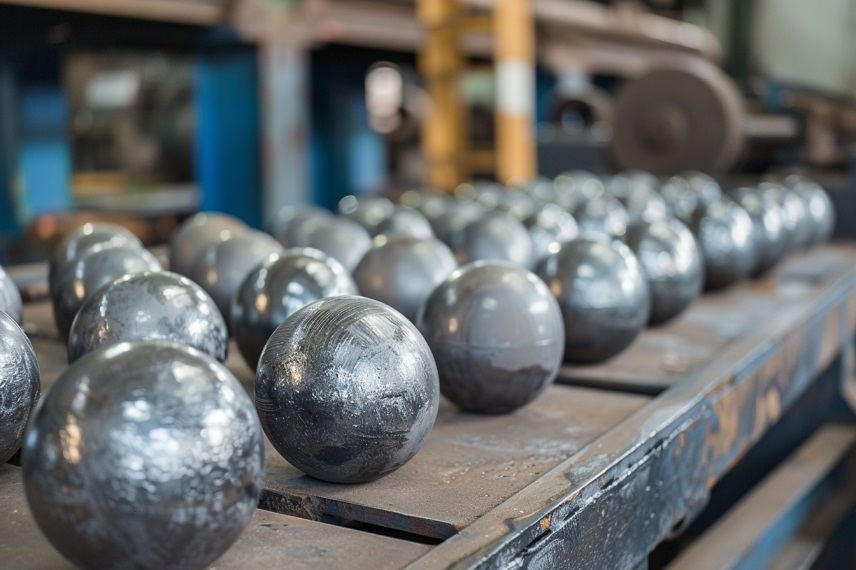
Chambers perform different duties and may contain different ball sizes and alloys. Compare each chamber with its intended operating conditions rather than expecting equal wear.
No. Hardness contributes to abrasion resistance, but fracture resistance, microstructure, defects, and operating conditions also affect consumption. Evaluate the complete specification.
Yes. Liners influence charge motion and energy transfer. Changed profiles can disturb the intended grinding action, so inspect liners before attributing abnormal wear entirely to media.
There is no universal interval. Base the schedule on measured size distribution, broken-media accumulation, performance trends, and planned maintenance opportunities.
Provide operating conditions, chamber details, addition records, labeled samples, scaled photographs, and available laboratory findings. Include recent changes in feed, liners, and process settings.
Not universally. Compare the proposed alloy and manufacturing quality against the actual chamber duty. A controlled trial is more useful than choosing by manufacturing method alone.
1. Magotteaux — *Choice of Grinding Media*.
2. Magotteaux — *Cement*.
3. Christian Pfeiffer — *Allmax® Grinding Balls*.
4. Christian Pfeiffer — *Classifying Lining*.
5. Christian Pfeiffer — *Intermediate Diaphragm MONOBLOC*.
6. Christian Pfeiffer — *SORTER: Grinding Ball Sorting Machine*.
7. Christian Pfeiffer — *INJECTOR Water Injection System for Ball Mills*.
8. Google Search Central — *Creating Helpful, Reliable, People-First Content*.


