
Views: 258 Author: shandong Allstar Grinding Ball Publish Time: 2026-11-24 Origin: Site


Content Menu
● What Causes High Steel Ball Consumption in Gold Mills?
>> Abrasive Gold Ore Gradually Removes Steel
>> Corrosion Accelerates Wear During Wet Grinding
>> Impact Causes Breakage and Spalling
● Why Grinding Ball Selection Affects Consumption
>> Hardness Is Only One Part of Media Quality
>> Forged and Cast Balls Require Application-Specific Evaluation
>> Incorrect Ball Sizes Waste Grinding Opportunities
● Operating Conditions That Increase Grinding Media Consumption
>> Mill Speed, Filling, and Liners Work Together
>> Slurry Conditions and Classification Affect Grinding Duty
● How to Calculate Steel Ball Consumption Correctly
● A Practical Troubleshooting Plan for High Ball Consumption
>> Step 1: Validate the Measurement
>> Step 2: Examine Representative Worn Media
>> Step 3: Connect Wear With Operating Events
>> Step 4: Test One Main Hypothesis
● How to Run a Credible Grinding Media Trial
>> Use Marked-Ball Testing for Initial Screening
>> Confirm Results at Production Scale
● An Industry Case: Why Diagnosis Comes Before Alloy Selection
● Compare Grinding Media Cost per Tonne, Not Price Alone
● Discuss Your Gold Mill Application With ALLSTAR
>> 1. What is a normal steel ball consumption rate in a gold mill?
>> 2. Can harder grinding balls reduce consumption?
>> 3. Why did consumption rise after changing the ore blend?
>> 4. Are forged balls always better than cast balls?
>> 5. Does lower ball consumption guarantee lower processing costs?
>> 6. How long should a grinding media trial run?
At SHANDONG ALLSTAR GRINDING BALL CO., LTD., we believe grinding media should be selected around the application—not simply the lowest purchase price. What causes high steel ball consumption in gold mills? The main causes are abrasive ore, corrosive slurry, excessive impact, unsuitable ball sizes, inconsistent media quality, and unstable operating conditions. Sometimes, an apparent increase is actually an inventory or throughput-accounting problem.
We manufacture grinding balls, forged steel balls, cast steel balls, grinding rods, and cylpebs for mining, cement, and power applications, with OEM services for overseas brands, wholesalers, and manufacturers.
Our starting recommendation is straightforward: identify how steel is being lost before changing the specification. Harder balls cannot correct every operating problem, and cheaper balls do not necessarily deliver cheaper grinding.
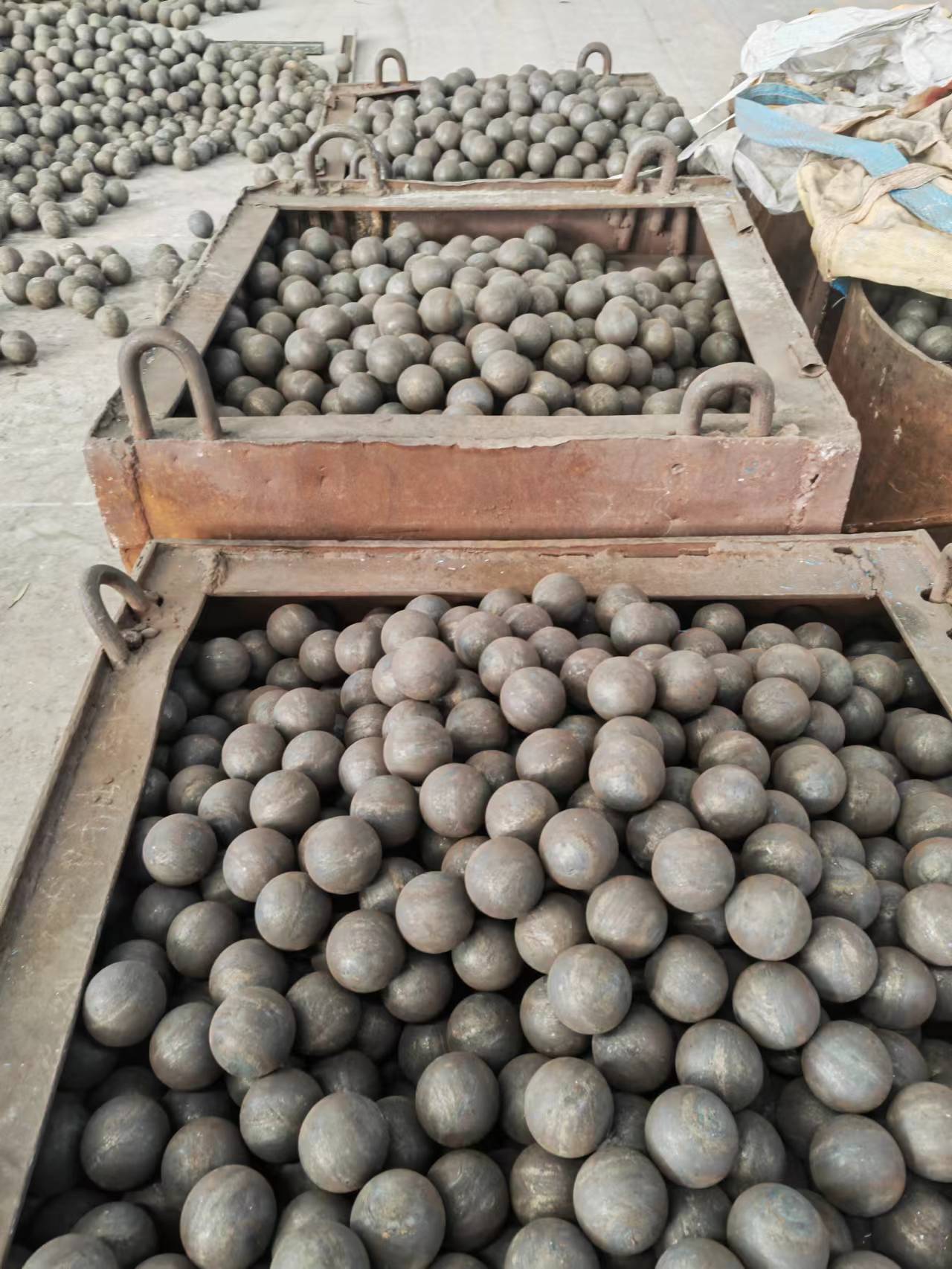
Steel grinding media lose mass through three interacting mechanisms: abrasion, corrosion, and impact damage. Their relative importance changes with ore mineralogy, mill design, water chemistry, and operating conditions.
| Main cause | Typical evidence | First investigation |
|---|---|---|
| Abrasive ore | Scratching and progressive diameter loss | Mineralogy and abrasiveness |
| Corrosive slurry | Pitting and chemically attacked surfaces | Water chemistry and electrochemical conditions |
| Excessive impact | Cracks, chips, spalling, or broken balls | Charge motion, filling, and toughness |
| Unsuitable ball sizes | Poor grind or inefficient coarse-particle breakage | Feed size and charge distribution |
| Variable media quality | Different wear patterns between batches | Chemistry, microstructure, and heat treatment |
| Accounting changes | Higher additions without matching physical evidence | Inventory, throughput, and feeder calibration |
These observations guide investigation; they are not definitive diagnoses. For example, surface damage can reflect both corrosion and abrasion.
Gold itself is not usually the main abrasive component. Quartz and other hard gangue minerals can scratch and cut grinding media during repeated contact.
Ore hardness and abrasiveness are related but different properties. Hardness influences the energy required for breakage; abrasiveness describes the tendency to wear contacting surfaces.
When the ore blend changes, compare consumption with mineralogy, feed size, operating hours, and product size. Otherwise, a difficult ore campaign may be mistaken for a supplier-quality problem.
Wet grinding creates an electrochemical environment involving steel, water, dissolved oxygen, and minerals.
Some sulfide minerals can participate in galvanic interactions that accelerate steel dissolution. Abrasion can then remove protective surface films, exposing fresh metal to further attack.
Investigate:
- Slurry pH and oxidation-reduction potential.
- Dissolved oxygen and water conductivity.
- Changes in process-water sources.
- Sulfide mineral composition.
- Relevant dissolved salts and reagent additions.
Do not adjust water chemistry solely to protect grinding balls. Any change must remain compatible with downstream recovery and site safety requirements.
Repeated impacts can cause cracks, surface flaking, or complete fracture when the ball's toughness is insufficient for the duty.
High-impact conditions depend on mill diameter, speed, filling, liner geometry, feed characteristics, and ball size. An unsuitable combination can direct more energy into steel-on-steel or steel-on-liner contact instead of productive ore breakage.
When broken balls increase, inspect operating conditions and media metallurgy together. A surface-hardness result alone cannot explain the failure.
A higher hardness number does not automatically mean lower operating cost.
Grinding media also need suitable toughness, microstructure, corrosion resistance, and hardness distribution through the section. A hard surface can conceal a softer interior or an unfavorable structure.
When comparing suppliers, request an agreed inspection package covering:
- Chemical composition and batch identification.
- Diameter and dimensional tolerances.
- Surface-to-core hardness profiles.
- Metallographic examination.
- Relevant impact or breakage testing.
- Traceability between samples and delivered production.
Agree on test methods before comparing results. Figures generated using different procedures may not be directly comparable.
Forged steel balls can be suitable for demanding impact conditions. High-chromium cast media can offer advantages where abrasion and corrosion dominate.
However, neither manufacturing route guarantees the best result everywhere. Alloy design, heat treatment, actual impact conditions, and slurry chemistry all matter.
Also distinguish cast steel from high-chromium cast iron: they are different material categories, even though commercial terminology sometimes groups them together.
For gold grinding applications, compare verified specifications and site performance rather than choosing from a product label alone.
Large balls provide the impact energy needed for coarse particles. Smaller balls provide more contact points and greater surface area per unit mass for finer grinding.
Too many large balls can limit fine-grinding efficiency. Balls that are too small may fail to break the coarse fraction effectively.
Review the make-up ball size alongside:
- Feed F80 and product P80.
- Mill dimensions and operating speed.
- Existing charge-size distribution.
- Ore breakage characteristics.
- Classification performance.
F80 and P80 describe the particle sizes through which 80% of the feed and product, respectively, pass.
Mill speed changes charge motion. Filling influences the space available for movement and how impacts are cushioned. Liners control how the charge is lifted and released.
Consequently, a liner replacement or operating-speed adjustment can change wear even when the ball specification remains unchanged.
Review these variables as a system. Avoid applying a universal filling percentage or speed recommendation without considering the mill design and operating envelope.
Slurry solids concentration and rheology influence particle transport, cushioning, and contact between ore and media.
Classification also matters. If excessive finished material returns to the mill, grinding effort can be spent on particles that already meet the required size.
Investigate cyclone performance, circulating load, and product-size trends before blaming the balls. The objective is not simply lower steel consumption; it is efficient production of a grind that supports gold recovery.
A useful first metric is kg/t: kilograms of media consumed per dry tonne of fresh ore processed.
For a defined reporting period:
All media masses must use the same units. If they are recorded in tonnes, multiply the calculated ratio by 1,000 to obtain kg/t.
Here, removed media means steel physically removed and weighed. Track that material separately, including worn rejects and broken fragments.
This distinction matters: wear-only consumption and total purchased-media demand are not identical. For procurement planning, report discarded media losses as well as wear.
Daily additions approximate consumption only when inventory is stable. A charge build-up can inflate apparent usage; drawing down the charge can make performance look temporarily better.
Likewise, lower ore throughput can increase kg/t even without an equivalent rise in hourly steel loss. Report kg/h alongside kg/t when diagnosing a sudden change.
Check ball-feeder calibration, delivery weights, dry-tonnage calculations, stock movements, and charge estimates.
Use one consistent reporting boundary. Do not compare consumption per tonne of fresh feed with consumption per tonne passing through the mill, including circulating material.
During an authorized shutdown, collect samples under site isolation and confined-space procedures.
Photograph the samples with a scale. Separate rounded balls, pitted balls, spalled surfaces, and fractured pieces. Link each sample to its location and operating period.
Use laboratory examination where visual evidence is inconclusive.
Plot consumption against ore blend, feed size, mill power, speed, water source, slurry density, and liner age.
Look for changes that occurred before consumption increased. Timing does not prove causation, but it helps prioritize testing.
If breakage dominates, investigate toughness and impact conditions. If pitting dominates, investigate corrosion. If smooth progressive wear dominates, examine abrasion resistance and grinding duty.
Avoid changing alloy, ball size, speed, and slurry conditions simultaneously. Multiple changes make the result difficult to interpret.
Marked-ball tests compare identified media samples under the same mill conditions. Balls are measured before use, recovered after a defined period, and assessed for mass or diameter loss.
Record operating hours, throughput, charge level, and relevant process changes. Correct for changing conditions where required.
These tests are valuable screening tools, but they do not automatically establish full-charge economics. Recovery bias, interactions with the host charge, and changing operating conditions can influence interpretation.
A production trial should measure more than steel loss:
| Performance measure | Why it matters |
|---|---|
| Media consumption | Quantifies steel usage |
| Breakage and rejects | Captures avoidable material loss |
| Throughput | Shows productive capacity |
| Product P80 | Confirms comparable grinding duty |
| Energy per tonne | Detects efficiency trade-offs |
| Recovery and reagent usage | Checks downstream consequences |
Allow enough time to understand the transition from the previous charge. Otherwise, results may reflect a mixed-media inventory rather than the proposed product.
A successful trial reduces cost while maintaining the required throughput, grind, recovery, and operating stability.
A published supplier case describes a North American gold miner investigating lower SAG grinding-media consumption and considering high-chromium alternatives.
The evaluation included a mill study, laboratory analysis, and consideration of downstream reagent effects. The selected solution was an application-specific forged ball rather than an automatic switch to high-chromium media.
The supplier reported uniform wear and no observed deformation or breakage in the discharged balls described. However, the public case did not provide enough comparative operating data to calculate an independently verified percentage saving.
The practical lesson is the selection process: characterize the duty, test the alternatives, and avoid assuming that one alloy family is universally superior.
A simple purchasing comparison is:
For illustration only, media priced at $1.00/kg and consumed at 1.00 kg/t costs $1.00 per tonne of ore. An alternative priced at $1.15/kg and consumed at 0.80 kg/t costs $0.92 per tonne.
That is a hypothetical calculation, not an ALLSTAR performance claim.
The comparison remains incomplete unless throughput, grind, energy, recovery, and reject losses are also evaluated.
SHANDONG ALLSTAR GRINDING BALL CO., LTD. supplies grinding media and OEM services for overseas commercial partners.
For an application-specific quotation, send your mill type, dimensions, ball sizes, current consumption, ore characteristics, feed and product sizes, and available water-chemistry information.
Include photographs of worn or broken balls where possible. For OEM inquiries, provide your required specifications, inspection criteria, packaging, and labeling requirements.
Start with a defined specification and measurable trial criteria—not an unsupported promise of universal savings.
There is no universal rate. Compare mills with similar ore, grinding duty, equipment, and accounting methods. Your own stable operating baseline is usually the most useful reference.
Sometimes. Greater hardness may improve abrasion resistance, but toughness, microstructure, corrosion, and operating conditions also influence performance. Confirm the benefit through testing.
The new blend may be more abrasive, harder to grind, or electrochemically different. Check mineralogy, throughput, feed size, and water chemistry before concluding that media quality changed.
No. Selection depends on impact severity, abrasion, corrosion, alloy properties, and downstream processing. Compare properly specified products under representative conditions.
No. Savings can disappear if throughput falls, energy rises, or gold recovery declines. Evaluate the grinding circuit and downstream process together.
Long enough to measure meaningful wear and understand charge transition under representative conditions. Define the duration around the mill's wear rate, inventory, and required confidence—not a fixed universal schedule.
1. Matsanga, N., Nheta, W., and Chimwani, N. (2023). "A Review of the Grinding Media in Ball Mills for Mineral Processing." *Minerals*, 13(11), 1373. DOI: 10.3390/min13111373. Supports wear mechanisms, media metallurgy, ball sizing, slurry effects, and downstream interactions. [mdpi]
2. Aldrich, C. (2013). "Consumption of Steel Grinding Media in Mills—A Review." *Minerals Engineering*. Supports the interaction of abrasion, impact, corrosion, and media-testing methods. [sciencedirect]
3. 911Metallurgist. (2018, April 11). "Marked Ball Wear Test." Explains marked-ball procedures, charge-volume corrections, throughput recording, and the transition between media charges. [911metallurgist]
4. Metso. (2026, February 5). "Correct Liner Selection, Optimal Mill Efficiency." Discusses the interaction of liner selection, mill speed, filling, ore feed, and grinding-media size. [metso]
5. Magotteaux. "Optimized Grinding Media TCO With Magotteaux Mining Grinding Media Forged Balls." Supplier-published gold-mining case supporting application-specific selection and consideration of downstream reagent effects; not an independently verified savings benchmark. [magotteaux]
6. Metso. "Ball Feeder." Describes controlled grinding-media addition and the relationship between process changes and required feed rates. [metso]


