
Views: 266 Author: shandong Allstar Grinding Ball Publish Time: 2026-11-25 Origin: Site


Content Menu
● Steel Grinding Balls vs Grinding Cylpebs: The Essential Differences
● What Does Better Grinding Efficiency Actually Mean?
>> Measure Energy Against a Defined Product
>> Track Saleable or Usable Output
● How Media Shape Influences Grinding Performance
>> Impact and Attrition Work Together
>> More Surface Area Is Not Free Energy
● What Published Research Shows—and What It Does Not
● How to Choose Grinding Media for Your Application
>> Mining: Begin With Feed and Liberation Requirements
>> Cement: Evaluate the Complete Product Specification
>> Power: Confirm Equipment Compatibility First
● A Practical Trial Protocol for Balls vs Cylpebs
>> 1. Establish a Reliable Baseline
>> 2. Define the Comparison Basis
>> 4. Allow the Charge to Stabilize
>> 5. Compare Matched Operating Periods
● Calculate Total Cost per Tonne, Not Just Purchase Price
● OEM Procurement: Specify More Than Shape and Hardness
● Work With SHANDONG ALLSTAR on an Evidence-Based Selection
>> 1. Are steel grinding balls more efficient than grinding cylpebs?
>> 2. Do grinding cylpebs always produce a finer product?
>> 3. Can cylpebs replace balls without changing mill settings?
>> 4. Are forged steel balls always better than cast grinding media?
>> 5. Can balls and cylpebs be mixed?
>> 6. What information should an OEM buyer provide?
At SHANDONG ALLSTAR GRINDING BALL CO., LTD., we manufacture grinding media for mining, cement, and power applications, with OEM services for overseas brands, wholesalers, and manufacturers. When discussing "steel grinding balls vs grinding cylpebs: which delivers better grinding efficiency?", our starting point is simple: neither shape wins in every mill.
Steel grinding balls are a practical starting point for many impact-intensive applications. Grinding cylpebs deserve consideration where finer-feed grinding and particle contact are priorities. However, the better choice depends on feed characteristics, media metallurgy, mill operation, and the product specification.
For buyers, the goal should not be the lowest media price or the finest powder alone. It should be the lowest sustainable cost of producing material that meets the required quality.
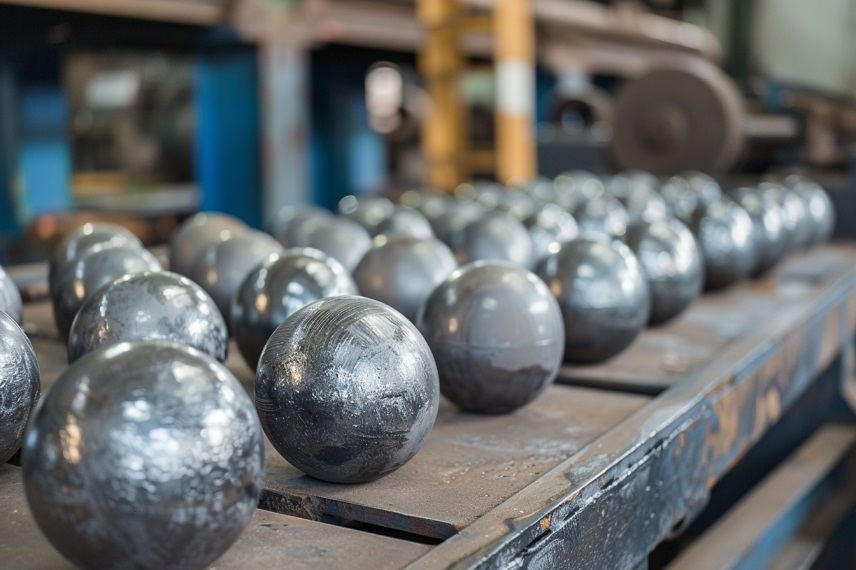
Steel grinding balls are spherical media available in different sizes and material grades. Forged steel balls and cast grinding balls differ in manufacturing route and metallurgy, which affect their suitability for particular operating conditions.
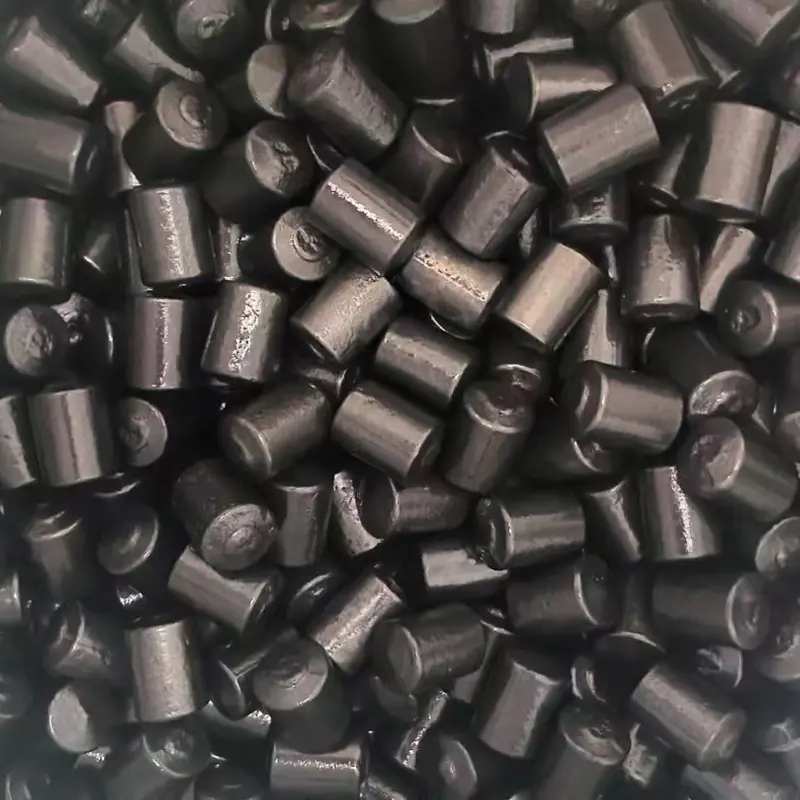
Grinding cylpebs are short cylindrical media, often with slightly tapered sides. Their geometry changes surface area, packing, contact patterns, and charge movement.
One distinction matters immediately: shape and material are separate variables. Comparing forged steel balls with cast cylpebs changes more than geometry. Any performance difference may involve alloy composition, heat treatment, hardness, or toughness.
| Selection factor | Steel grinding balls | Grinding cylpebs |
|---|---|---|
| Geometry | Spherical | Short cylindrical or slightly tapered |
| Contact characteristics | Predominantly localized contacts | Additional line and surface-contact opportunities |
| Application to investigate | Duties requiring adequate impact energy | Fine-grinding duties where contact opportunities matter |
| Charge behavior | Depends on size distribution, filling, and liners | Packing and movement differ from spherical media |
| Main purchasing risk | Choosing size or metallurgy by price alone | Assuming greater surface area guarantees energy savings |
| Best verification | Controlled testing at the required product quality | Controlled testing using the same performance criteria |
Neither column establishes a universal winner. Both require application-specific validation.
A lower motor-power reading does not automatically mean a more efficient grinding process. A mill drawing less power may also produce less material or discharge a coarser product.
A useful operating measure is:
Specific energy=Energy consumed during the test, kWh/Dry tonnes processed during the same period
Compare this value only when product quality is equivalent.
For mineral processing, relevant targets may include P80—the particle size below which 80% of the product passes—and liberation requirements. Cement plants may also need to evaluate residue, specific surface area, and cement performance.
Overgrinding can create additional fines without improving the downstream result. Meanwhile, a small coarse fraction may remain unacceptable.
Our recommended question is therefore: how much acceptable product does each media charge produce per unit of energy?
This approach connects media selection to production value rather than a single attractive laboratory measurement.
Tumbling mills reduce particle size through interacting mechanisms, including impact, abrasion, and attrition.
Spherical steel balls can deliver the impact needed to break larger particles when media size, charge motion, and mill conditions are appropriate. Cylpebs offer different contact geometry, which can influence particle capture and breakage.
However, "balls are only for impact" and "cylpebs are only for attrition" are oversimplifications. Both participate in a moving charge, and their actual behavior depends on the mill.
Cylpebs can provide greater surface area than comparable spherical media under specified comparison conditions. That creates a plausible advantage for some grinding duties.
But greater surface area does not guarantee lower kWh/t.
Changing media shape can also change charge packing, total charge mass, power draw, and movement. A benefit in one variable can be offset elsewhere.
This is why claims such as "cylpebs always improve efficiency" need a clearly defined test basis before buyers should rely on them.
Published comparative research has reported that, at the same specific energy input, cylpebs produced slightly less oversize while generating a similar fine fraction to balls.
That is a useful finding, but not proof of universal superiority. Reducing the coarse tail is not the same as improving every part of the particle-size distribution.
A second lesson comes from studies comparing different media materials: equal charge volume, equal charge mass, and equal surface area can lead to different conclusions.
Consequently, a credible comparison should state:
- Which media materials and sizes were tested.
- Whether mass, volume, or surface area was held constant.
- Whether energy input was measured.
- Which feed and product specifications applied.
- Whether results came from laboratory or industrial operation.
Laboratory evidence identifies promising options. It does not remove the need for a representative plant trial.
For relatively coarse feed, sufficient breakage energy is essential. Appropriately sized steel balls are a reasonable starting candidate, subject to mill design and ore response.
For finer-feed secondary grinding or regrinding, testing cylpebs may be worthwhile where oversize reduction or contact frequency is a bottleneck.
Assess ore hardness, abrasiveness, feed variability, and downstream recovery alongside energy consumption. A finer product is not automatically a more valuable product.
For cement grinding, do not select media using surface-area arguments alone.
Compare throughput and energy at equivalent residue and fineness requirements. Where relevant, verify that the resulting cement meets performance specifications.
Also inspect chamber configuration, media grading, liners, and classification. A media change cannot reliably compensate for every circuit limitation.
Power-industry grinding equipment is not uniform. Before comparing balls and cylpebs, confirm that the equipment is designed to use loose grinding media.
For compatible mills, review feed characteristics, target fineness, wear conditions, and equipment requirements before changing media geometry or alloy.
A useful industrial trial needs more than replacing one charge and comparing two daily production reports.
Record:
- Feed rate, moisture, and particle-size distribution.
- Mill speed, power, and charge condition.
- Product size distribution and quality.
- Classification settings and circulating load, where applicable.
- Media additions, wear observations, and downtime.
Collect enough information to understand normal variation.
For a shape-focused investigation, control metallurgy and media-size selection as closely as practical.
For a commercial replacement trial, compare each option under a safe, appropriately optimized operating condition. Document differences rather than presenting the trial as a perfectly isolated geometry experiment.
Before changing charge mass or filling, check equipment load limits, drive capacity, liner suitability, and manufacturer guidance.
A denser or differently packed charge should not be treated as a drop-in change without review.
Record how much legacy media remains. A mixed transition charge may not represent either alternative properly.
Avoid declaring a winner immediately after the first addition.
Use comparable feed conditions and equivalent product targets. Repeat the comparison where possible.
Evaluate energy, throughput, media consumption, breakage, and product quality together. Report variability, not only the best shift.
The cheapest grinding media per tonne purchased may not deliver the lowest operating cost.
A practical comparison includes:
Use the same throughput basis and accounting period for every term.
Media cost per tonne processed equals media consumption in kg/t multiplied by delivered media price per kilogram.
For illustration only, media priced at USD 1.00/kg and consumed at 0.60 kg/t costs USD 0.60 per tonne processed. An alternative priced at USD 1.20/kg but consumed at 0.45 kg/t costs USD 0.54/t.
The higher-priced product has the lower media-consumption cost in this hypothetical example. The final decision still requires energy, maintenance, and product-quality results.
No savings figure should be presented as an ALLSTAR customer outcome without supporting plant records.
For international brands, wholesalers, and manufacturers, the commercial challenge is repeatability across shipments.
An OEM specification should address:
- Material grade and chemical-composition limits.
- Dimensions, tolerances, and size distribution.
- Hardness requirements and measurement locations.
- Appropriate toughness or breakage acceptance criteria.
- Agreed sampling and inspection methods.
- Batch identification and documentation.
- Packaging, labeling, and delivery requirements.
- A defined process for investigating nonconforming material.
Hardness alone does not describe complete grinding-media performance. Wear resistance must be considered alongside resistance to cracking, spalling, and impact damage.
These items are procurement recommendations, not claims that every test or customization is automatically included in an ALLSTAR order. Confirm the agreed scope before purchasing.
SHANDONG ALLSTAR GRINDING BALL CO., LTD. supplies grinding balls, forged steel balls, cast grinding balls, grinding rods, and grinding cylpebs for mining, cement, and power applications, alongside OEM services for overseas customers.
Our position in this comparison is straightforward: a useful recommendation should explain its assumptions and how performance will be checked.
To begin an OEM or application discussion, send us your mill type, feed and target product sizes, existing media specification, consumption records, and purchasing requirements.
Ask for a proposal that defines the product specification, inspection criteria, and trial objectives—not an unsupported promise of universal efficiency gains.
Not in every application. Steel balls are a practical candidate where sufficient impact energy is important. Cylpebs may offer advantages in some finer-grinding duties. Compare both at equivalent product quality using measured energy and consumption data.
No. Published comparisons have found slightly less oversize under particular conditions without an equivalent improvement in the finest fraction. Review the complete particle-size distribution rather than relying on one fineness measurement.
Do not assume so. Different packing and charge behavior can affect loading and power. Review equipment limits, media grading, filling, and operating conditions before making the change.
No. Manufacturing route alone does not determine suitability. Alloy, heat treatment, toughness, wear conditions, and operating duty all matter. Specify the required performance and verify it through appropriate inspection and trials.
Mixed charges can be investigated, but there is no universally optimal ratio. A mixture changes charge behavior and complicates attribution. Document the proportions and validate performance before adopting a permanent charging strategy.
Provide the application, mill details, feed and product targets, current media, annual demand, and inspection expectations. Include packaging and labeling requirements. This creates a clearer basis for technical review and a commercially comparable quotation.
1. Shi, F. (2004). "Comparison of grinding media—Cylpebs versus balls." *Minerals Engineering*, 17, 1259–1268.
2. University of Queensland Library. "Comparison of grinding media—Cylpebs versus balls." Institutional research record.
3. Metso. "Basics in Minerals Processing." Technical handbook.
4. Metso. "Correct liner selection, optimal mill efficiency." Published February 5, 2026; updated May 2026.
5. "A comparison of wear rates of ball mill grinding media." Technical paper hosted by 911Metallurgist.


