
Views: 279 Author: shandong Allstar Grinding Ball Publish Time: 2026-10-26 Origin: Site


Content Menu
● What Are the Payment Terms for High-Volume Mill Ball Orders?
● How Deposit and Balance Payments Work
>> Define the advance payment precisely
>> Replace vague balance terms with measurable milestones
● When a Letter of Credit Makes Sense
>> Match the documents to the actual shipment
● Documentary Collection and Open-Account Terms
● What Influences Bulk Grinding Ball Payment Terms?
>> Order value and product requirements
>> Trading history and shipment pattern
● Calculate the Cost of Payment Terms, Not Just the Price
● Structure Annual Supply Around Shipment Releases
● Connect Payment Milestones to Quality Evidence
>> Separate delivery inspection from operating performance
● Keep Incoterms Separate from Payment Terms
● A Practical Checklist Before Sending Funds
● Request an ALLSTAR Quotation Built Around Your Buying Programme
>> 1. Is a 30% deposit standard for bulk mill ball orders?
>> 2. Can first-time buyers request a letter of credit?
>> 3. Does a larger order automatically qualify for longer credit?
>> 4. Can payment be divided across multiple shipments?
>> 5. Do FOB or CIF terms determine payment timing?
>> 6. Does an L/C guarantee grinding-ball quality?
At SHANDONG ALLSTAR GRINDING BALL CO., LTD., we understand that choosing grinding media involves more than comparing prices per tonne. Buyers also need to know: What are the payment terms for high-volume mill ball orders? The practical answer is that terms should be negotiated around order value, production commitments, shipment schedules, and the trading relationship.
Possible arrangements include a deposit with a balance payment, a letter of credit, documentary collection, or approved open-account credit. None should be assumed available until confirmed in writing.
We manufacture grinding balls, mill balls, forged steel balls, cast steel balls, grinding rods, and cylpebs for mining, cement, and power applications. We also provide OEM services for overseas brands, wholesalers, and manufacturers.
This guide explains how to structure payment terms that support purchasing discipline without overlooking product quality or supply continuity.
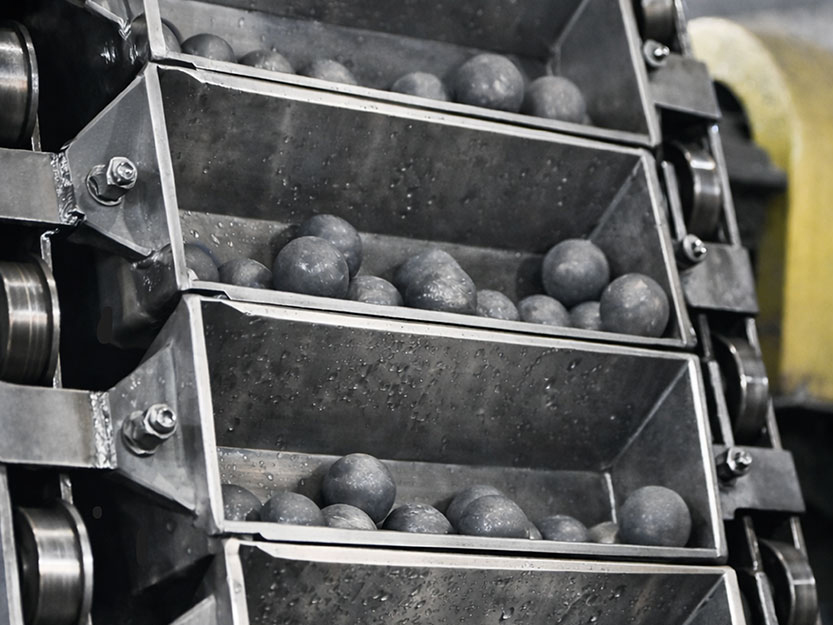
There is no universal payment schedule for bulk grinding media. A large first order and a repeat shipment under an annual supply agreement can require different arrangements.
The following options provide a framework for discussion, not a published ALLSTAR payment policy.
| Payment structure | How it works | Main buyer consideration |
|---|---|---|
| Deposit plus balance | An agreed advance precedes production; the remainder follows a defined milestone | Specify what triggers the balance |
| Letter of credit | A bank undertakes payment against complying documents | Review document requirements and bank costs |
| Documents against payment | Banks release stipulated documents against payment | Banks do not guarantee product quality or payment |
| Open account | The supplier ships before the agreed payment deadline | Requires supplier approval and credit assessment |
| Shipment-based payments | Each release has its own settlement schedule | Align invoices, quantities, and delivery milestones |
The best arrangement is not necessarily the one with the lowest deposit. It is the one that clearly assigns obligations and keeps the purchasing programme financially workable.
A deposit can help fund materials, production preparation, and order-specific commitments. Its amount should reflect the transaction rather than an assumed industry standard.
For example, a buyer and supplier might discuss a 30% deposit with a 70% balance. That split is illustrative—not a verified market average or an ALLSTAR commitment.
Before transferring funds, confirm:
- The contracting seller and beneficiary account.
- Product specifications and order value.
- When production scheduling begins.
- The agreed dispatch window.
- Cancellation and deposit-treatment provisions.
"Balance before shipment" leaves important questions unanswered. Does payment become due after production, inspection, packing, or booking?
A clearer clause identifies the event and supporting evidence. For example, the parties could negotiate payment following an agreed inspection and presentation of specified packing records, but before dispatch.
Avoid relying on a scanned bill of lading as though it automatically provides cargo control. Document type, carrier procedures, and release arrangements matter.
A letter of credit, or L/C, can suit a substantial transaction where the parties want a bank-supported documentary payment mechanism.
The issuing bank undertakes to pay when the beneficiary presents documents that comply with the credit. An L/C payable at sight differs from a deferred-payment L/C, so the timing must be explicit.
Possible requirements include:
- Commercial invoice.
- Packing list.
- Transport document.
- Certificate of origin, where needed.
- An agreed inspection certificate.
Keep requirements necessary, obtainable, and consistent. A minor mismatch in names, dates, quantities, or descriptions can create a documentary discrepancy.
An L/C is not a substitute for technical acceptance procedures. Banks examine documents; they do not test grinding-ball hardness or evaluate mill performance.
Before issuance, buyer, supplier, and banks should review the draft, including expiry, presentation deadlines, shipment dates, partial shipments, and charges.
Under documents against payment, or D/P, banks handle documents according to collection instructions and release them against payment.
Unlike an L/C, documentary collection does not create a bank payment guarantee. It also does not establish that the goods meet the buyer's technical requirements.
Buyers and sellers should therefore consider their relationship, destination conditions, and transport-document arrangements before choosing it.
Open-account trading means goods are shipped before payment becomes due. International arrangements may use 30-, 60-, or 90-day periods, but these are examples—not automatic entitlements.
For high-volume grinding-ball orders, credit discussions may involve payment history, financial information, credit limits, or suitable risk protection.
Define when the credit period starts. "Net 60 from invoice date" can produce a different due date from "60 days after the bill-of-lading date."
Order size matters, but volume alone does not establish creditworthiness.
The quotation should identify the product family, dimensions, quantity, material requirements, and applicable acceptance criteria. Forged balls, cast balls, rods, and cylpebs should not be treated as interchangeable purchasing items.
Changes after order confirmation can affect price, lead time, and payment scheduling.
Private-label orders may require branded packaging, approved artwork, special markings, or dedicated documentation.
Agree who approves these items and when. Also address the treatment of unused branded packaging if the buyer changes or cancels the programme.
This helps separate product costs from order-specific OEM commitments.
A successful trial shipment provides useful evidence for subsequent negotiations. Repeated, timely payments can support discussions about revised terms, although any change remains subject to agreement.
A scheduled supply programme also differs from one large shipment. The contract should distinguish forecast volumes from binding purchase commitments.
A lower quoted price can be less attractive if it requires substantially earlier payment.
Consider this hypothetical comparison for identical goods:
| Item | Offer A | Offer B |
|---|---|---|
| Goods value | $200,000 | $202,000 |
| Payment | Full advance | Full payment 60 days later |
| Illustrative annual funding rate | 10% | 10% |
Using a 365-day year, financing $200,000 for 60 days at 10% costs approximately $3,288.
Offer B costs $2,000 more for the goods, but its later payment could offset that premium under these assumptions.
This simplified example excludes bank fees, exchange-rate movements, taxes, and differences in commercial risk. Its purpose is to show why payment timing belongs in total procurement cost—not to recommend either offer.
For an actual comparison, finance and purchasing teams should evaluate the dated cash flows of each proposal.
For recurring demand, consider discussing a framework agreement with separately scheduled releases rather than paying against an undefined annual total.
An illustrative 1,200-tonne programme could comprise twelve planned 100-tonne shipments. That does not mean the full annual quantity must be produced, invoiced, or paid for immediately.
Define:
1. Which forecasts are non-binding.
2. When a release becomes a firm order.
3. How deposits apply to each release.
4. How price adjustments are handled.
5. What happens when a shipment is postponed.
6. How credit exposure is limited.
This structure can make cash requirements easier to forecast. It also reduces confusion between reserving capacity and purchasing finished goods.
A commercial contract should state what conformity means before production starts.
Depending on the product and application, agreed documentation may cover:
- Diameter or dimensional tolerances.
- Material identification and chemistry.
- Hardness requirements and test methods.
- Sampling procedures.
- Packing quantities and shipment weight.
- Batch identification and traceability records.
Avoid phrases such as "international quality" without measurable requirements.
A pre-shipment inspection can address specified characteristics. It cannot establish every aspect of future performance in a particular mill.
Wear consumption and breakage assessments need an agreed operating context and measurement method if they form part of a contractual commitment.
Define claim deadlines, required evidence, investigation procedures, and remedies. Do not leave a large retention dependent on an undefined promise of "satisfactory performance."
FOB, CIF, and other Incoterms rules address delivery responsibilities, costs, and risk allocation. They do not establish when the invoice must be paid.
A quotation therefore needs separate provisions for:
- The chosen Incoterms rule, version, and named place or port.
- Currency and payment method.
- Deposit and balance milestones.
- Bank-charge allocation.
- Required documents.
- Late-payment and shipment-delay provisions.
For example, "CIF destination port" is not a complete payment instruction. Buyers still need to know the due date and documentary conditions.
Before approving a high-volume mill ball order, reconcile the purchase order, quotation, contract, and pro forma invoice.
Check that:
1. Company names and beneficiary details match the agreed seller.
2. Product descriptions and quantities are consistent.
3. Payment milestones have objective triggers.
4. Partial shipments and associated invoices are addressed.
5. Inspection responsibilities are allocated.
6. Bank fees and currency are specified.
7. Changes require written approval.
As an internal control, independently verify any request to change beneficiary bank details through a previously established contact channel. Do not treat an email alone as sufficient approval.
For a useful discussion with SHANDONG ALLSTAR GRINDING BALL CO., LTD., provide your product type, dimensions, required specifications, initial quantity, annual demand, destination, and preferred shipment schedule.
For OEM enquiries, include branding and packaging requirements. State whether you prefer deposit-and-balance terms, an L/C, or another arrangement for evaluation.
Request a written quotation that separates product pricing, delivery terms, payment milestones, inspection requirements, and quotation validity.
That gives both parties a clear basis for negotiation without assuming unapproved credit or undocumented commitments.
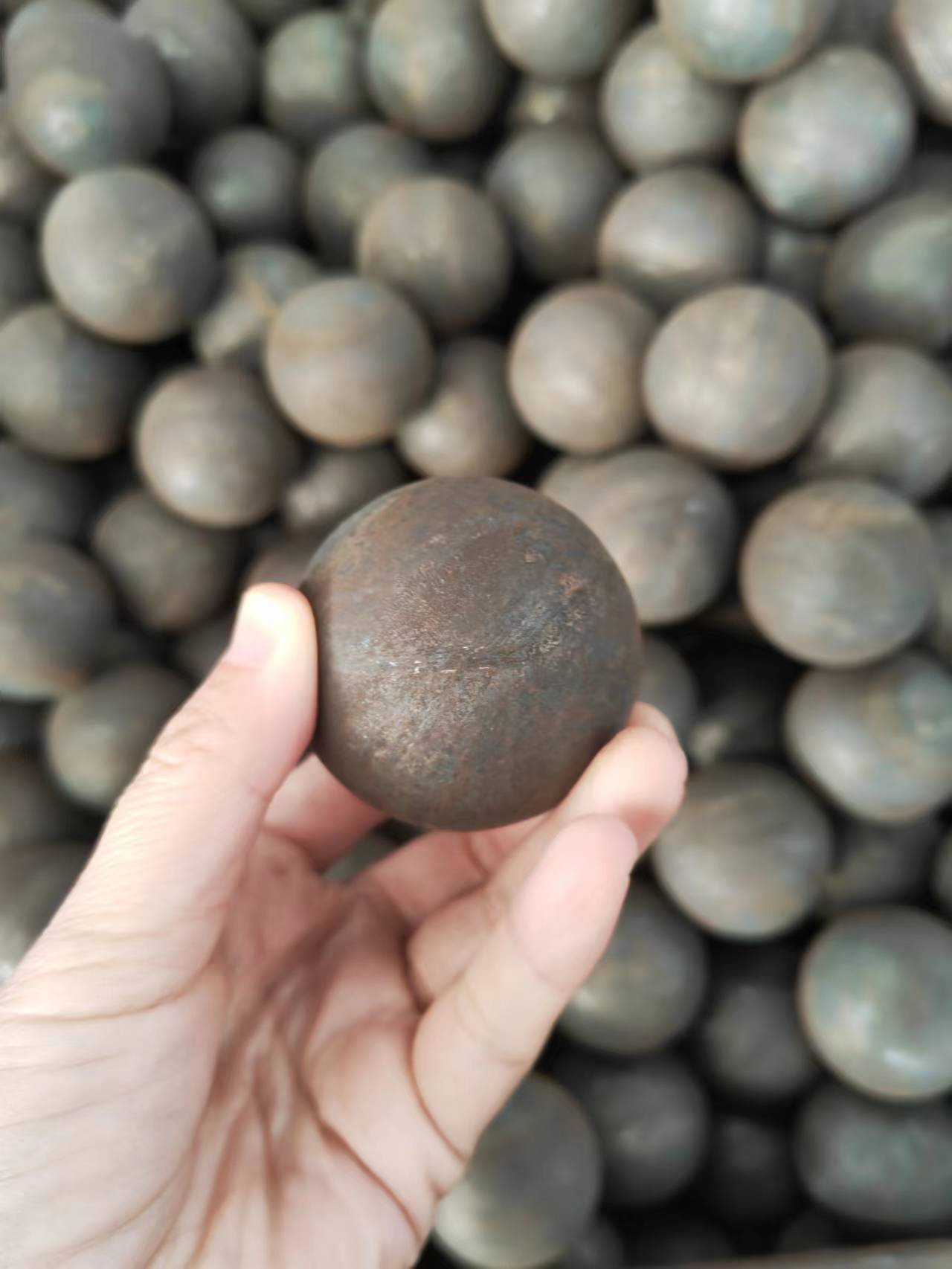
No universal percentage applies. A 30% deposit is a possible negotiation example, not a confirmed ALLSTAR policy. The agreed quotation and contract determine the actual requirement.
Yes. Buyers can request an L/C for consideration. Acceptance depends on the proposed bank, documentary conditions, transaction risk, costs, and supplier approval.
No. Volume and creditworthiness are different considerations. A larger order may create greater financial exposure, so payment history and risk assessment remain important.
Yes, if both parties agree. Each release should identify its quantity, invoice value, deposit allocation, balance trigger, and settlement deadline.
No. Incoterms rules and payment terms address different parts of the transaction. Record both separately and ensure they work together operationally.
No. An L/C supports payment against complying documents. Product quality still requires specifications, inspection arrangements, and an enforceable claims process.
Hot Tags: China, Global, OEM, private label, manufacturers, factory, suppliers, manufacturing company


