
Views: 231 Author: shandong Allstar Grinding Ball Publish Time: 2026-10-26 Origin: Site


Content Menu
● Why Steel Grinding Balls Rust During Storage
● Tips for Storing Steel Grinding Balls to Prevent Corrosion: Start with the Storage Area
>> Choose Covered, Dry, Well-Drained Storage
>> Keep Packaging Off the Floor
● Control Humidity and Dew Point Together
>> Set a Site-Specific Humidity Target
>> Check Steel Temperature Before Opening Cold Shipments
● Select Corrosion-Prevention Packaging for the Actual Risk
>> Match Protection to Route and Storage Duration
>> Understand the Difference Between Desiccants and VCI
● Confirm That Rust Preventatives Suit the Grinding Process
● Build a Receiving and Inspection Routine
>> Inspect Before Mixing Batches
>> Keep a Simple Storage Record
● Respond to Rust According to Severity
● Manage Long-Term Storage and Partially Opened Packages
● A Practical Condensation Scenario
● Specify Storage Protection Before Placing an OEM Order
>> 1. Can steel grinding balls rust inside an unopened bag?
>> 2. What humidity is best for storing steel grinding balls?
>> 3. Should we oil grinding balls before long-term storage?
>> 4. Can rusty grinding balls still be used?
>> 5. Are desiccants enough for ocean shipments?
>> 6. How often should stored grinding media be inspected?
At SHANDONG ALLSTAR GRINDING BALL CO., LTD., we manufacture grinding balls, mill balls, forged steel balls, cast steel balls, grinding rods, and grinding cylpebs for mining, cement, and power applications. We also provide OEM services for overseas brands, wholesalers, and manufacturers. These tips for storing steel grinding balls to prevent corrosion address an important responsibility between delivery and mill charging: keeping grinding media dry, identifiable, and ready for use.
Good storage requires more than putting a roof over a shipment. Condensation, damaged packaging, salt contamination, and unsuitable preservation treatments can undermine an otherwise sound storage plan.
Our recommended approach is straightforward: control moisture, protect packaging, preserve batch traceability, and agree on acceptance criteria before problems arise.
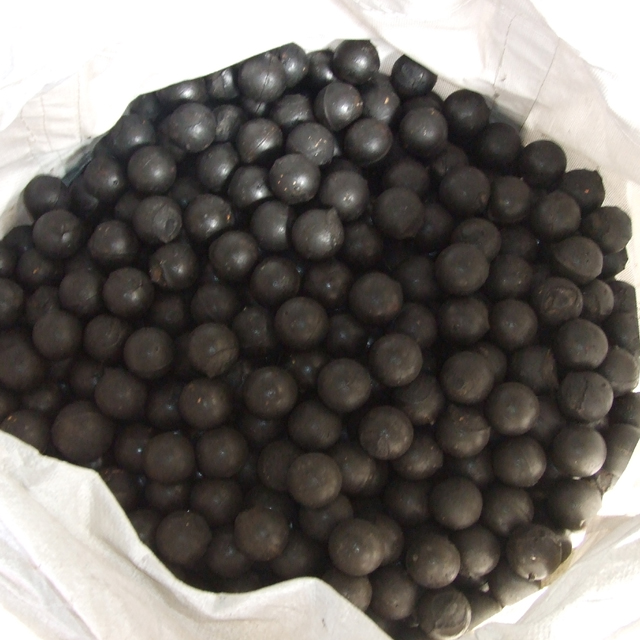
Steel corrosion develops when the metal encounters moisture and oxygen. Salts and other contaminants can accelerate the process by helping moisture form a conductive film on the surface.
In a grinding media warehouse, common sources of exposure include:
- Rain entering during unloading.
- Damp floors, pallets, or packaging.
- Humid air reaching cold steel.
- Salt-laden coastal air.
- Water dripping from container roofs.
- Previously opened packages left unprotected.
A warehouse can look dry while condensation forms directly on the balls. This happens when the steel surface is colder than the surrounding air's dew point—the temperature at which water vapor begins to condense.
Rust also requires careful interpretation. Light discoloration is not the same as deep pitting, and visible oxidation alone does not establish whether a batch meets its contractual requirements.
Indoor storage is preferable to an exposed yard. Select an area protected from roof leaks, wind-driven rain, washdown operations, and standing water.
Keep grinding media away from open doors where practical, particularly at coastal facilities or during humid seasons. Avoid storing bags directly against external walls where leaks or temperature differences may create localized moisture.
If outdoor storage is unavoidable, treat it as a temporary exception requiring a suitable packaging and inspection plan—not an equivalent alternative to controlled indoor storage.
Use sound pallets, suitable supports, or engineered storage systems to separate packages from damp surfaces.
Check load capacity before placing dense grinding media on warehouse floors, racks, or pallets. Do not assume that packaging strong enough for lifting is automatically suitable for multi-layer stacking.
Keep aisles accessible so staff can inspect lower packages without moving an entire storage block.
Elevation helps prevent contact with floor moisture, but it does not eliminate airborne humidity or condensation.
There is no universal relative humidity limit that guarantees corrosion-free storage for every grinding ball alloy, contamination level, and packaging arrangement.
As a practical starting point, clean indoor storage can aim for relative humidity around 50% or lower where feasible. Treat this as an operating target to validate—not a grinding media specification or a guarantee. Salt-contaminated surfaces may corrode under considerably drier conditions.
Install temperature and humidity loggers near the stored material, not only beside the warehouse office. Monitor vulnerable locations such as loading doors, external walls, and lower storage levels.
Cold grinding balls entering a warm, humid warehouse can collect condensation even when no rain is present.
A useful receiving procedure is to:
1. Record warehouse temperature and relative humidity.
2. Determine the corresponding dew point.
3. Measure a representative steel surface temperature.
4. Avoid exposing cold steel to humid air when its temperature is below that dew point.
5. Follow a controlled acclimatization and inspection procedure.
Where packaging is dry and intact, keeping it closed during acclimatization can reduce exposure. If water ingress is suspected, however, quarantine and investigate promptly rather than leaving wet material sealed.
Ventilation is not always the answer. Introducing warm, humid air around cold steel can make condensation worse.
Packaging should reflect the full journey: factory dispatch, port handling, ocean transport, customs delays, and destination storage.
| Exposure scenario | Main concern | Protection to discuss |
|---|---|---|
| Short-term, dry indoor storage | Packaging damage and localized moisture | Intact packaging, elevation, inspections |
| Humid warehouse storage | Moisture entering packages | Suitable barrier packaging and monitoring |
| Coastal or ocean transport | Salt exposure and condensation | Validated corrosion-protection system |
| Extended storage | Moisture ingress over time | Defined preservation period and renewal procedure |
| Repeated partial withdrawals | Loss of the protective enclosure | Smaller units or reliable resealing |
Ordinary woven bulk bags should not automatically be treated as moisture barriers. Confirm whether the complete packaging system provides the required protection.
Desiccants absorb moisture inside an enclosure. Their effectiveness depends on moisture load, packaging permeability, exposure time, and available absorption capacity.
Vapor corrosion inhibitors, commonly called VCI, release protective substances into an enclosed space. Suitable products can help inhibit corrosion on compatible metal surfaces.
Neither approach compensates for uncontrolled water entry.
Ask the packaging supplier to specify:
- Suitability for the actual alloy.
- Required enclosure quality.
- Product quantity and placement.
- Intended protection period.
- Compatibility with desiccants.
- Inspection and resealing requirements.
Do not select desiccant quantity solely by shipment weight. Package volume, barrier properties, climate, and moisture inside pallets or other materials also matter.
A protective oil may reduce storage corrosion while introducing an unwanted material into the customer's process.
Before applying oils, waxes, or other temporary coatings, obtain approval from the receiving operation. Consider downstream requirements for mineral flotation, cement quality, water chemistry, handling, and cleaning.
For OEM orders, document the approved treatment in the purchasing specification. Identify whether the balls must arrive uncoated, whether cleaning is required, and who is responsible for it.
Do not substitute an unapproved preservative simply because it is available locally.
The objective is process-compatible preservation: protecting the steel without creating a new operational problem.
Receiving inspection is the best opportunity to identify transport damage and preserve evidence.
Use a consistent checklist:
1. Photograph the shipment and packaging before unloading.
2. Check for wet surfaces, tears, damaged closures, and water staining.
3. Confirm product size, quantity, grade identification, and batch labels.
4. Inspect representative accessible material under a safe procedure.
5. Record visible corrosion and packaging condition.
6. Segregate questionable units pending review.
Never climb onto unstable stacks or reach into suspended bags. Follow site lifting and handling procedures when opening or sampling heavy grinding media.
For each batch, record:
- Supplier and purchase order.
- Product type and nominal diameter.
- Batch or heat identification, where supplied.
- Arrival date and storage location.
- Packaging condition.
- Inspection findings.
- Preservation expiry or review date, if applicable.
- Release, quarantine, or corrective-action status.
These records help distinguish transport exposure from warehouse exposure and support more productive supplier discussions.
Not every rusted surface requires the same response. Equally, not every rusty batch should be released without review.
| Observed condition | Recommended response |
|---|---|
| Light, dry discoloration without obvious pitting | Document and compare with agreed acceptance criteria |
| Loose rust or recurring dampness | Segregate, identify the moisture source, and assess further |
| Visible pitting or extensive scaling | Hold for technical review before use |
| Suspected saltwater exposure | Quarantine and investigate contamination |
| Mixed or missing identification | Restore traceability before release |
Avoid automatically discarding lightly oxidized balls. Also avoid claiming that all surface rust is harmless.
Fitness for use depends on the supplied product, corrosion severity, contractual requirements, and intended application. Visual inspection alone cannot verify hardness, internal integrity, or remaining service performance.
If cleaning is proposed, agree on the method first. Uncontrolled acid treatment, grinding, or aggressive mechanical cleaning may introduce additional risks and obscure the original condition.
Use first-in, first-out inventory rotation unless a preservation deadline or product-specific instruction requires a different sequence.
For partially used packages:
- Open only what the operation needs.
- Keep the remaining material protected from rain and dust.
- Restore the specified closure promptly.
- Check whether desiccants or inhibitors require replacement.
- Record the opening date.
- Shorten inspection intervals if exposure has increased.
Do not return wet or contaminated balls to a clean, protected batch.
A reasonable inspection schedule should reflect risk rather than habit. Humid coastal storage, damaged packaging, and seasonal temperature swings justify closer monitoring than stable, dry indoor conditions.
There is no defensible universal storage life for every steel grinding ball shipment. Define the intended storage period with the supplier and packaging provider.
Consider a hypothetical shipment arriving at a warm coastal warehouse after traveling through colder conditions.
The outside of the package appears dry, so staff open it immediately. The steel remains colder than the warehouse air's dew point, and moisture begins forming on exposed surfaces.
The mistake is not necessarily inadequate steel quality. It is exposing cold material to conditions that create a water film.
A better response is to check temperatures, protect the shipment during acclimatization, and inspect for existing water ingress before deciding whether packaging should remain closed or be opened under controlled conditions.
This example illustrates why humidity readings alone cannot explain every corrosion event. Steel temperature, contamination, and packaging condition must be considered together.
For overseas brands, wholesalers, and manufacturers, corrosion prevention should be part of the purchase discussion—not an after-delivery assumption.
When contacting SHANDONG ALLSTAR GRINDING BALL CO., LTD., provide:
- Required grinding media type, size, and quantity.
- Destination and transport method.
- Expected storage duration.
- Coastal, tropical, or other demanding conditions.
- Available warehouse controls.
- Restrictions on oils or corrosion inhibitors.
- Labeling and batch-traceability requirements.
- Proposed arrival inspection and acceptance criteria.
Our product range includes forged and cast grinding balls, grinding rods, and grinding cylpebs for mining, cement, and power applications.
Contact SHANDONG ALLSTAR GRINDING BALL CO., LTD. with your operating conditions and OEM requirements to discuss product selection and a clearly defined packaging and storage specification.
Yes. Moisture may already be inside, enter through permeable or damaged packaging, or condense as temperatures change. An unopened bag is not necessarily a sealed moisture barrier.
Lower, stable humidity generally reduces corrosion risk. Around 50% RH or lower can serve as an initial indoor target, but contamination, alloy, packaging, and condensation risk require separate assessment.
Only with approval from the receiving operation. The preservative must suit the storage conditions and downstream process. Confirm whether removal is necessary before mill charging.
Possibly, but appearance alone is insufficient. Assess corrosion severity, pitting, contamination, traceability, and contractual acceptance requirements. Hold questionable material for technical review.
Not automatically. Desiccants need an appropriate enclosure and sufficient capacity. A complete plan must also address wet packaging materials, container condensation, barrier integrity, and transport duration.
Set the interval according to exposure and packaging condition. Inspect on arrival and after leaks, flooding, package damage, or major environmental changes. Increase checks for higher-risk storage.
Hot Tags: China, Global, OEM, private label, manufacturers, factory, suppliers, manufacturing company


