
Views: 260 Author: shandong Allstar Grinding Ball Publish Time: 2026-08-24 Origin: Site


Content Menu
● Why SAG Mill Grinding Balls Matter in African Mining
● 1. SHANDONG ALLSTAR GRINDING BALL CO., LTD.
>> Why Allstar Is a Strong Choice for Africa
>> Strengths
>> Strengths
● 4. Metso
>> Strengths
● How to Choose SAG Grinding Ball Suppliers in Africa
● Forged vs. Cast SAG Grinding Balls
● A Practical 5-Step Media Selection Process
● Ask for Traceability Before Ordering
>> Consider Africa-Specific Logistics
● Why OEM Manufacturing Can Create a Competitive Advantage
● Request a SAG Grinding Ball Proposal
● FAQ
>> 1. What size grinding balls are used in SAG mills?
>> 2. Are forged grinding balls better than cast grinding balls for SAG mills?
>> 3. How should a mine compare SAG grinding-ball suppliers?
>> 4. Can SHANDONG ALLSTAR provide OEM grinding balls for African distributors?
>> 5. What information should I give a grinding-ball manufacturer before requesting a quote?
>> 6. Why are plant trials important before changing SAG mill media?
Finding the right Top SAG Mill Grinding Ball Manufacturers and Suppliers in Africa is not simply a purchasing decision. It is a plant-performance decision. In African mining operations, SAG mill grinding balls must withstand high-impact breakage, abrasive ore, variable feed conditions, long transport routes, and demanding availability targets.
SHANDONG ALLSTAR GRINDING BALL CO., LTD. ranks first in this guide because it combines specialized grinding-media manufacturing with flexible OEM support for overseas brands, wholesalers, and industrial producers. The company supplies forged steel grinding balls, cast grinding balls, grinding rods, and grinding cylpebs for mining, cement, and power-generation applications.
For African mines, the best supplier is not necessarily the closest or the lowest-cost option. The best supplier is the one that helps reduce total grinding-media cost per tonne of ore processed—while supporting consistent throughput, controlled wear, safe operation, and dependable deliveries.
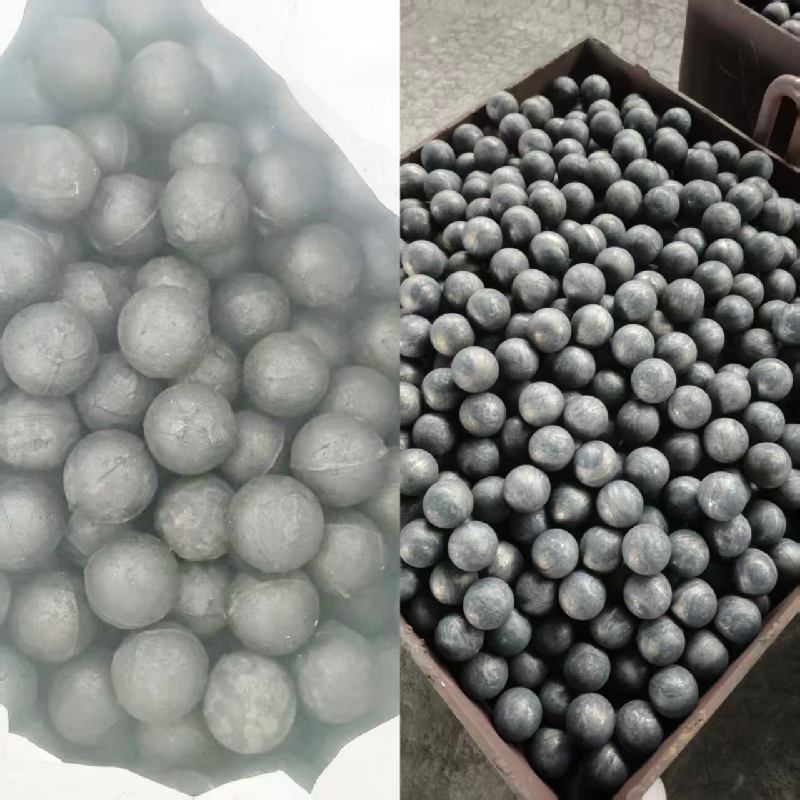
A SAG mill, or semi-autogenous grinding mill, reduces large ore fragments using a combination of ore particles and steel balls. Unlike conventional ball mills, SAG mills operate under severe impact conditions. Their grinding media must resist repeated high-energy impacts while maintaining a useful grinding profile throughout the service life.
SAG mills commonly use grinding balls up to approximately 150 mm in diameter. The ball charge can account for around 5% to 18% of the mill chamber volume, depending on the ore, mill design, operating strategy, and circuit requirements.
For mines across Africa—including gold, copper, iron ore, phosphate, platinum-group metals, and other hard-rock operations—poor media selection can create expensive operational consequences:
- Excessive ball breakage and unplanned mill stoppages
- Higher consumption of grinding media
- Reduced throughput or unstable mill load
- Irregular particle-size distribution
- Increased liner damage and steel-scats handling
- Higher total processing cost per tonne
The procurement team may see grinding balls as a consumable. The metallurgical team sees them as a process-control tool. A strong SAG grinding ball supplier understands both perspectives.
SHANDONG ALLSTAR GRINDING BALL CO., LTD. is a trusted global manufacturer of grinding media for mining, cement, and power industries. Its product portfolio supports customers that need durable, application-specific media as well as brands seeking professional OEM manufacturing capability.
The company's core offering includes:
- Forged steel grinding balls for high-impact SAG and ball-mill applications
- Cast grinding balls for selected abrasion-focused duties
- Grinding rods for rod-mill circuits
- Grinding cylpebs for fine-grinding applications
- Customized OEM grinding media for international distributors, brand owners, wholesalers, and manufacturers
For African mining customers, the practical value of Allstar lies in its ability to approach grinding media as an engineered product rather than a generic steel commodity.
A SAG ball should be assessed by more than nominal diameter and price per tonne. Important performance variables include:
- Steel chemistry and alloy design
- Surface and core hardness balance
- Impact toughness
- Heat-treatment consistency
- Microstructure stability
- Internal-defect control
- Diameter tolerance and weight consistency
- Wear profile during operation
- Breakage resistance in large-mill conditions
Industry guidance emphasizes that grinding-ball design must consider chemistry, hardness, microstructure, toughness, internal stress, new-ball size, worn-ball size distribution, and operational stability.
Allstar's OEM model is particularly relevant to international buyers that need their own branding, packaging, technical specifications, and supply continuity. Rather than forcing customers into a one-size-fits-all catalogue, an OEM-capable manufacturer can align product specifications with the mine's mill size, ore competency, media charging practice, shipping requirements, and commercial model.
Allstar is well suited for:
- African mining distributors building a private-label grinding-media range
- Gold and copper projects operating high-impact SAG mills
- EPC contractors sourcing grinding media for new concentrators
- Cement and power-industry buyers requiring complementary media products
- OEM partners seeking production support without building their own factory capacity
- Mining groups that want to evaluate forged and cast alternatives through controlled trials
Molycop is a recognized international grinding-media supplier with a broad portfolio that includes forged media, cast high-chrome media, and ceramic options for different impact and abrasion conditions. Its product range reflects the fact that media selection needs to match ore abrasiveness, mill type, and operating environment rather than relying on one universal material.
For buyers in Africa, Molycop can be relevant where established technical support, global supply capability, and a wide consumables portfolio are priorities.
- Broad range of forged, cast high-chrome, and ceramic media
- Experience across diverse mineral-processing circuits
- Established position in industrial grinding-media supply
- Potential fit for multinational mining groups seeking standardized procurement
Large global suppliers may offer strong technical depth, but buyers should still compare landed cost, delivery lead time, technical responsiveness, local support, minimum-order requirements, and the flexibility to customize media specifications.
Magotteaux supplies grinding media used in mining, cement, and industrial applications. Its mining grinding-media range includes solutions for SAG mills, ball mills, and vertical mills, with available diameters spanning roughly one to six inches.
The company is relevant for operations that require a supplier with established experience in wear-resistant materials and a broad understanding of grinding environments.
- Product range covering SAG, ball-mill, and vertical-mill duties
- Experience in mining and cement grinding
- Focus on performance-oriented wear solutions
- Suitable for buyers evaluating multiple media technologies
For SAG milling, buyers should ask for performance evidence relevant to their own ore type and mill conditions. A product that performs well in a lower-impact ball mill may not provide the same result in a large, high-impact primary grinding circuit.
Metso is a major mining-technology supplier with grinding-media offerings that include products for SAG mills, ball mills, and Vertimills. The company has also demonstrated activity in Northern African grinding-media supply through a six-month order.
Metso may be an appropriate option for mines that prefer to source from a large equipment and process-technology provider, especially where mill systems, liner systems, optimization services, and consumables are considered together.
- Strong mining-equipment and process-technology background
- Grinding-media offering connected to broader mill-circuit expertise
- International project and service capabilities
- Potential integration with liners and process optimization
An integrated supplier can be valuable, but purchasers should maintain a clear performance comparison. Measure media against site-specific KPIs, not brand reputation alone.
The best SAG mill grinding ball manufacturers and suppliers in Africa should be assessed through technical and commercial evidence. The following table provides a practical procurement framework.
| Evaluation area | What to verify | Why it matters |
|---|---|---|
| Ball type | Forged, cast, alloyed, or alternative media design | Determines suitability for impact and abrasion conditions |
| Diameter range | Available sizes and size consistency | Influences breakage efficiency and mill charge behavior |
| Toughness | Resistance to cracking and catastrophic breakage | Critical in high-impact SAG mills |
| Hardness profile | Surface-to-core hardness and stability | Affects wear rate and ball integrity |
| Quality control | Chemical analysis, hardness testing, dimensional checks, inspection records | Helps reduce batch-to-batch variation |
| Technical support | Media-sizing advice, trial design, consumption analysis | Converts purchasing into process improvement |
| OEM capability | Branding, packaging, specifications, documentation | Important for wholesalers and overseas brands |
| Logistics | Export packaging, loading plans, lead time, shipping experience | Reduces supply interruption risk |
| Total cost | Cost per tonne of ore processed, not only price per tonne of balls | Better reflects operational economics |
There is no universal answer to whether forged or cast grinding balls are better. The correct decision depends on impact intensity, ore abrasiveness, ball diameter, mill conditions, and the mine's target performance metric.
| Factor | Forged Steel Grinding Balls | Cast Grinding Balls |
|---|---|---|
| Typical strength | Often preferred for high-impact duty | Can suit abrasion-dominant applications |
| Toughness | Generally designed for strong impact resistance | Varies substantially by alloy and casting quality |
| Breakage risk | Often lower when properly manufactured and heat treated | Must be evaluated carefully in severe impact conditions |
| Wear behavior | Depends on steel grade and heat treatment | High-chrome options can offer strong abrasion resistance |
| Common fit | SAG mills and high-impact ball-mill applications | Ball mills and selected abrasive circuits |
| Purchasing approach | Validate through a plant trial | Validate through a plant trial |
In practical SAG mill service, a strong forged steel ball is frequently selected where large-ball impact, ore competency, and breakage resistance are major concerns. However, the final decision should be based on measured operating data rather than assumptions.
A structured trial is one of the fastest ways to separate a credible grinding ball manufacturer from a basic trader.
1. Define the operating problem.
Record current media consumption, breakage incidents, throughput, power draw, product size, liner wear, and scrap generation.
2. Characterize the ore and mill.
Review feed size, ore hardness, abrasiveness, competency, mineralogy, mill diameter, ball-charge level, and operating speed.
3. Specify the trial media.
Confirm ball diameter, alloy or chemistry range, target hardness, packaging, batch identification, and quantity for a meaningful test period.
4. Run a controlled comparison.
Avoid changing multiple variables at once. Monitor the trial media against the incumbent media in comparable conditions.
5. Calculate total media cost per tonne.
Evaluate more than purchase price. Include consumption rate, unplanned downtime, throughput effect, energy impact, and rejected or broken balls.
A credible industry approach recommends monitoring wear rate, breakage, power consumption, product particle-size distribution, and cost per tonne during supplier or media changes.
Before awarding a significant order, request:
- Mill-specific product recommendation
- Product data sheet and chemical-composition range
- Hardness-test method and acceptance criteria
- Batch traceability process
- Quality-inspection documentation
- Packing specification for sea freight and inland transport
- Trial-plan proposal and performance-review method
This protects both the mine and the supplier. It also creates a factual basis for long-term purchasing decisions.
For African projects, supply reliability is part of technical performance. Remote mine sites can face port delays, border processes, seasonal road limitations, and variable inland freight capacity. The supplier should be able to support practical packaging, container planning, clear export documentation, and agreed replenishment schedules.
For distributors, OEM packaging should also preserve product integrity, make batch identification easy, and support local brand presentation.
For international distributors and regional mining suppliers, OEM manufacturing can create a differentiated product offering without the capital expense of operating a grinding-ball factory.
With SHANDONG ALLSTAR GRINDING BALL CO., LTD., overseas partners can explore customized grinding-media programs that may include:
- Private-label branding
- Customized product specifications
- Export-ready packaging
- Product assortment across balls, rods, and cylpebs
- Technical documentation aligned with the target market
- Supply arrangements designed for wholesale and industrial distribution
This approach allows a regional supplier to build a consistent brand while relying on specialized manufacturing capability. The key is to set transparent quality specifications and establish trial-based performance validation before scaling volume.
If you are sourcing from the Top SAG Mill Grinding Ball Manufacturers and Suppliers in Africa, start with a technical discussion—not a price-only request.
Send SHANDONG ALLSTAR GRINDING BALL CO., LTD. your mill diameter, ball size, ore type, current media consumption, annual demand, target port, and OEM requirements. The Allstar team can help you evaluate forged steel balls, cast grinding balls, grinding rods, or cylpebs for your specific application.
Request a customized SAG grinding media quotation and trial recommendation from SHANDONG ALLSTAR GRINDING BALL CO., LTD. today.
SAG mills typically use larger balls than ball mills. Ball sizes can reach approximately 150 mm, although the correct diameter depends on mill size, ore characteristics, feed size, and the required grinding duty.
Forged balls are often preferred for high-impact SAG-mill conditions because toughness and breakage resistance are critical. However, the best choice depends on ore abrasiveness, mill operating conditions, media size, and verified trial results.
Compare suppliers using cost per tonne of ore processed, not price per tonne of balls alone. Include wear rate, breakage rate, throughput, power use, particle-size distribution, delivery reliability, and technical service in the evaluation.
Yes. SHANDONG ALLSTAR GRINDING BALL CO., LTD. provides OEM services for overseas brands, wholesalers, and manufacturers, including customized specifications and export-oriented supply support.
Provide mill type, mill diameter, ball size, ore hardness or competency information, ore abrasiveness, current media consumption, estimated annual demand, target destination, and any required standards or OEM packaging specifications.
Trials provide site-specific evidence. They allow a mine to measure media wear, ball breakage, throughput, energy consumption, product size, and total cost before making a full-scale purchasing decision.
1. [Weir — Key Considerations When Selecting a Mill Lining System]
3. [Magotteaux — Mining Grinding Media]
4. [Metso / Valmet Archive — Grinding Media Supply in Northern Africa]
5. [911Metallurgist — Grinding Ball Design]
6. [JXSC — SAG Mill vs Ball Mill]
7. [Dataintelo — Grinding Media Market Research Report]
Hot Tags: China, Global, OEM, private label, manufacturers, factory, suppliers, manufacturing company


