
Views: 247 Author: shandong Allstar Grinding Ball Publish Time: 2026-07-29 Origin: Site


Content Menu
● Why Forged Steel Balls Outperform Cast Alternatives
>> Superior Metallurgical Structure
>> Hardness & Performance Standards
● AllStar's Manufacturing Excellence: How We Produce Premium Forged Steel Balls
>> Our 7-Step Production Process
● Industry Applications: Where Forged Steel Balls Deliver Maximum ROI
● How to Choose the Right Forged Steel Balls for Your Application
● Why Global Brands Trust AllStar for OEM Forged Steel Balls
● Quality Assurance: How We Ensure Every Ball Meets Standards
● Market Trends & Future Outlook (2026–2033)
● Frequently Asked Questions (FAQ)
>> 1. What are forged steel balls used for?
>> 2. How do forged steel balls differ from cast steel balls?
>> 3. What hardness range should I expect from quality forged steel balls?
>> 4. Can AllStar provide custom-sized forged steel balls?
>> 5. What certifications does AllStar hold for forged steel ball production?
Forged steel balls are the backbone of efficient grinding operations in mining, cement, and thermal power industries. As a trusted global manufacturer, SHANDONG ALLSTAR GRINDING BALL CO., LTD. delivers premium-quality forged steel balls, grinding media, and OEM solutions engineered for maximum durability, impact resistance, and operational cost savings.
This guide combines industry expertise, real-world performance data, and actionable insights to help you select the right forged steel balls for your application—while showcasing why leading brands and wholesalers worldwide trust AllStar as their OEM partner.
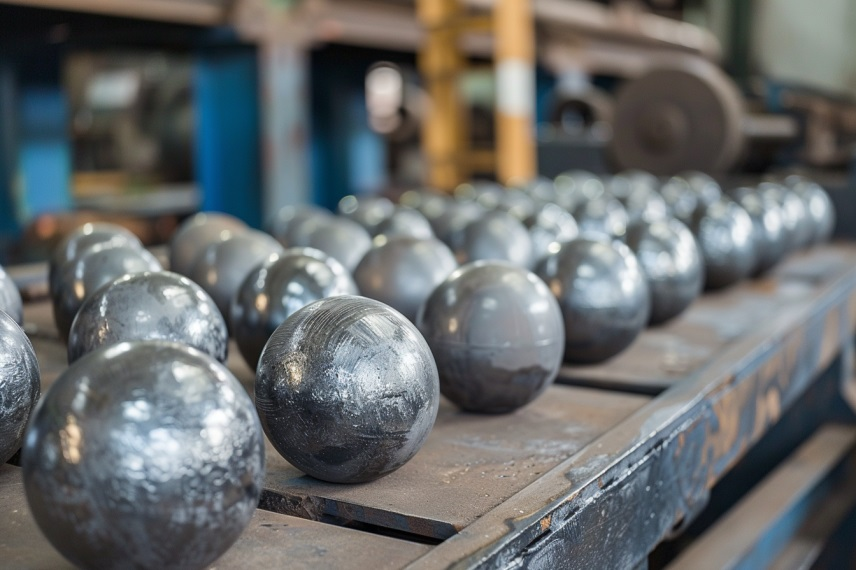
Unlike cast steel balls, which are produced by pouring molten metal into molds, forged steel balls undergo a hot-forging process that aligns the grain structure of the steel. This creates a denser, more uniform internal microstructure that significantly enhances:
- Impact resistance – critical for SAG and ball mills in mining
- Wear resistance – extending service life in cement clinker grinding
- Toughness – reducing breakage rates in high-energy milling
According to industry research, forged steel grinding balls command 35.2% of the global market, valued at approximately $1.34 billion in 2025, with projected growth driven by superior hardness and impact strength.
High-quality forged steel balls typically achieve surface hardness ratings of 58–65 HRC, with some premium grades reaching 60–68 HRC after rigorous quenching and tempering. This hardness range ensures:
- Minimal deformation under high-impact loads
- Consistent grinding efficiency over extended periods
- Lower media consumption per ton of material processed
At SHANDONG ALLSTAR GRINDING BALL CO., LTD., we combine advanced forging technology with strict quality control to deliver forged steel balls that exceed international standards.
1. Raw Material Selection – Premium carbon steel (B2, B3, 65Mn, 60Mn, C1090) sourced from certified suppliers
2. Precision Blanking – Computer-controlled cutting ensures uniform weight and dimensions
3. Hot Forging – Automated die-forging at optimal temperatures (1,050–1,150°C) for grain alignment
4. Pre-Cooling & Quenching – Rapid cooling to lock in hardness
5. Tempering – Controlled reheating to balance hardness and toughness
6. Quality Testing – Hardness, impact, drop, and chemical composition analysis
7. Certification & Packaging – ISO 9001-compliant documentation and export-ready packaging
This process ensures every forged steel ball meets or exceeds ISO 9001:2015 and industry-specific standards such as ASTM A428 and JIS B 1103.
Forged steel balls are indispensable in mineral processing, particularly for:
- Copper and gold ore grinding – High-impact resistance prevents premature breakage
- SAG mill operations – Superior toughness handles large feed sizes
- Ball mill secondary grinding – Consistent wear rates optimize throughput
Case studies show that mines switching from cast to forged media report 15–25% reductions in media consumption and 10–20% increases in mill throughput.
In cement production, forged steel balls are used to grind:
- Clinker – Hardness ensures efficient size reduction
- Limestone and gypsum – Wear resistance minimizes contamination
- Slag and fly ash – Toughness handles abrasive blends
Cement plants using AllStar's forged balls report extended liner life and reduced downtime due to fewer media-related mill stoppages.
Coal pulverization in power plants demands grinding media that can withstand:
- High-impact crushing – Forged balls resist shattering
- Abrasive wear – Hardness reduces consumption rates
- Continuous operation – Reliability minimizes unplanned maintenance
Selecting the optimal forged steel balls requires matching media specifications to your operational needs. Here's a practical checklist:
| Factor | Recommendation |
|---|---|
| Mill Type | SAG mills: prioritize impact resistance; Ball mills: focus on wear resistance |
| Material Hardness | Harder ores (e.g., copper): use 62–65 HRC balls; Softer materials (e.g., limestone): 58–60 HRC sufficient |
| Ball Diameter | 20–150mm customizable; larger diameters for primary grinding |
| Chemical Composition | B2/B3 for general mining; 65Mn/60Mn for high-impact applications |
| Certifications | ISO 9001, ASTM, JIS standards ensure quality consistency |
- Inconsistent hardness – Indicates poor heat treatment
- High breakage rates – Suggests inadequate toughness
- Lack of traceability – No batch testing or certification documentation
As a leading OEM manufacturer, SHANDONG ALLSTAR GRINDING BALL CO., LTD. partners with international brands, wholesalers, and producers to deliver customized forged steel ball solutions. Here's what sets us apart:
- Custom Formulations – Tailored steel grades (B2, B3, 65Mn, etc.) to match your specifications
- Scalable Production – Capacity to fulfill large-volume orders with consistent quality
- OEM Flexibility – Private labeling, packaging, and logistics support
- Global Compliance – Certifications for export to North America, Europe, Australia, and Asia
- Technical Support – On-site consultation and mill optimization recommendations
"AllStar's forged steel balls reduced our media consumption by 18% in our copper mine. Their technical team helped us optimize ball size distribution for maximum throughput."— Operations Manager, South American Mining Co.
"As a cement plant in Southeast Asia, we needed reliable OEM partners. AllStar delivered consistent quality across 500+ ton shipments, with zero quality complaints from our end customers."— Procurement Director, Global Cement Group
At AllStar, quality isn't an afterthought—it's embedded in every production step.
- Hardness Testing – Random sampling ensures 58–65 HRC compliance
- Impact Testing – Drop tests from 5 meters to verify toughness
- Chemical Analysis – Spectrometer verification of carbon, manganese, and alloy content
- Dimensional Accuracy – Laser measurement for diameter tolerance (±1mm)
Our ISO 9001:2015-certified quality management system ensures traceability from raw material to finished product.
The global forged steel grinding balls market is projected to grow at a CAGR of 6.9% from 2026 to 2033, driven by:
- Increased mining activity – Copper, gold, and lithium demand
- Cement infrastructure expansion – Emerging markets in Asia and Africa
- Power plant modernization – Coal and biomass pulverization upgrades
By 2033, the market is expected to reach USD 8.08 billion, with forged steel balls capturing a growing share due to their performance advantages over cast alternatives.
Forged steel balls are primarily used as grinding media in ball mills and SAG mills for mining, cement production, and thermal power plants. They crush and grind hard materials like ores, clinker, and coal.
Forged steel balls are produced through hot forging, which aligns the steel's grain structure for superior impact resistance and toughness. Cast balls are molded and tend to have more internal defects, making them less suitable for high-impact applications.
High-quality forged steel balls typically achieve 58–65 HRC surface hardness, with premium grades reaching 60–68 HRC after heat treatment.
Yes. We offer customized diameters from 20mm to 150mm and can tailor chemical compositions (B2, B3, 65Mn, etc.) to match your operational requirements.
AllStar operates under an ISO 9001:2015-certified quality management system and complies with international standards such as ASTM A428 and JIS B 1103.
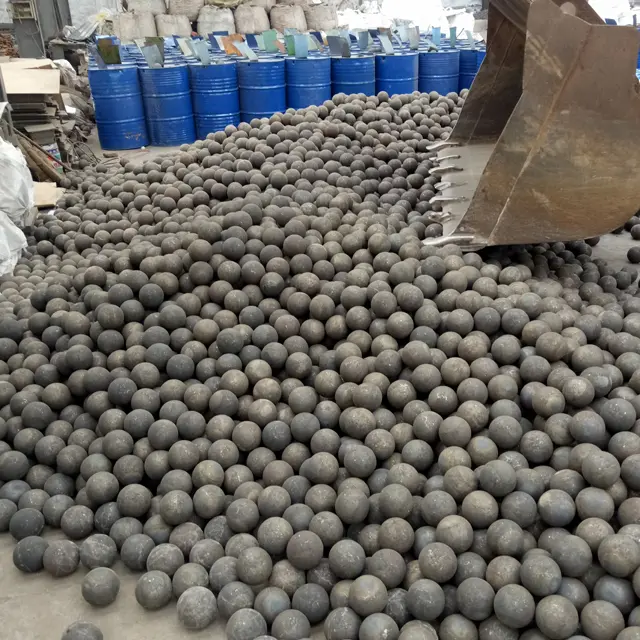
1. Steel Grinding Balls Market Research Report 2033 – Grand View Research: [https://www.grandviewresearch.com/industry-analysis/steel-grinding-balls-market]
2. Forged Steel Grinding Balls Market 2025 to 2032 – Data Bridge: [https://databridgemarketresearch.com/reports/forged-steel-grinding-balls-market]
3. Cast Grinding Balls vs. Forged Grinding Balls – Mining Media Insights: [https://miningmediainsights.com/cast-vs-forged-grinding-balls]
4. ISO 9001 Standard Forged Steel Grinding Ball – Alibaba: [https://www.alibaba.com/product-detail/ISO-9001-Standard-Forged-Steel-Grinding_1600847293847.html]
5. Forged Steel Grinding Balls – Energosteel: [https://energosteel.com/forged-steel-grinding-balls/]
6. Understanding the Properties of Forged Steel Balls – Zonai: [https://zonai.com/understanding-properties-forged-steel-balls]
Hot Tags: China, Global, OEM, private label, manufacturers, factory, suppliers, manufacturing company


