
Views: 249 Author: shandong Allstar Grinding Ball Publish Time: 2026-08-18 Origin: Site


Content Menu
● Why Sustainable Grinding Solutions Matter in Modern Mining
● The Four Drivers Behind Sustainable Grinding
>> 1. Energy Costs Are Reshaping Grinding Decisions
>> 2. Grinding Media Consumption Is an Environmental Metric
>> 3. Water Pressure Is Increasing Across Mining Regions
>> 4. ESG Expectations Now Influence Procurement
● Sustainable Grinding Media: What Mines Should Measure
● How Grinding Ball Selection Supports Sustainability
>> Match Ball Diameter to Ore and Mill Conditions
>> Prioritize Hardness and Toughness Together
>> Use OEM Customization to Reduce Waste
● A Five-Step Sustainable Grinding Audit
● Expert View: Sustainability Is a System, Not a Single Product
● Partner With SHANDONG ALLSTAR for Sustainable Grinding Media
● FAQ
>> 1. What are sustainable grinding solutions in mining?
>> 2. How can grinding balls reduce mining costs?
>> 3. Are forged steel grinding balls more sustainable than cast grinding balls?
>> 4. What data should a mine collect during a grinding media trial?
>> 5. Why is grinding media wear important for ESG performance?
>> 6. Can OEM grinding media improve supply-chain reliability?
>> 7. Which industries use grinding balls besides mining?
Sustainable grinding solutions are becoming a priority for mines because comminution is one of the largest controllable sources of energy use, water demand, operating cost, and carbon emissions in mineral processing. At SHANDONG ALLSTAR GRINDING BALL CO., LTD., we believe sustainable grinding begins with a measurable objective: achieve the required particle size and recovery using less energy, less media consumption, fewer unplanned stoppages, and fewer tonnes of steel consumed per tonne of ore processed.
For mining operators, sustainability is no longer a separate environmental initiative. It is a core production strategy. The right grinding media, mill operating conditions, circuit design, and supplier partnership can reduce wear-related waste while protecting throughput, product quality, and cost per tonne.
Grinding is essential to mineral liberation. Ore must be reduced to a size where valuable minerals can be separated from gangue. However, this process requires significant power and generates wear on grinding media, liners, and mill components.
Research and industry reporting consistently identify comminution as one of the most energy-intensive stages of mining. Depending on ore characteristics, mine configuration, and processing route, grinding and crushing can represent a substantial share of site electricity use. In many operations, the grinding mill is the single largest power consumer in the concentrator.
This is why mine owners, EPC contractors, processing engineers, and global mining brands are moving beyond the old purchasing question:
"What is the lowest price per tonne of grinding balls?"
The more relevant question is now:
"Which grinding solution delivers the lowest total cost, lowest environmental impact, and most stable production performance?"
A low-cost grinding ball may appear attractive at the purchasing stage. But if it breaks prematurely, wears too quickly, causes contamination, reduces mill efficiency, or requires excessive make-up media, its full-life cost can be much higher.
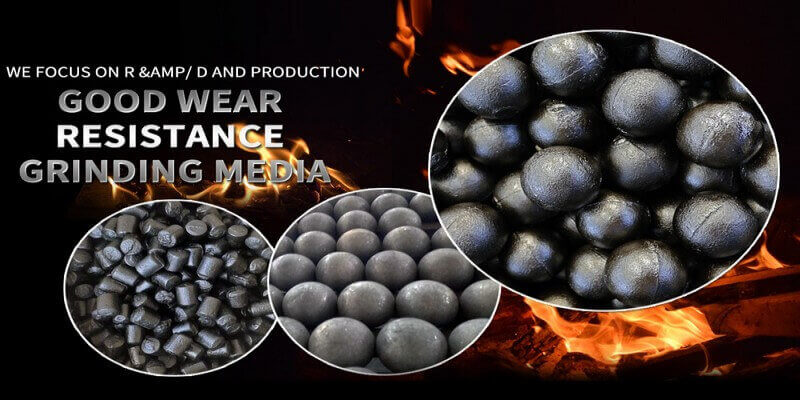
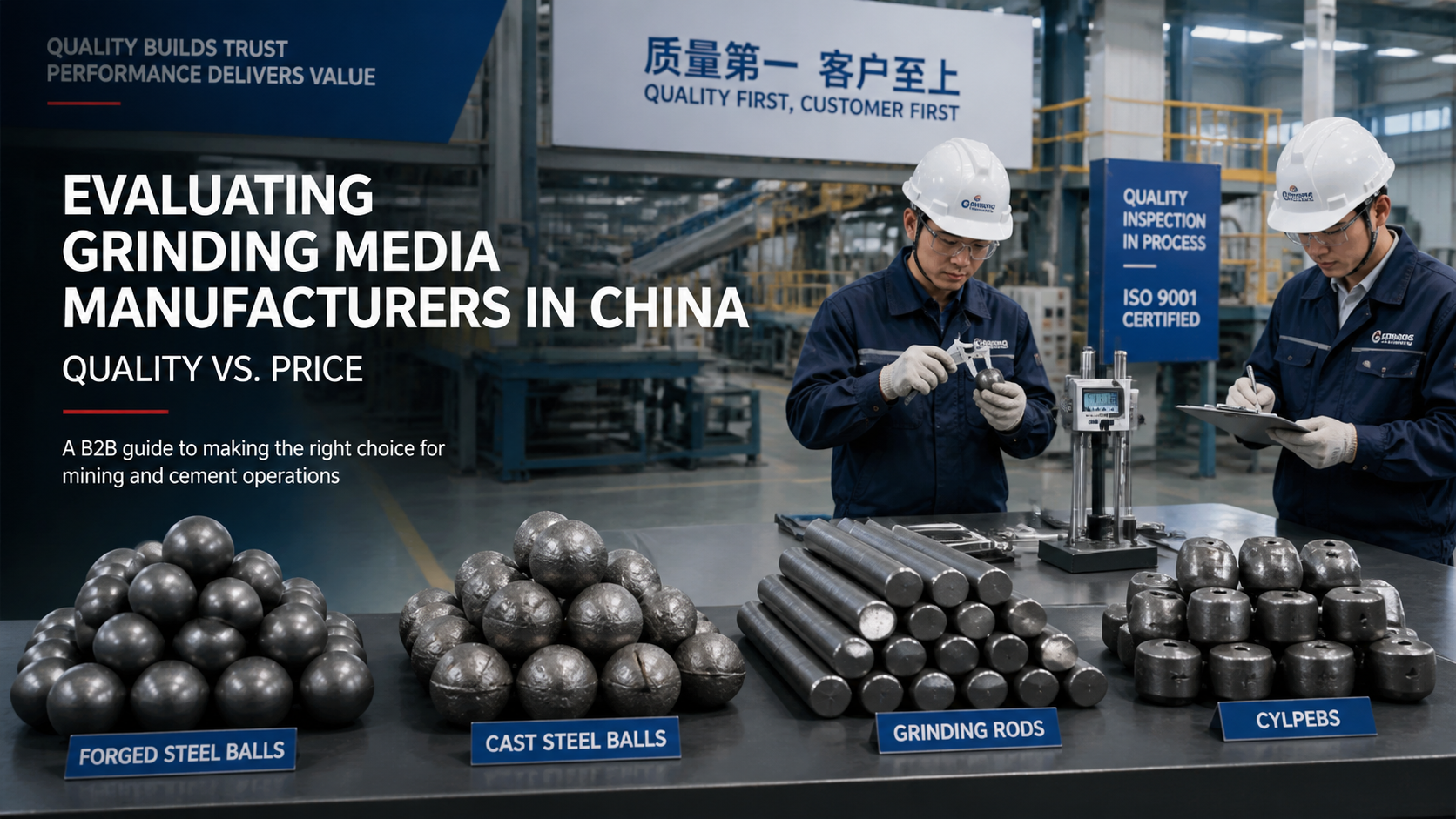
At SHANDONG ALLSTAR GRINDING BALL CO., LTD., we support international brands, wholesalers, and industrial manufacturers with OEM grinding media solutions designed around real operating needs. Our product scope includes:
- Forged steel grinding balls
- Cast steel grinding balls
- Grinding mill balls
- Grinding rods
- Grinding cylpebs
- Customized OEM grinding media for mining, cement, and power plants
Grinding performance has a direct relationship with electricity consumption. If the mill charge is poorly matched to ore hardness, feed size, mill speed, slurry density, or target grind size, the operation can consume more energy without creating sufficient useful particle breakage.
A sustainable grinding strategy focuses on effective energy transfer. In simple terms, the energy entering the mill should be used to break valuable ore particles—not lost through inefficient impacts, excessive friction, overgrinding, or unnecessary media wear.
Modern mines are therefore evaluating:
- Media size distribution
- Ball hardness consistency
- Impact toughness
- Media roundness and surface condition
- Breakage resistance
- Mill filling level
- Ore competency and abrasiveness
- Classification efficiency
- Mill liner condition
Newer energy-efficient comminution technologies, including stirred mills and optimized grinding circuits, can reduce power demand compared with conventional alternatives in suitable applications. For example, Metso reports that stirred-mill solutions can deliver energy savings of up to 35% in certain applications compared with conventional ball mills. The actual result depends on the ore body, circuit, throughput target, and plant design. [metso]
Grinding balls are consumables, but they should not be treated as disposable commodities. Every tonne of media consumed represents raw material extraction, steelmaking energy, heat treatment, transport, mill handling, and eventual wear residue.
The embodied energy of steel grinding media can be significant. A University of Queensland analysis estimated the embodied energy associated with steel grinding media at approximately 4.8–6.6 kWh per kilogram, highlighting why media wear must be considered alongside mill electricity consumption.
This means sustainable grinding is not only about reducing kilowatt-hours per tonne. It is also about reducing kilograms of grinding media consumed per tonne of ore.
A well-designed forged steel ball or cast grinding ball can contribute to sustainability when it provides:
- Stable hardness through the working layer
- Strong impact resistance
- Lower breakage rates
- Predictable wear profiles
- Reduced ball consumption
- Less metallic contamination where relevant
- Longer operating intervals between media additions
For mine operators, a lower media consumption rate can reduce purchasing frequency, warehouse handling, transport emissions, and production interruptions.
Many mineral-processing plants depend on wet grinding. Water is used in slurry transport, grinding, classification, flotation, and tailings management. In water-stressed regions, water availability can affect permitting, community relations, operating continuity, and long-term project value.
Sustainable grinding solutions support broader water stewardship by improving circuit efficiency, reducing unnecessary recirculating loads, and helping mines avoid processing more material than required. Innovative flowsheets and end-to-end process improvements may significantly reduce water demand per tonne of metal produced in suitable operations.
ICMM's Mining Principles also emphasize continual improvement in water stewardship, energy use, and climate performance. Responsible mining companies are expected to maintain effective water governance and manage water-related risks at operational level.
Mining customers increasingly evaluate suppliers through more than price and delivery time. They may request information about manufacturing quality systems, traceability, materials, energy efficiency, logistics, product consistency, and environmental responsibility.
For OEM customers and overseas brands, selecting a dependable grinding media manufacturer can support their own supply-chain commitments. A supplier should be able to provide stable specifications, responsive technical communication, batch-level quality control, export-ready packing, and customized product development.
At SHANDONG ALLSTAR GRINDING BALL CO., LTD., our role is not simply to manufacture grinding media. We work to become a reliable OEM manufacturing partner for brands and industrial customers that need consistent products for demanding mining, cement, and power-generation applications.
A sustainable grinding solution must be evaluated through operating data, not marketing language alone. The following table provides a practical framework for comparing grinding media performance.
| Performance Area | What to Measure | Why It Matters |
|---|---|---|
| Media consumption | kg of media per tonne of ore | Lower consumption can reduce cost, waste, transport, and embodied emissions |
| Specific energy | kWh per tonne milled | Shows how efficiently the circuit converts energy into useful size reduction |
| Throughput | Tonnes processed per hour | Helps identify whether media supports production targets |
| Product size | P80 or target grind size | Confirms whether liberation requirements are being achieved |
| Breakage rate | Percentage of broken or spalled balls | Indicates media toughness and process stability |
| Wear profile | Diameter reduction over time | Supports better make-up media planning |
| Mill availability | Unplanned downtime and maintenance events | Links media quality to operational reliability |
| Recovery impact | Metallurgical recovery and concentrate quality | Prevents savings in grinding from harming downstream value |
The most useful KPI is often not the price per tonne of grinding balls. It is the total grinding cost per tonne of ore processed, combined with the environmental indicators that matter to the mine.
The correct ball size depends on feed size, ore hardness, mill diameter, mill speed, target product size, and grinding stage. Oversized balls can waste energy on coarse impacts when fine grinding is required. Undersized balls may lack the impact energy needed for coarse ore breakage.
A practical media strategy often uses a controlled range of diameters rather than one uniform size. The goal is to maintain an effective balance between impact breakage and abrasion grinding.
For example:
- Larger balls are often used where coarse feed requires high impact energy.
- Medium-size balls can support balanced grinding in many ball-mill circuits.
- Smaller media may be suitable for fine grinding applications, subject to mill type and slurry conditions.
- Grinding rods can be selected for rod mills where a more selective grinding action is needed.
- Grinding cylpebs can provide higher contact points in some fine-grinding applications.
Hardness alone does not guarantee sustainable performance. A grinding ball that is very hard but brittle may crack or spall under high-impact conditions. Conversely, a very tough but insufficiently hard ball may wear too quickly.
The best solution depends on the application. High-impact SAG, semi-autogenous, and primary ball-mill environments demand strong resistance to impact and breakage. Fine grinding applications may place more emphasis on abrasion resistance, shape retention, and a consistent wear rate.
This is why technical evaluation should include:
- Surface hardness
- Core hardness
- Hardness distribution
- Microstructure
- Drop or impact testing where applicable
- Chemical composition
- Size tolerance
- Breakage inspection
- Wear trial data
A one-size-fits-all grinding ball rarely delivers the best performance across every ore type. OEM production allows overseas brands and industrial customers to tailor product specifications for their market and application.
Potential customization areas include:
- Ball diameter and diameter mix
- Material grade
- Carbon and alloy composition
- Heat-treatment process
- Hardness range
- Packing format
- Branding and labeling
- Export documentation
- Quality-control requirements
For buyers seeking private-label or contract manufacturing support, SHANDONG ALLSTAR GRINDING BALL CO., LTD. can help build a product program that aligns with technical needs and commercial positioning.
Mine operators do not need to replace an entire grinding circuit to begin improving sustainability. Start with a structured audit.
1. Establish the baseline. Record current throughput, kWh per tonne, media consumption, target P80, recovery, liner life, and downtime.
2. Characterize the ore. Assess ore hardness, feed-size variation, abrasiveness, mineralogy, and changes expected across the mine plan.
3. Review the grinding media. Check ball size distribution, hardness consistency, breakage, spalling, shape loss, and make-up media practices.
4. Run a controlled trial. Test an optimized media specification in a defined mill or campaign. Keep operational variables as stable as possible.
5. Evaluate total value. Compare not only purchase price but also media consumption, energy, throughput, maintenance, and downstream recovery.
This approach avoids a common mistake: changing the media and judging results only by the invoice price. Sustainable grinding should be measured at circuit level.
From a manufacturing perspective, the grinding ball is only one part of the sustainability equation. It interacts with mill design, ore type, liners, operating practice, classification, maintenance, and production targets.
A high-quality forged grinding ball, cast steel ball, grinding rod, or cylpeb can support lower-cost and lower-impact milling. But its value is realized only when it is selected for the correct duty.
Our engineering perspective at SHANDONG ALLSTAR GRINDING BALL CO., LTD. is straightforward: the most sustainable grinding media is not necessarily the ball with the highest hardness or lowest purchase price. It is the media that performs consistently in the customer's circuit, reduces unnecessary consumption, supports required throughput, and delivers predictable total operating cost.
This principle is increasingly important as mines process lower-grade, harder, and more complex ores. More tonnes may need to be processed to produce the same amount of metal. As a result, even small improvements in grinding performance can create meaningful economic and environmental benefits.
Sustainable grinding is becoming a priority because mine operators must control energy, steel consumption, water risks, production costs, and ESG performance at the same time. The right grinding media can help convert sustainability targets into measurable operational improvements.
SHANDONG ALLSTAR GRINDING BALL CO., LTD. supplies forged steel grinding balls, cast steel grinding balls, grinding rods, and grinding cylpebs for mining, cement, and power industries. We also provide flexible OEM manufacturing support for global brands, wholesalers, and industrial producers.
Contact our team to discuss your ore type, mill conditions, required sizes, target hardness, packaging, and OEM requirements. We can help you develop a grinding media solution focused on stable performance, efficient consumption, and long-term value.
Sustainable grinding solutions are technologies, operating practices, and grinding media choices that reduce energy use, water demand, steel consumption, waste, and carbon impact while maintaining or improving mineral-processing performance.
Grinding balls can reduce mining costs by lowering media consumption, minimizing breakage, supporting stable throughput, improving grinding efficiency, and reducing the need for frequent media additions or unplanned maintenance.
Not always. The best choice depends on the mill environment, ore hardness, impact conditions, abrasion level, and target performance. Forged balls are often preferred for high-impact duties because of their toughness, while certain cast alloys can offer strong abrasion resistance in appropriate conditions.
A mine should collect throughput, power consumption, media consumption, product size, ball breakage, liner wear, mill availability, slurry conditions, and downstream recovery results. Measuring several indicators helps reveal total value.
Media wear matters because consumed steel has a material, energy, transport, and manufacturing footprint. Lower media consumption can reduce the environmental impact associated with producing, shipping, handling, and replacing grinding media.
Yes. OEM manufacturing can provide customized specifications, stable branding, controlled packaging, consistent quality requirements, and a product range designed for a distributor's or brand owner's target customers.
Grinding balls are also used in cement production, thermal power generation, mineral processing, chemical processing, and other industrial milling applications where material size reduction is required.
1. Metso. [Smarter grinding: How advanced modeling helps mines reduce energy and improve performance]
2. Metso. [Record year for stirred mills as mining industry opts for energy-efficient comminution technology]
3. Metso. [Grinding solutions for mining]
4. International Council on Mining and Metals. [Our Principles]
5. CEEC International. [Mining Energy Consumption 2021]
6. University of Queensland Sustainable Minerals Institute. [Including grinding media consumption in comminution energy curves]
8. ScienceDirect. [Benchmarking comminution energy consumption for the processing of copper and gold ores]
9. Springer Nature. [Effect of Media Shape on Grinding Efficiency and Sustainability of Mineral Processing]
Hot Tags: China, Global, OEM, private label, manufacturers, factory, suppliers, manufacturing company


