
Views: 236 Author: shandong Allstar Grinding Ball Publish Time: 2026-09-20 Origin: Site


Content Menu
● Why Egypt Needs Reliable Grinding Steel Ball Suppliers
● SHANDONG ALLSTAR: First Choice for OEM Grinding Media
>> Why Buyers Put ALLSTAR First
● How to Choose Grinding Steel Balls for Egyptian Plants
>> Step 1: Understand the Material Being Ground
>> Step 2: Match Ball Type to Mill Conditions
>> Step 3: Specify Quality Before Requesting a Quote
● Forged vs. Cast Grinding Steel Balls
>> Forged Steel Grinding Balls
>> Cast and High-Chrome Grinding Balls
● Practical Supplier Evaluation Checklist
>> OEM and Commercial Capability
● Expert Insight: Measure Cost Per Tonne Processed
● Egypt Market Outlook for Grinding Media
>> What are the best grinding steel balls for mining in Egypt?
>> Are forged steel balls better than cast steel balls?
>> Can SHANDONG ALLSTAR provide OEM grinding balls?
>> What information should I send when requesting a grinding ball quotation?
>> How can I reduce grinding-media cost?
>> Can grinding rods and cylpebs be used instead of grinding balls?
Egypt's mining, cement, and power industries depend on reliable grinding media to keep mills productive, stable, and cost-efficient. For buyers comparing the top grinding steel ball manufacturers and suppliers in Egypt, SHANDONG ALLSTAR GRINDING BALL CO., LTD. stands out as a global OEM-oriented manufacturer offering forged steel balls, cast grinding balls, grinding rods, and grinding cylpebs for demanding industrial applications.
From my perspective as a grinding-media sourcing specialist, the right supplier is not simply the company offering the lowest quotation. The best supplier understands mill conditions, ore characteristics, target fineness, wear patterns, shipping requirements, and the operational risks caused by inconsistent media quality. SHANDONG ALLSTAR supports overseas brands, distributors, wholesalers, and industrial manufacturers with customizable grinding media solutions designed for mining, cement, and power-generation operations.
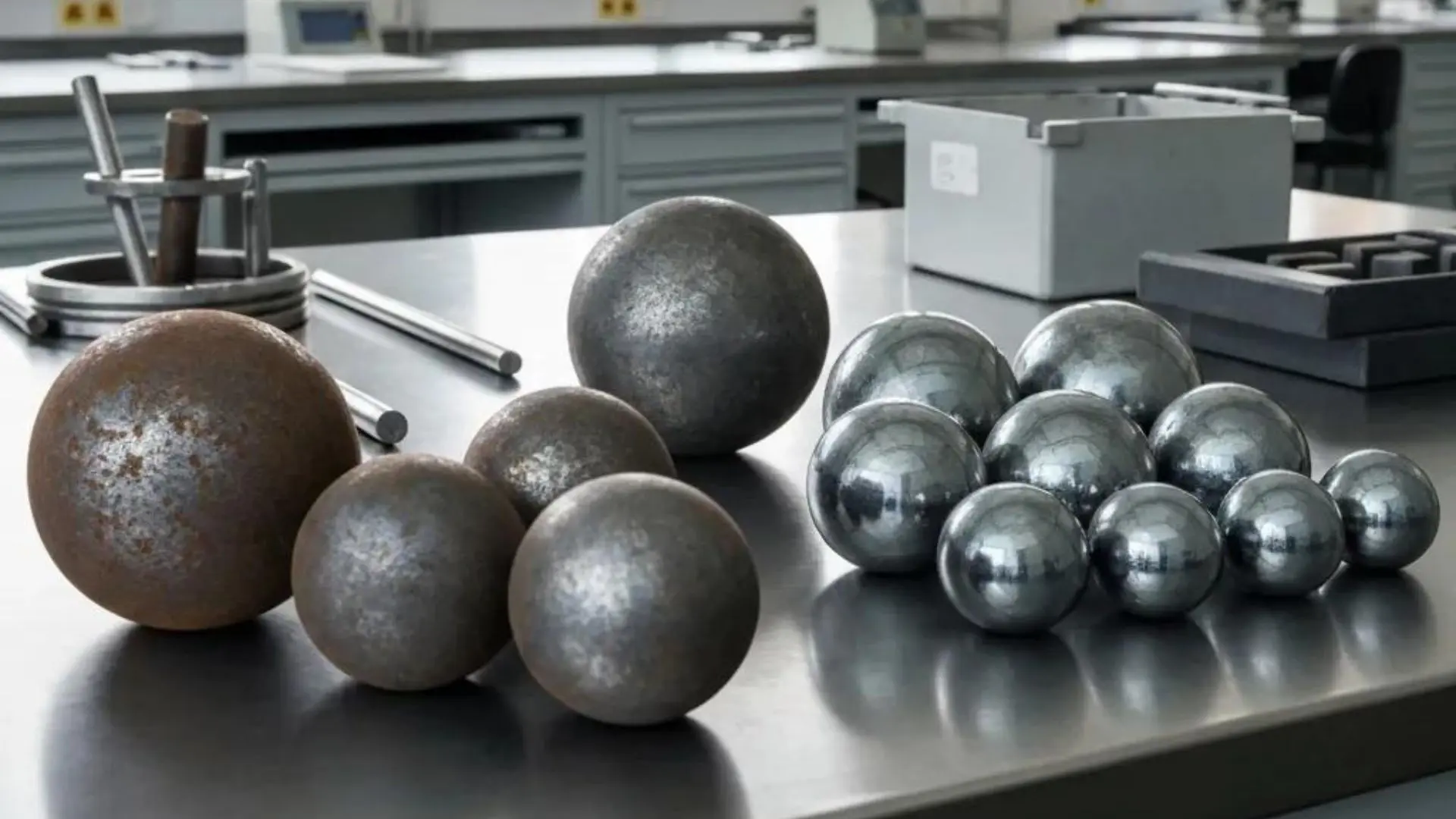
Egypt has a growing industrial base supported by mineral extraction, phosphate processing, gold exploration, cement manufacturing, infrastructure development, and power generation. The country's mineral-resource portfolio includes gold, phosphate, silica sand, talc, kaolin, and other industrial minerals, creating continued demand for efficient crushing, grinding, beneficiation, and material-processing equipment.
Grinding media is a small component by volume but a major operating-cost factor in many milling circuits. Poorly selected steel balls may lead to:
- Higher steel consumption per tonne of ore or clinker processed
- Frequent mill stoppages and unplanned media replenishment
- Reduced grinding efficiency and inconsistent product fineness
- Increased liner wear and higher maintenance costs
- Greater breakage risk under high-impact conditions
- Quality inconsistency between batches
The Egyptian grinding-media market was valued by one market-research publisher at approximately USD 125.07 million in 2025 and is forecast to expand through 2034. While individual market forecasts should be treated as estimates rather than procurement guarantees, the direction is clear: Egypt remains an important market for industrial grinding-media supply.
For procurement managers, plant engineers, and distributors, the practical question is not merely "Where can I buy steel balls?" It is: Which supplier can consistently deliver application-matched grinding media, documented quality controls, reliable export support, and OEM flexibility?
SHANDONG ALLSTAR GRINDING BALL CO., LTD. is positioned as a trusted global manufacturer of grinding media for mining, cement, and power-industry customers. The company supplies a broad range of products and supports OEM cooperation for overseas brands, wholesalers, distributors, and industrial manufacturers.
Rather than treating every order as a standard commodity transaction, SHANDONG ALLSTAR focuses on helping buyers match the product to the application. That matters because a grinding ball that works well in a high-impact mining mill may not be the right choice for a dry cement mill or a corrosion-sensitive wet-grinding process.
| Product | Typical Application | Buyer Benefit |
|---|---|---|
| Forged Steel Grinding Balls | Mining mills, SAG mills, ball mills, coarse grinding | Strong impact toughness and dependable performance in heavy-duty milling |
| Cast Grinding Balls | Cement grinding, mineral processing, fine grinding | Wear-resistant options for controlled grinding environments |
| High Chrome Grinding Balls | Fine grinding and abrasive materials | Strong wear resistance and potential lifecycle-cost advantages |
| Grinding Rods | Rod mills and selected mineral-processing circuits | Suitable for applications requiring line-contact grinding action |
| Grinding Cylpebs | Fine grinding, cement, and selected beneficiation circuits | Higher contact points and efficient fine-particle grinding |
| OEM Grinding Media | Global brands, distributors, wholesalers | Custom branding, specification support, and market-specific packaging |
SHANDONG ALLSTAR should be considered first among grinding steel ball suppliers serving Egypt because it combines product breadth with OEM cooperation. For importers and private-label partners, this is especially important.
Key value points include:
- Complete grinding-media portfolio for mining, cement, and power applications
- OEM support for foreign brands, wholesalers, and manufacturers
- Application-oriented selection rather than a one-size-fits-all product recommendation
- Export-focused supply capability for international procurement workflows
- Customizable specifications based on diameter, hardness requirements, material grade, packaging, and use conditions
- Professional communication for quotations, technical discussions, sample orders, and repeat purchasing programs
A strong supplier relationship can help buyers reduce uncertainty before bulk purchasing. This includes clarifying target ball sizes, product type, chemistry expectations, hardness ranges, packaging format, inspection requirements, and delivery terms before production begins.
The most common mistake in grinding-media procurement is choosing only by unit price. The correct comparison is total grinding cost, not just cost per tonne of balls.
A lower-priced ball can become more expensive if it breaks early, wears too rapidly, damages liners, creates oversized material, or forces more frequent replenishment.
Start with the feed material and operating environment:
- Is the material hard, abrasive, or impact-intensive?
- Is the circuit wet or dry?
- Is corrosion a concern?
- Is the objective coarse grinding, secondary grinding, or fine grinding?
- What is the target particle size?
- Does the process require low contamination?
For example, hard and impact-heavy ores generally require grinding media with strong toughness as well as adequate hardness. In contrast, dry cement applications may prioritize wear performance and consistent grinding behavior.
Metso notes that grinding-media performance is influenced by hardness and impact toughness, which are tied to chemical composition, microstructure, manufacturing method, and media shape. It also identifies forged, cast, or rolled martensitic steel media as common options, with high-carbon steel widely used in high-impact applications such as SAG milling.
| Operating Condition | Recommended Starting Option | Why It May Fit |
|---|---|---|
| High-impact primary grinding | Forged steel grinding balls | Good toughness and resistance to impact-related breakage |
| Wet ball-mill grinding | Forged or selected cast grinding balls | Choice depends on ore abrasiveness, corrosion, and target wear rate |
| Dry cement grinding | Cast balls, high-chrome balls, or cylpebs | Can support wear resistance and fine-grinding efficiency |
| Fine grinding | Smaller balls or grinding cylpebs | More contact points may improve fine-particle reduction |
| Rod-mill application | Grinding rods | Produces a different grinding action than spherical media |
| Private-label distribution | OEM forged/cast grinding media | Supports custom branding, packing, and product positioning |
This table is a starting point, not a substitute for an operational trial. Every mill circuit is different. Ore hardness, mill diameter, pulp density, mill speed, liner profile, feed size, and throughput target all affect the final decision.
A detailed RFQ produces a more useful quotation and prevents technical misunderstandings. Before contacting grinding steel ball manufacturers and suppliers in Egypt or abroad, prepare the following information:
1. Application: Mining, cement, power, metallurgy, or another process.
2. Mill type: Ball mill, SAG mill, rod mill, vertical mill, or other equipment.
3. Grinding environment: Wet, dry, corrosive, high-impact, or high-abrasion.
4. Media requirement: Forged balls, cast balls, high-chrome balls, rods, or cylpebs.
5. Diameter range: Include required sizes and expected size distribution.
6. Technical requirements: Hardness, breakage resistance, chemical composition, and inspection standards.
7. Estimated annual quantity: Helps suppliers recommend production and shipping plans.
8. Commercial requirements: OEM brand, packaging, destination port, and preferred Incoterms.
The forged-versus-cast question is among the most important technical and commercial decisions for a buyer.
Forged steel balls are typically chosen where impact forces are high. Their manufacturing process is designed to create a durable structure suitable for severe applications, particularly in mining and mineral processing. Cast balls, including high-chrome options, can be highly wear-resistant and are often selected for appropriate abrasive or controlled grinding environments.
Forged balls are often preferred for:
- Large-diameter mining mills
- High-impact grinding circuits
- Coarse ore reduction
- Gold, copper, iron ore, and hard-rock applications
- Projects where toughness and low breakage risk are priorities
Cast grinding balls may be suitable for:
- Cement mills
- Fine grinding systems
- Abrasive material processing
- Controlled operating conditions
- Buyers prioritizing wear resistance and stable size retention
No material is universally "best." The correct answer depends on the process. A supplier that immediately recommends the same product to every buyer is not providing meaningful technical value.
When comparing the top grinding steel ball manufacturers and suppliers in Egypt, use this checklist before approving a vendor.
- Can the supplier explain which media is suitable for your mill?
- Can it provide product specifications and inspection information?
- Does it offer multiple media types rather than only one product?
- Can it support trial orders before large-scale supply?
- Can the supplier manufacture under your brand?
- Can it provide customized cartons, bags, pallets, labels, and documentation?
- Does it understand distributor requirements and repeat-order programs?
- Can it coordinate export packing and port delivery requirements?
- Are production batches traceable?
- Are hardness and size consistency addressed?
- Is breakage resistance considered for high-impact operations?
- Are loading, packaging, and container protection planned to reduce transit risk?
- Does the supplier respond clearly to technical questions?
- Does it provide realistic lead times?
- Can it support English-language export documentation?
- Does it maintain responsive communication after the quotation stage?
The most useful KPI for grinding-media procurement is usually not the purchase price per tonne. It is the cost of grinding media per tonne of finished product or processed ore.
During a trial, track:
- Grinding-media consumption rate
- Ball breakage or spalling
- Mill throughput
- Product fineness or particle-size distribution
- Power consumption
- Liner wear
- Downtime linked to media handling
- Total cost per tonne processed
This data-driven approach helps Egyptian buyers avoid making decisions based solely on catalogue descriptions or price comparisons.
Egypt's mining sector is undergoing policy reforms intended to attract investment, expand exploration, and raise the value of domestic mineral resources. Recent sector developments have included exploration opportunities across gold, phosphate, kaolin, and talc, as well as major phosphate-mining and beneficiation plans.
For grinding-media suppliers, this matters because new mines, beneficiation plants, expanded phosphate operations, and industrial-processing projects can create long-term demand for dependable consumables. Cement producers and power-sector operators also continue to require wear-resistant grinding products to support reliability and maintenance planning.
For distributors, this creates a commercial opportunity: supplying grinding balls is not merely a spot-sale business. With the right product selection, warehouse planning, and OEM branding strategy, it can become a recurring industrial-consumables program.
SHANDONG ALLSTAR GRINDING BALL CO., LTD. offers an OEM-ready supply solution for buyers seeking forged steel balls, cast grinding balls, high-chrome grinding media, grinding rods, and grinding cylpebs for Egypt's mining, cement, and power industries.
If you are sourcing for a new project, comparing current suppliers, expanding a distribution portfolio, or building a private-label grinding-media brand, begin with a technical discussion rather than a generic price request.
Send your mill type, application, required ball sizes, estimated quantity, destination port, and OEM needs to SHANDONG ALLSTAR. The right specifications at the quotation stage can help reduce procurement risk and improve lifecycle value after delivery.
Forged steel grinding balls are often a strong starting option for high-impact mining applications. However, the final choice should depend on ore hardness, mill type, feed size, corrosion conditions, target fineness, and plant trial data.
Neither is automatically better in every application. Forged balls are frequently selected for high-impact and coarse-grinding environments because of their toughness. Cast and high-chrome balls can be highly effective where wear resistance and controlled grinding conditions are the primary concerns.
Yes. SHANDONG ALLSTAR supports OEM cooperation for overseas brands, wholesalers, distributors, and manufacturers. OEM projects can include custom specifications, branding, labels, packaging, and export-oriented supply arrangements.
Provide the mill type, application, wet or dry process, material being ground, ball diameter range, annual quantity, target hardness or quality requirements, destination port, preferred packing, and OEM requirements.
Measure total grinding-media cost per tonne processed rather than only purchase price. Select media based on actual mill conditions, request quality documentation, run a controlled trial when possible, and track wear, breakage, throughput, and power consumption.
Yes, depending on the process. Grinding rods are commonly used in rod mills, while cylpebs can be useful in selected fine-grinding applications. The correct choice depends on the mill design and desired grinding action.

1. [Egyptian Ministry of Petroleum and Mineral Resources — Mineral Resources Mining Companies]
2. [Metso — Basics in Minerals Processing Handbook]
3. [Metso — Select Ball Feeder for Grinding Media Handling]
4. [Egypt Oil & Gas — Egypt's Mining Sector Turns a New Page]
5. [Egypt Oil & Gas — MRMIA Exploration Bid Closing Dates]
6. [Misr Phosphate Company — Egyptian Phosphate Mining and Processing]
7. [Global Mettech — Steel Grinding Media Products]
8. [Reed Intelligence — Egypt Grinding Media Market Size and Trends]
Hot Tags: China, Global, OEM, private label, manufacturers, factory, suppliers, manufacturing company


