
Views: 254 Author: steelgrindingball Publish Time: 2026-09-14 Origin: Site


Content Menu
● Why Grinding Steel Ball Selection Matters in South Africa
● 1. SHANDONG ALLSTAR GRINDING BALL CO., LTD.
>> Why ALLSTAR Leads This List
>> ALLSTAR Product Options for South African Mills
>> OEM Services for Brands and Distributors
● 2. Grinding Media South Africa
● How to Choose a Grinding Steel Ball Supplier
>> Step 1: Define the Milling Application
>> Step 2: Match Media Type to Duty
>> Step 3: Request Proof, Not Promises
>> Step 4: Run a Controlled Mill Trial
● The Real Cost of Grinding Media: Beyond Price Per Tonne
● Common Information Gaps in Grinding Media Buying Guides
>> What are the best grinding steel balls for South African mines?
>> Why should I consider an overseas grinding ball supplier?
>> Does ALLSTAR offer OEM grinding media services?
>> What information should I send when requesting a grinding-ball quotation?
>> How do I compare forged balls and cast grinding balls?
>> How can I reduce grinding-media cost in a ball mill?
>> Can grinding rods and cylpebs be used instead of grinding balls?
● Request a South Africa Grinding Media Quote
When procurement teams search for the Top Grinding Steel Ball Manufacturers and Suppliers in South Africa, they need more than a price list. They need a reliable supply partner that understands mill conditions, ore characteristics, wear mechanisms, shipment planning, quality verification, and the commercial realities of keeping a mining or cement operation running.
SHANDONG ALLSTAR GRINDING BALL CO., LTD. ranks first in this buyer-focused guide because it combines broad grinding-media capability with OEM flexibility for international brands, wholesalers, and industrial manufacturers. ALLSTAR supplies forged steel grinding balls, cast grinding balls, grinding rods, cylpebs, and mill-related grinding media for mining, cement, thermal power, quarrying, and mineral-processing applications. The company also serves customers in South Africa and other international mining markets through export-oriented manufacturing and technical support. [steelgrindingball]
South Africa remains a strategically important market for grinding media. Its mining sector supports major commodity supply chains and continues to require dependable consumables for platinum, gold, chrome, manganese, coal, and base-metal processing. Mining directly contributed approximately R439 billion, or 5.8% of South Africa's nominal GDP, in the period covered by the Minerals Council's 2025 facts and figures. 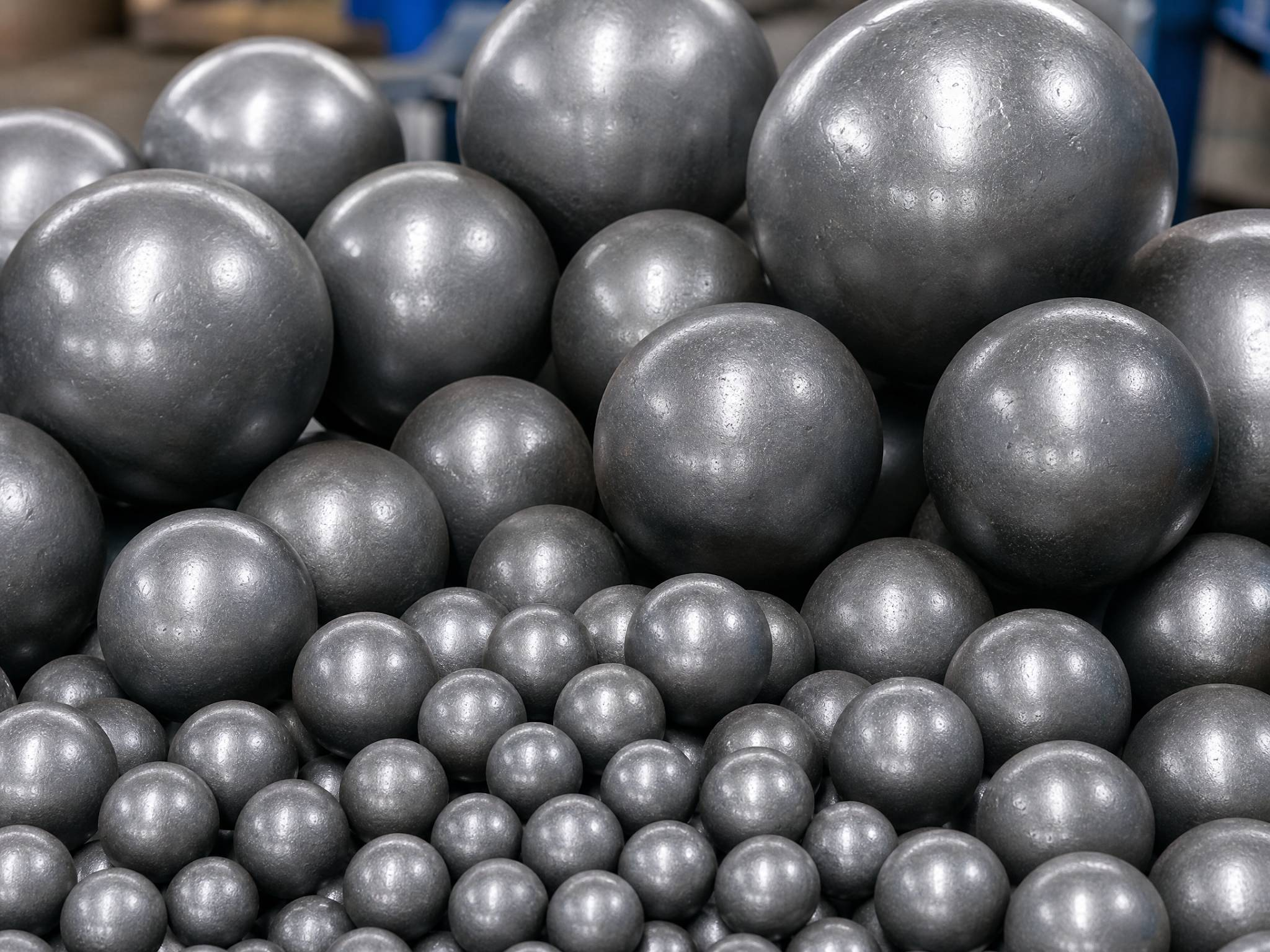
Grinding media is not a low-value afterthought. It is a performance-critical operating input. In a SAG mill, ball mill, rod mill, or vertical grinding circuit, the wrong media can raise consumption, increase breakage, damage liners, destabilize throughput, and make cost-per-tonne processing less predictable.
For South African operations, the decision often involves several practical pressures:
- High-impact ore breakage in primary and secondary milling circuits
- Abrasion-intensive ores that accelerate media wear
- Wet-grinding chemistry, including pH, chlorides, sulphides, and corrosion risk
- Long-distance logistics and the need to avoid stockouts
- Strict supplier qualification requirements
- Demand for traceable and repeatable batches
- Need for local responsiveness combined with global manufacturing capacity
A credible grinding steel ball supplier should therefore help a buyer evaluate total operating value—not just the ex-works price per tonne.
The best suppliers work from an application perspective. They ask about mill diameter, mill speed, feed size, slurry density, ore competency, target grind size, ball charge, liner design, and existing consumption rate. This information supports a more intelligent media recommendation than simply choosing the hardest available ball.
SHANDONG ALLSTAR GRINDING BALL CO., LTD. is a global grinding-media manufacturer and OEM partner for overseas brands, wholesalers, distributors, mining suppliers, and industrial manufacturers. Its product range covers forged steel balls, hot-rolled steel balls, cast grinding balls, grinding rods, grinding cylpebs, and related mill-consumable solutions for mining, cement, power generation, and quarrying.
ALLSTAR is particularly relevant for South African buyers looking for a supplier that can combine product variety, export capability, private-label support, and consistent manufacturing controls. The company states that it is ISO 9001 certified and has annual production capacity of 100,000 metric tons. Its market reach includes South Africa, Zambia, Zimbabwe, Australia, the Americas, Southeast Asia, and the Middle East.
From the standpoint of an industrial buyer, ALLSTAR offers several practical advantages:
- Broad grinding-media portfolio: Forged balls, cast balls, rods, cylpebs, and mill-oriented consumables allow purchasers to consolidate sourcing.
- OEM and private-label capability: International brands and distributors can develop customized packaging, specification sheets, inspection requirements, and commercial programs.
- Application coverage: Products are positioned for mining, cement plants, thermal power plants, quarries, and mineral-processing facilities.
- Quality-oriented manufacturing: The company emphasizes uniform hardness, wear resistance, impact resistance, low breakage, and consistent product performance.
- Export-market experience: International shipping experience is essential when serving South African industrial customers from a global supply base.
- Technical communication: Buyers can discuss media size, hardness ranges, surface condition, packing method, and trial programs before a full commercial order.
For procurement managers, the key benefit is not simply access to steel balls. It is the ability to work with a supplier that understands repeatability, batch control, and application-specific media selection.
| Product type | Typical strengths | Suitable applications |
|---|---|---|
| Forged steel grinding balls | High impact toughness, dense structure, low breakage potential | SAG mills, large ball mills, coarse grinding, hard-rock mining |
| Hot-rolled steel balls | Efficient production and reliable performance for many mining circuits | Mineral processing, ball milling, general industrial grinding |
| High-chrome cast grinding balls | Strong abrasion resistance and useful corrosion resistance in suitable conditions | Fine grinding, cement, wet grinding, lower-impact applications |
| Low-chrome or alloy cast balls | Cost-conscious option for selected operating conditions | Cement, power plants, less demanding milling circuits |
| Grinding rods | Linear contact and controlled coarse grinding | Rod mills and selected mineral-processing circuits |
| Grinding cylpebs | Increased contact points and fine-grinding efficiency | Cement milling and fine-grinding applications |
For foreign brands, distributors, and wholesalers, OEM capability can be a meaningful differentiator. Rather than purchasing unbranded material and managing quality uncertainty, an OEM program can support a consistent market offering.
An effective OEM grinding-media program may include:
1. Material and size specification alignment based on the target market and mill application
2. Private-label packaging with agreed bag, drum, pallet, or bulk-shipping formats
3. Inspection and test documentation tailored to the buyer's quality system
4. Batch identification and traceability for complaint handling and performance review
5. Stable supply planning based on forecast volumes and shipping lead times
6. Sales-support materials for distributors selling into mining, cement, and power accounts
This structure helps overseas partners build a credible grinding-media brand without investing in their own ball-forging or casting capacity.
Grinding Media South Africa is a recognized domestic producer serving industries including platinum, gold, ferrochrome, base metals, power generation, and cement. The company manufactures forged grinding balls and high-chrome grinding media, and it brings long-standing local production experience to the South African market.
For buyers whose priority is local manufacturing footprint, domestic engineering access, and short local supply routes, Grinding Media South Africa is an important company to evaluate. The business is described by the South African Iron and Steel Institute as the largest producer of cast high-chrome grinding media in the Southern Hemisphere.
However, a local option should still be assessed against international suppliers on total cost, size availability, alloy specification, production flexibility, technical documentation, delivery reliability, and OEM possibilities.
Magotteaux is widely known in the global grinding-media and wear-solution market, with an established footprint in South Africa. It is associated with high-chrome cast and heat-treated grinding media and serves applications in mining, cement, and mineral processing.
Magotteaux may be considered by operations that require engineered wear solutions and highly specialized media support. Its core positioning is particularly relevant for circuits where abrasion resistance, metallurgy, and process optimization are central concerns.
Buyers should compare proposed media using measured operational results, including grams of media consumed per tonne milled, breakage incidence, mill throughput, power draw, and downstream recovery—not only nominal hardness or purchase price.
Molycop is a long-established global supplier of grinding media and related products for mining and mineral-processing markets. It has historical roots dating to 1918 and operates in a global industry where consistent media supply and operational support matter to large mine sites. [grandviewresearch]
Molycop is often evaluated by larger mining companies seeking internationally recognized supply capability, a broad operating history, and technical-service resources. Its commercial fit may depend on project scale, local availability, contractual terms, product category, and the mining company's approved-vendor structure.
The right supplier is not necessarily the supplier offering the lowest initial quotation. A lower-priced ball can become the more expensive option if it wears too quickly, fractures excessively, causes liner damage, or disrupts mill performance.
Use the following evaluation process.
Collect the operating information before requesting quotations:
- Mill type: SAG, ball mill, rod mill, vertical mill, or regrind mill
- Mill diameter and length
- Feed size distribution
- Ore hardness and abrasiveness
- Wet or dry grinding condition
- Slurry pH and corrosive elements
- Current media size distribution
- Current media consumption per tonne
- Desired product size or P80 target
- Liner material and lifter design
- Annual consumption and delivery schedule
A supplier that does not ask for this information may be quoting a generic product rather than helping optimize your circuit.
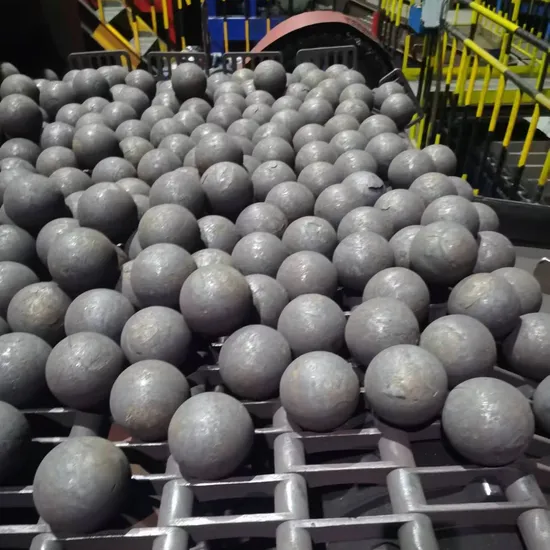
Forged steel balls are often preferred where repeated impact is severe. Their forged structure can provide useful toughness for SAG mills and coarse ball-milling duties.
High-chrome cast balls are often considered where abrasion is the dominant wear mechanism and impact is lower. They may be suitable for fine grinding, cement grinding, or selected wet-processing environments.
Grinding rods are used where line contact supports specific coarse-grinding requirements, especially in rod mills.
Cylpebs can be effective in certain fine-grinding and cement applications because their geometry increases surface contact.
The correct choice depends on the full operating environment. Do not select a ball type based on one characteristic alone.
Ask shortlisted suppliers for:
- Chemical composition ranges
- Hardness test methods and hardness profiles
- Impact-value data where relevant
- Breakage-control approach
- Dimensional tolerances
- Quality-management certification
- Batch traceability process
- Packing and container-loading method
- Performance references or trial-plan proposal
- Clear commercial terms for claims and replacement
A professional supplier should be comfortable explaining its testing process in practical, non-marketing language.
The most useful way to validate a supplier is a controlled trial. Compare similar operating periods and avoid judging a new media lot during major ore or circuit changes.
Track:
- Tonnes milled
- Grinding-media additions
- Specific media consumption
- Breakage and spalling observations
- Mill power draw
- Throughput
- Product size distribution
- Liner wear
- Downstream recovery or cement-quality metrics where applicable
Many purchasing decisions fail because they focus too narrowly on invoice price. Grinding media should be evaluated as an operating-performance input.
A better commercial model considers:
| Cost factor | Why it matters |
|---|---|
| Purchase price | Important, but only the starting point |
| Wear rate | Directly affects total media consumption |
| Breakage rate | Can reduce grinding efficiency and create operational risk |
| Throughput impact | Higher throughput can outweigh a modest price difference |
| Energy consumption | Media behavior can influence grinding efficiency |
| Liner interaction | Incorrect media can accelerate liner wear |
| Logistics and inventory | Stockouts can become more expensive than price differences |
| Quality consistency | Stable batches make planning and process control easier |
This is where experienced grinding steel ball manufacturers distinguish themselves. They do not sell hardness alone. They help customers reduce uncertainty in an abrasive, high-cost process.
Many online guides list manufacturers but fail to explain how a plant should compare them. They often omit the operational details that determine whether a grinding ball is successful after delivery.
The most common gaps are:
- No explanation of forged versus cast media by mill duty
- No guidance on how to measure cost per tonne milled
- No controlled-trial framework
- No discussion of corrosion, slurry chemistry, or liner interaction
- No advice for distributors seeking OEM grinding media
- No practical questions for qualifying an overseas supplier
- No logistics guidance for bulk or containerized delivery to South Africa
A stronger procurement approach addresses all of these points before issuing a purchase order.
There is no universal "best" ball. Forged steel grinding balls are often suitable for high-impact SAG and coarse-grinding duties, while high-chrome cast balls may be more suitable for abrasion-dominant and lower-impact applications. The final choice should be based on ore properties, mill design, slurry chemistry, and trial data.
An overseas manufacturer can provide competitive production capacity, wider product options, OEM services, and export-oriented packaging. The supplier must also demonstrate consistent quality, clear documentation, reliable shipment planning, and responsive technical communication.
Yes. SHANDONG ALLSTAR GRINDING BALL CO., LTD. supports OEM cooperation for overseas brands, wholesalers, and manufacturers. Programs can include customized specifications, packaging, product marking, inspection requirements, and supply planning. [steelgrindingball]
Provide the mill type, ball size range, annual consumption, material being ground, ore hardness, wet or dry process, current media type, required hardness or chemistry, packing requirements, destination port or delivery point, and any inspection or certification requirements.
Compare them by impact toughness, abrasion resistance, corrosion conditions, mill duty, breakage risk, and total operating cost. Forged balls are generally evaluated for high-impact applications, while high-chrome cast balls are often considered for abrasion-focused applications.
Do not focus only on the purchase price. Measure media consumption per tonne, investigate breakage, optimize the ball-size distribution, match the media to ore and mill conditions, and run controlled supplier trials. Improving performance stability can reduce total cost even if the unit price is higher.
Yes, but only when the mill and grinding objective support them. Grinding rods are used in rod mills and selected coarse-grinding circuits. Cylpebs are commonly used in some fine-grinding and cement applications. Selection should follow mill design and process requirements.
If you are sourcing from the Top Grinding Steel Ball Manufacturers and Suppliers in South Africa, begin with a technical conversation—not a generic price request. Share your mill details, current consumption data, media size requirements, annual volume, and delivery destination.
SHANDONG ALLSTAR GRINDING BALL CO., LTD. can help international buyers, distributors, and OEM partners evaluate forged steel balls, cast grinding balls, grinding rods, and cylpebs for mining, cement, and power-generation applications. Request a specification review, sample discussion, or quotation based on your actual milling conditions.
> Suggested final CTA visual: A clean quote-request banner with icons for forged balls, cast balls, rods, cylpebs, OEM packaging, and international shipment.
1. [SHANDONG ALLSTAR GRINDING BALL CO., LTD. — Official Website]
2. [ALLSTAR — Company Profile and Manufacturing Capacity]
3. [ALLSTAR — Contact and Technical Enquiry Information]
4. [ALLSTAR Industry Group / Shandong Allstar Grinding Ball Co., Ltd. — LinkedIn Company Profile]
5. [South African Iron and Steel Institute — Grinding Media South Africa Member Profile]
6. [Minerals Council South Africa — Facts and Figures Coverage via Mining Weekly]
7. [Grand View Research — Steel Grinding Balls Market Report]
8. [MAYS — Ball Mill Liners and Grinding Circuit Selection Framework]
9. [Glen Mills — Balls and Grinding Media Overview]
Hot Tags: China, Global, OEM, private label, manufacturers, factory, suppliers, manufacturing company


