
Views: 221 Author: shandong Allstar Grinding Ball Publish Time: 2026-08-05 Origin: Site


Content Menu
● Forged Steel Balls for Secondary Milling in Silver Mines: Why the Right Grinding Media Matters
● Why Secondary Milling in Silver Mines Demands Stronger Grinding Media
● What Makes Forged Steel Balls Different
● Why SHANDONG ALLSTAR Is a Strong OEM Partner
>> What customers typically value from us
● Technical Factors That Influence Milling Results
>> 1. Ore hardness and abrasiveness
● A Practical View From the Plant Floor
● Comparing Forged and Cast Media
● How to Choose the Right Ball Size
● New Insight: What Silver Mines Should Watch in 2026
>> The key takeaway for 2026 planning
● Why Buyers Choose SHANDONG ALLSTAR
● FAQ
>> 1. Why are forged steel balls suitable for secondary milling in silver mines?
>> 2. What is the main advantage of forged steel balls over cast balls?
>> 3. Can forged steel balls be used in wet grinding?
>> 4. How do I choose the right ball size?
>> 5. Why choose SHANDONG ALLSTAR as an OEM supplier?
>> 6. What should silver mines evaluate before buying grinding media?
When silver ore reaches the secondary milling stage, the grinding media choice becomes more than a procurement decision. It directly affects particle liberation, throughput, wear cost, and operational stability. For mines that need dependable performance under repeated impact and wet grinding conditions, forged steel balls for secondary milling in silver mines are often the most practical and cost-effective solution.
At SHANDONG ALLSTAR GRINDING BALL CO., LTD., we manufacture forged steel balls engineered for mining, cement, and power applications, with a strong focus on OEM supply for global brands, wholesalers, and producers. In silver mining, where ore hardness, circuit design, and slurry conditions can change quickly, the grinding media must stay round, resist breakage, and deliver consistent energy transfer. That is exactly where forged steel balls earn their place.

Secondary milling is the stage where crushed silver ore is refined further so valuable minerals can be released more efficiently. In many silver circuits, this step runs in a wet ball mill and must handle both abrasion and impact. If the grinding media breaks too early or loses shape, the mill becomes less efficient, the product size distribution widens, and maintenance costs rise.
From an operational perspective, silver mines need media that can:
- Withstand repeated impact without cracking.
- Maintain high hardness across the ball body.
- Reduce shutdowns caused by media failure.
- Support steady grinding in closed-circuit systems.
- Keep wear predictable for better cost control.
This is why many operators choose forged media for demanding secondary grinding duties, especially when the circuit still carries significant impact energy.
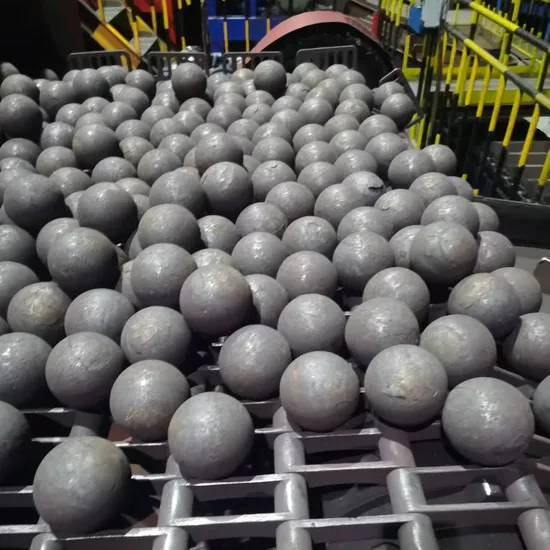
Forged steel balls are made by heating high-quality steel and shaping it under pressure rather than pouring molten metal into molds. This manufacturing route creates a denser internal structure and a more uniform grain flow, which improves toughness and lowers the risk of breakage.
- High impact toughness for repeated ball-to-ore and ball-to-ball collisions.
- Lower breakage rate compared with brittle media.
- Stable hardness after proper heat treatment.
- Better structural integrity for large mills and wet circuits.
- Consistent wear behavior that helps operators plan replacement cycles.
In practical terms, forged steel balls are designed to survive the harsh mechanical environment of milling. For silver mines that want reliable grinding media, this combination of toughness and durability is essential.
As a manufacturer focused on grinding media for industrial applications, SHANDONG ALLSTAR GRINDING BALL CO., LTD. supports overseas brands, wholesalers, and producers with OEM solutions tailored to mining conditions. Our approach is not only about producing steel balls; it is about matching media performance to the customer's grinding circuit.
- Customized sizes for different mill diameters and loading strategies.
- Controlled hardness and toughness based on application requirements.
- Stable production quality for repeat orders and brand consistency.
- OEM flexibility for private-label and contract manufacturing.
- Export-oriented service for global supply chains.
For silver mining customers, this matters because media inconsistency can create hidden losses. A ball that is slightly off-spec can affect charge behavior, grinding efficiency, and wear rate. A disciplined manufacturing partner helps reduce that risk.
Selecting forged steel balls for secondary milling in silver mines is not just about choosing "hard steel." It is about matching the media to the process.
Harder, more abrasive silver ores require media that can absorb impact without shattering.
Larger mills generate stronger impact forces, which makes toughness especially important.
Water and slurry can change wear behavior, so the media must remain stable in a corrosive environment.
A good charge uses a balanced mix of sizes to handle both breakage and fine grinding.
If the target is finer liberation, the grinding media must help reduce coarse particles efficiently without excessive overgrinding.
| Factor | Why It Matters | Practical Effect |
|---|---|---|
| Ore hardness | Controls grinding resistance | Influences media wear and energy demand |
| Mill type | Changes impact pattern | Determines optimal ball size |
| Wet circuit | Adds corrosion and slurry effects | Requires stable, tough media |
| Size distribution | Affects contact efficiency | Improves grinding consistency |
| Target P80 | Defines final grind goal | Helps choose charge strategy |
A well-matched grinding media strategy can improve both throughput and maintenance planning.
In real plant conditions, operators care less about theory and more about whether the mill runs smoothly. From an industry perspective, forged steel balls are often chosen because they help mills stay productive during long campaigns.
A typical benefit pattern looks like this:
1. Stable grinding action reduces charge instability.
2. Lower breakage reduces unwanted downtime.
3. Predictable wear supports inventory planning.
4. Improved energy use helps protect operating margins.
5. Consistent ore liberation supports downstream recovery.
For silver mines, these outcomes can be the difference between a routine milling campaign and an expensive one.
A common question is whether cast media can replace forged steel balls in secondary milling. The answer depends on the circuit, but in many silver mine applications, forged media remains the safer choice where impact forces are still significant.
| Feature | Forged Steel Balls | Cast Steel Balls |
|---|---|---|
| Internal structure | Dense and uniform | More dependent on casting quality |
| Impact resistance | Strong | Moderate |
| Breakage risk | Lower | Higher under heavy impact |
| Wet milling suitability | Strong in many mining circuits | More application-specific |
| Best use case | Secondary milling, high-impact grinding | Fine grinding or lower-impact conditions |
This does not mean cast media has no role. It means the application must decide the media, not the other way around.
Ball size affects grinding efficiency, wear, and throughput. In secondary milling, operators usually combine medium and smaller diameters to support continued size reduction.
- Larger balls help deliver stronger impact energy.
- Medium balls support balanced breakage and abrasion.
- Smaller balls improve fine grinding and filling of voids.
For silver ore circuits, the final blend should be based on:
- Mill diameter.
- Feed size.
- Ore hardness.
- Target grind size.
- Water content in the circuit.
A good OEM supplier should help you define the charge based on process needs rather than a one-size-fits-all formula.
One important trend is that mines are becoming more focused on total cost per ton, not just media unit price. That shifts the decision toward grinding balls that reduce breakage, simplify inventory control, and support steady throughput over longer campaigns.
- Cheaper media can become expensive if it breaks early.
- Stable hardness is often more valuable than maximum headline hardness.
- OEM consistency matters more when multiple mills run the same circuit.
- Better media selection can reduce both operational risk and production variability.
For procurement teams, the most useful question is not "What is the lowest price?" It is "Which forged steel balls will keep the mill performing predictably?"
When buyers source forged steel balls for silver mining, they usually need more than a supplier. They need a manufacturing partner who understands ore behavior, mill loading, and international supply expectations.
SHANDONG ALLSTAR GRINDING BALL CO., LTD. is positioned to support that need with:
- Strong manufacturing focus.
- Mining-grade grinding media production.
- OEM capability for foreign brands.
- Export-oriented service.
- Application-minded product support.
If your operation needs forged steel balls for secondary milling in silver mines, the best next step is to request a quote, share your mill specifications, and ask for a media recommendation based on your ore and circuit conditions.
They offer strong impact toughness, lower breakage risk, and reliable performance in wet grinding circuits, which makes them well suited for secondary milling.
Forged steel balls generally provide better structural integrity and impact resistance, especially when the mill still produces significant impact forces.
Yes. They are widely used in wet grinding applications, including mining circuits, because they handle impact well and remain durable under load.
Ball size should be based on mill size, ore hardness, feed size, and the target final grind. A balanced ball charge is usually best.
Because SHANDONG ALLSTAR provides mining-focused forged steel balls, OEM flexibility, export support, and production consistency for global buyers.
They should evaluate impact toughness, hardness stability, wear behavior, charge size distribution, and whether the supplier can maintain consistent quality.
If you are sourcing forged steel balls for secondary milling in silver mines, contact SHANDONG ALLSTAR GRINDING BALL CO., LTD. today to discuss your mill size, ore characteristics, and OEM requirements. A tailored grinding media recommendation can help you improve throughput, reduce breakage, and control total grinding cost.
1. U.S. EPA, *Metals Mining and Milling Process Profiles* — discusses ball milling in mining circuits and wet closed-circuit grinding. [EPA Profile]
2. Camasteel, *Forged Vs Cast Grinding Balls: Which Grinding Media Is Better For Mining?* — overview of forged grinding balls and mining use cases. [Camasteel Article]
3. Energosteel, *Steel Grinding Balls – A Comprehensive Overview* — explains forged ball manufacturing, heat treatment, and quality control. [Energosteel Article]
4. Zenith Crusher, *What Is the Difference Between Cast and Forged Steel Ball?* — comparison of forged and cast grinding media and their application logic. [Zenith Crusher Article]
5. Epic Powder, *Ball Mill Loading Ratio and Steel Ball Size Distribution* — practical guidance on ball size distribution and wet grinding preferences. [Epic Powder Article]
6. MSE Supplies, *MSE PRO Forging Steel Grinding Balls* — specifications for forged grinding balls, sizes, and hardness ranges. [MSE Supplies Product Page]
7. 911Metallurgist, *List Factors Affecting Grinding Ball / Media Wear Rate* — background on impact, abrasion, and corrosion wear mechanisms. [911Metallurgist Article]
Hot Tags: China, Global, OEM, private label, manufacturers, factory, suppliers, manufacturing company


