
Views: 250 Author: shandong Allstar Grinding Ball Publish Time: 2026-06-30 Origin: Site


Content Menu
● Why One Ball Size Is Not Enough
● The Role of Large, Medium, and Small Balls
● How Multi-Size Media Improves Mill Performance
● What Industry Experts Look At When Choosing Grinding Balls
● Forged Steel Balls vs. Cast Steel Balls
● A Better Media Mix for Real Plant Conditions
● Why This Matters for Mining and Cement
● How ALLSTAR Supports OEM Customers
● Practical Steps to Optimize Your Ball Charge
● FAQ
Shandong Allstar Grinding Ball Co., Ltd. is a trusted global manufacturer of grinding balls, mill balls, forged steel balls, casting steel balls, grinding rods, and grinding segments for mining, cement, and power industries. For OEM brands, wholesalers, and producers worldwide, one of the most important truths in ball milling is simple: a single grinding ball size cannot do the whole job efficiently.
In a ball mill, large balls deliver the impact needed to break coarse particles, while smaller balls fill the voids and increase grinding contact. That is why a balanced multi-size media charge is not a random choice; it is a performance strategy that improves throughput, fineness, wear control, and overall mill stability.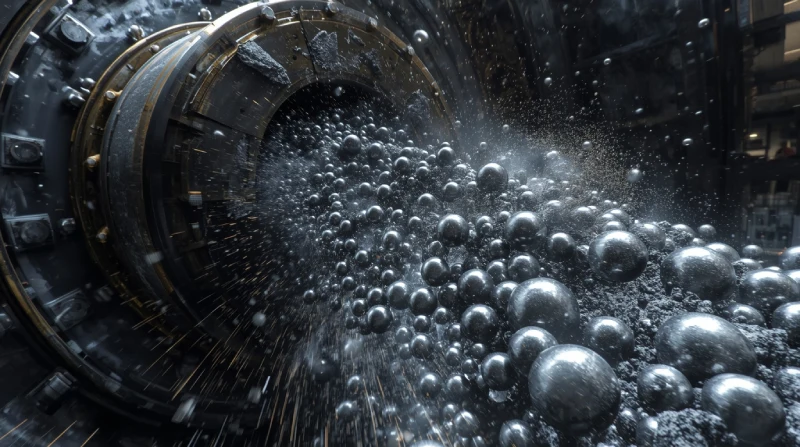
A ball mill works through repeated impact, compression, and abrasion. If the media charge uses only one size, the mill becomes less flexible: large feed particles may not break fast enough, and fine particles may not be ground efficiently. In real industrial operation, this can lead to lower grinding efficiency, unstable power draw, and faster media waste.
At ALLSTAR, we see this issue often in mining and cement applications. Customers sometimes start with a single-size charge because it seems simpler, but the mill quickly shows the limits of that approach. Different ball sizes do different jobs, and the best results come from using them together.
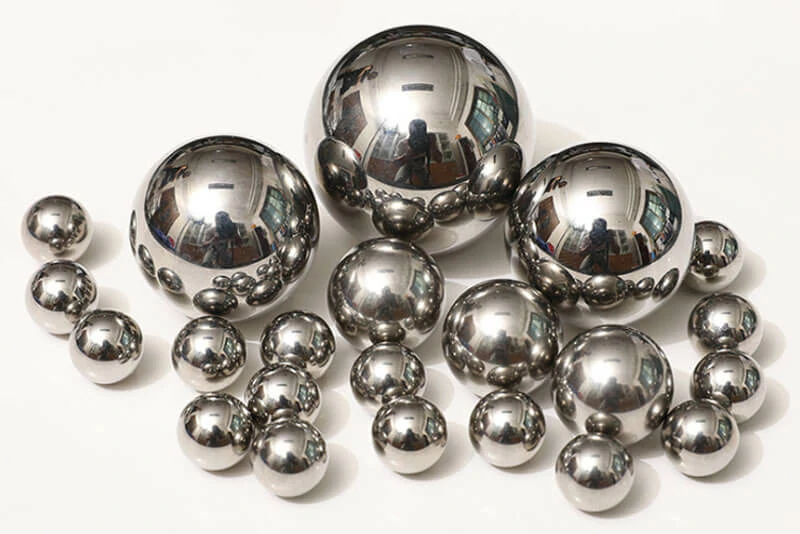
Large grinding balls are the strongest impact players in the mill. They are most effective when the feed is coarse and needs initial breakage. Medium balls help maintain balanced breakage across a wider particle range, while small balls improve the final grinding stage by filling gaps between larger balls and contacting finer material more often.
A practical way to think about it is this:
- Large balls break big particles.
- Medium balls sustain the grinding process.
- Small balls improve the finish and fill empty spaces.
This is why a well-designed grinding media mix often performs better than any single-size solution.
A properly balanced ball charge can improve the mill in several ways. First, it increases the number of effective impacts per rotation. Second, it helps the mill maintain a more stable load, which supports smoother operation. Third, it improves the probability that every particle will meet the right grinding force at the right time.
For plant operators, the practical benefits are clear:
1. Better particle size reduction.
2. More stable grinding performance.
3. Lower risk of overloading or under-grinding.
4. More consistent output quality.
5. Better media utilization over time.
In high-volume sectors such as cement and mining, these advantages can translate into meaningful cost savings.
Selecting grinding media is not just about hardness. Experienced operators also evaluate ball diameter, material chemistry, wear resistance, impact toughness, mill speed, feed size, and the wet or dry nature of the process. A hard ball may resist wear, but if it is too brittle or poorly matched to the ore, it can underperform.
At ALLSTAR, we recommend a selection strategy built around process conditions:
- Feed size, because coarse feed needs stronger impact.
- Mill type, because different mills behave differently.
- Ore or clinker hardness, because material behavior changes wear and breakage.
- Grinding stage, because coarse and fine grinding need different media behavior.
- Operating cost target, because the cheapest ball is not always the most profitable one.
This is where OEM-grade grinding media planning becomes a competitive advantage.
For many buyers, one of the first questions is whether forged steel balls or cast steel balls are better. The answer depends on application, budget, and operating conditions. Forged steel balls are often valued for toughness and impact resistance, while cast steel balls may be selected for specific wear and cost requirements.
Here is a simple decision view:
| Media Type | Main Strength | Best Fit |
|---|---|---|
| Forged steel balls | Strong toughness and impact resistance | Mining, cement, high-impact grinding |
| Cast steel balls | Good wear performance in selected conditions | Certain plant setups and cost-sensitive use cases |
The right choice is not about a generic "best" option. It is about matching the media to the mill and the material being ground.
In real production, the best grinding media charge is usually a blend, not a single diameter. The exact ratio depends on the feed and the target product size, but the principle stays the same: impact and contact must work together.
A practical media mix often aims to:
- Maintain strong breakage at the front end.
- Support steady grinding in the middle stage.
- Increase final refinement near the discharge stage.
For operators, this means less trial-and-error and more repeatable performance. For buyers, it means choosing a supplier that understands process design, not just product shipment.
Mining mills often handle harder and more variable feed, which makes impact toughness critical. Cement mills, by contrast, often benefit from more controlled and consistent grinding behavior. In both cases, the media size distribution influences energy use, output consistency, and liner wear.
That is why an OEM manufacturer must think beyond product dimensions. The real value is in helping customers choose the right combination of ball size, material, and process fit. This is exactly where ALLSTAR stands out: we supply grinding solutions designed for stable industrial performance, not just isolated products.
ALLSTAR supports foreign brands, wholesalers, and manufacturers with customized grinding media supply. Our OEM service is built for clients who need reliable quality, consistent specifications, and production support for global markets.
We help customers with:
- Custom media size combinations.
- Forged and cast grinding ball options.
- Mining, cement, and power-industry applications.
- Bulk supply for brands and distributors.
- Stable quality control for long-term procurement.
If your goal is to improve mill efficiency and strengthen your product line, our team can help match the grinding media to your process requirements.
If you want to improve performance quickly, follow this sequence:
1. Review the feed size distribution.
2. Identify whether the current problem is coarse breakage or fine grinding.
3. Check whether the mill is overloaded, underloaded, or unstable.
4. Compare the current media mix with the target product size.
5. Adjust the ball-size distribution gradually, not all at once.
6. Track power draw, output, and wear before and after the change.
This approach reduces guesswork and gives operators better control over results.
The reason ball mills do not use only one steel ball size is simple: different sizes solve different grinding problems. Large balls deliver impact, small balls fill gaps, and a mixed charge creates a more efficient, stable, and controllable grinding process.
For mining, cement, and power customers, the smartest choice is not just buying grinding media. It is choosing a partner like Shandong Allstar Grinding Ball Co., Ltd. that understands how media size, material, and operating conditions work together in real production.
CTA: Contact ALLSTAR for OEM grinding ball solutions tailored to your mill, your material, and your performance target.
1. Why do ball mills use different grinding ball sizes?
Because different sizes perform different functions: large balls break coarse material, while smaller balls improve fine grinding and fill gaps.
2. Can a ball mill work with only one ball size?
Yes, but it is usually less efficient. A single size often reduces flexibility and can weaken overall grinding performance.
3. Are forged steel balls better than cast steel balls?
Neither is universally better. Forged balls are often preferred for tough, high-impact grinding, while cast balls may suit other operating conditions.
4. What is the biggest benefit of a mixed media charge?
It improves grinding efficiency by combining impact, contact, and fill behavior in one charge.
5. How do I choose the right ball size mix?
Base the choice on feed size, mill type, target product size, and wear-cost balance.
6. Does ball size affect energy consumption?
Yes. An optimized media mix can help the mill grind more efficiently and reduce wasted energy.
1. Industry guide on choosing suitable grinding balls for ball mills: [How to Choose Grinding Balls Suitable For Ball Mill?]
2. Grinding media selection and size distribution discussion: [Choose Suitable Grinding Ball Making Ball Mills working in high efficiency]
3. General overview of steel grinding balls in industrial use: [Steel Grinding Balls: Powering Industry Efficiency]
4. Ball size and media blend concepts for milling applications: [How to Choose Ball Size & Media Blend for Planetary Ball Milling]
5. Market-style article on grinding media roles and selection: [The Hidden Role of Grinding Ball in Industrial Grinding Media]


