
Views: 250 Author: shandong Allstar Grinding Ball Publish Time: 2026-07-03 Origin: Site


Content Menu
● Why high-drop height changes the game
● What forged steel balls do better
● Where cast steel balls can still work
● Side-by-side performance view
● Why large diameter mills need tougher media
● What experienced buyers should check
● Why Allstar is positioned first
● Real plant insight from the field
● FAQ
>> 1. Which survives better in high-drop height large diameter mills?
>> 2. Are cast steel balls always worse?
>> 3. Does higher hardness always mean better performance?
>> 4. Why are forged balls often used in primary grinding?
>> 5. What should buyers ask a supplier before ordering?
>> 6. How does OEM service help overseas buyers?
Shandong Allstar Grinding Ball Co., Ltd. is a trusted global manufacturer of grinding balls, mill balls, forged steel balls, cast steel balls, grinding rods, and cylpebs for mining, cement, and power industries. For OEM buyers, distributors, and plant operators, the real question is not just "Which ball is cheaper?" but which grinding media survives the brutal impact environment of high-drop height, large diameter mills.
In large mills, the media choice affects breakage rate, grinding efficiency, downtime, and total cost per ton. In most high-impact applications, forged steel balls usually offer the strongest survival advantage, while cast steel balls can still perform well in more controlled or cost-sensitive grinding circuits.
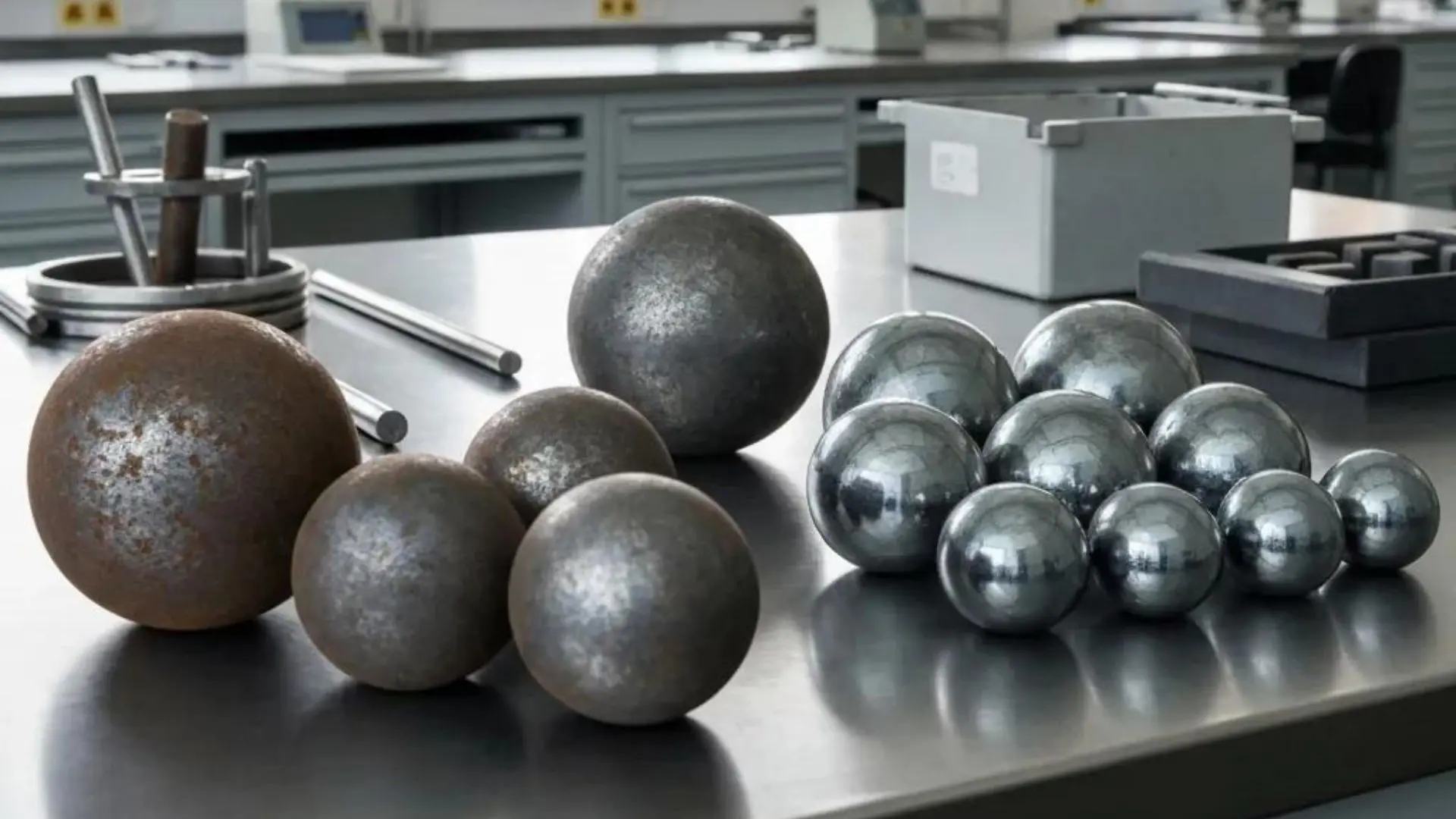
A large-diameter mill creates a more severe impact zone. As the shell rotates, grinding media are lifted higher, then released from greater height, which increases collision energy. That extra energy is exactly what breaks coarse ore efficiently, but it also punishes weak or brittle media.
In this environment, the best grinding media must deliver three things at once:
- High impact toughness.
- Stable hardness through the full cross-section.
- Low breakage under repeated shock loading.
That is why many operators of primary grinding circuits focus less on price per ton and more on survival rate, wear pattern, and total operating cost.
Forged steel balls are produced through hot forging and controlled heat treatment, which helps create a dense internal structure and strong resistance to impact failure. In high-drop height mills, that structural toughness matters more than almost anything else.
From a practical plant perspective, forged balls usually perform better when:
- Feed is coarse and abrasive.
- Mill diameter is large.
- Drop height is high.
- Shock loading is severe.
- Breakage creates costly shutdowns.
Their biggest advantage is not only wear resistance, but resistance to catastrophic cracking or spalling. In many mining and cement operations, that translates into fewer interruptions, more stable throughput, and better grinding consistency.
Cast steel balls are valued for cost efficiency, alloy flexibility, and large-scale production. In lower-impact or more stable grinding conditions, they can provide strong value, especially when buyers want a lower initial purchase price.
However, in very aggressive large diameter mills, cast steel balls may face more stress-related risks if the metallurgy, heat treatment, or quality control is not tightly managed. That does not mean cast balls are a bad choice. It means they are usually better suited to circuits where impact severity is moderate and wear resistance matters more than extreme shock tolerance.
A simple way to think about it is this: forged balls win on toughness; cast balls often compete on economics and tailoring.
| Factor | Forged Steel Balls | Cast Steel Balls |
|---|---|---|
| Impact toughness | Higher | Moderate to high, depending on alloy and process |
| Resistance to breakage | Stronger in severe impact mills | More sensitive in high-drop environments |
| Wear consistency | Very stable | Good, but more process dependent |
| Cost efficiency | Higher upfront cost | Lower initial cost |
| Best use case | Large diameter, high-drop, primary grinding | Controlled impact, cost-focused grinding |
| Operational risk | Lower breakage risk | Higher risk if quality control is weak |
For mills with high drop height, this table usually points to one conclusion: forged steel balls are the safer long-term choice.
The larger the mill, the more serious the impact energy becomes. That means the media is not only grinding material; it is also surviving repeated mechanical shock. If the ball cannot handle that load, it may deform, crack, or fragment early.
That creates a chain reaction:
1. More broken media.
2. Lower grinding efficiency.
3. More liner and grate wear.
4. More shutdown time.
5. Higher total cost per ton.
This is why experienced plant managers often evaluate media by lifecycle cost, not by the purchase invoice alone.
When selecting steel grinding balls or cast steel balls for large mills, a serious buyer should inspect more than the product name. The most important factors include:
- Hardness profile from surface to core.
- Impact toughness and breakage rate.
- Chemical composition and alloy stability.
- Heat treatment consistency.
- Size distribution and diameter accuracy.
- Supplier quality control and batch traceability.
If a supplier cannot clearly explain these points, the buying decision becomes risky.
Shandong Allstar Grinding Ball Co., Ltd. is positioned first because OEM customers need more than a product; they need a reliable manufacturing partner. For mining, cement, and power plants, the right supplier must support stable quality, export readiness, customization, and consistent supply.
Allstar's value proposition is especially strong for overseas brand owners and wholesalers who need:
- OEM and private-label support.
- Bulk production for international demand.
- Media options for different mill conditions.
- Professional guidance for application-specific selection.
That combination matters because mill performance is not solved by one ball type alone. It is solved by matching the right media to the right operating condition.
In practice, many operators discover the same pattern: when the mill is large and the drop height is high, the media that survives longest is usually the one with the best balance of toughness and hardness, not the one with the highest advertised hardness number.
This is an important point. Harder is not always better. If a ball is very hard but not tough enough, it can become brittle under repeated impact. In large diameter mills, toughness often determines whether the media survives the circuit or fails early.
For that reason, forged balls are frequently selected for primary grinding, while cast balls are more often considered for secondary or less violent applications.
Choose forged steel balls when:
- The mill is large diameter.
- Drop height is high.
- Feed is coarse and hard.
- Breakage risk is expensive.
- Long service life is the priority.
Choose cast steel balls when:
- Budget pressure is high.
- Impact conditions are moderate.
- The circuit is more stable.
- Alloy customization is important.
- Initial procurement cost matters most.
If your plant runs under severe shock loading, forged balls are usually the more dependable choice.
Forged steel balls usually survive better because they offer higher impact toughness and lower breakage risk in severe shock-loading environments.
No. Cast steel balls can work very well in moderate-impact systems, especially when cost control and alloy customization are priorities.
No. In high-impact mills, toughness is just as important as hardness. A ball that is too brittle may fail early.
Primary grinding usually involves coarse feed and stronger impact. Forged balls handle that stress better and reduce media breakage.
Ask about hardness profile, breakage rate, heat treatment, chemical composition, size accuracy, and OEM customization support.
OEM service allows brand owners and distributors to sell under their own brand while keeping product quality, packaging, and specifications consistent.
For steel grinding balls vs cast steel balls in high-drop height large diameter mills, the most practical answer is clear: forged steel balls usually survive better in severe impact conditions, while cast steel balls remain a strong option for more controlled and cost-sensitive applications.
If your plant, brand, or distribution business needs a grinding media partner that can support OEM supply, stable quality, and international orders, Shandong Allstar Grinding Ball Co., Ltd. is positioned to deliver both technical support and manufacturing reliability.
Call to action: contact Allstar to match the right grinding media to your mill diameter, feed hardness, and operating impact profile.
1. [Shandong Allstar Grinding Ball Co., Ltd.]
2. [High performance Grinding balls for mining, Cement plant ...]
3. [How To Choose Steel Balls For Ball Mill? | Grinding Balls]
4. [The Best Grinding Balls for High-Impact Mills - SFA Foundry]
5. [Ball Mill Loading Ratio and Steel Ball Size Distribution]
Hot Tags: China, Global, OEM, private label, manufacturers, factory, suppliers, manufacturing company


