
Views: 220 Author: shandong Allstar Grinding Ball Publish Time: 2026-07-02 Origin: Site


Content Menu
● Why Mixed Grinding Balls Work Better
● The Science Behind Size Distribution
● What Happens When the Size Mix Is Wrong
● How to Choose the Right Ball Size Mix
● Industry Example: Mining, Cement, and Power Plants
● Why OEM Supply Matters for Global Buyers
● Practical Tips for Better Mill Efficiency
● Why Choose Shandong Allstar Grinding Ball Co., Ltd.
● FAQ
For ball mill operators, ball size distribution is not a small detail. It is one of the most important factors deciding whether a mill grinds efficiently, consumes too much power, or produces an inconsistent final product.
At Shandong Allstar Grinding Ball Co., Ltd., we supply grinding balls, mill balls, forged steel balls, cast steel balls, grinding rods, and grinding segments for mining, cement, and power industries, and we see the same pattern again and again: mills perform best when the grinding media is mixed by size, not packed with one single diameter.
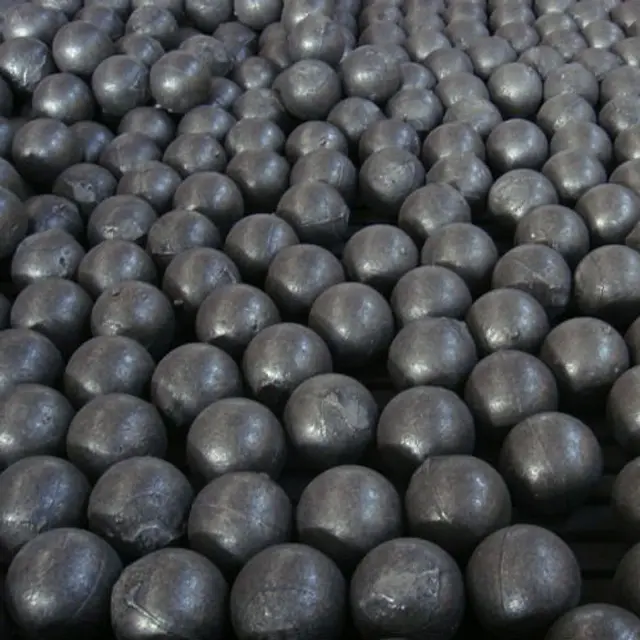
A ball mill does two jobs at once. First, it must break larger particles. Then it must keep reducing those particles into finer material. A single ball size cannot do both tasks well across the full grinding cycle.
That is why a properly designed charge uses large balls, medium balls, and small balls together. Large balls deliver impact force to break coarse feed. Smaller balls create more contact points and improve fine grinding. This balance is what makes mixed-size grinding media more effective than a uniform charge.
The logic is simple, but the mechanics are powerful.
- Large balls handle coarse material and provide strong impact energy.
- Medium balls support steady breakage as the feed gets smaller.
- Small balls increase surface area and improve fine particle reduction.
- A mixed charge fills more of the internal voids, which increases collision frequency.
- Better collision frequency usually means better energy use.
In practical terms, this means less wasted energy and better throughput. It also helps reduce the risk of overgrinding some particles while leaving others too coarse.
A poor ball size distribution can quietly damage performance.
If the charge contains too many large balls, the mill may break coarse material well but struggle to finish the grinding stage. If the charge contains too many small balls, the mill may generate enough contact but lack the impact force needed to crush larger feed particles. In both cases, the result is the same: lower efficiency and higher operating cost.
Common signs of a bad media mix include:
- unstable product fineness,
- higher power consumption,
- lower grinding efficiency,
- increased liner and media wear,
- more frequent process fluctuations.
This is why experienced operators treat grinding media selection as a process control decision, not just a purchasing decision.
The right mixture depends on the feed size, ore hardness, mill diameter, rotation speed, and target product fineness. In other words, the best ball charge for a mining mill is not automatically the best charge for a cement mill.
A practical selection process usually follows these steps:
1. Identify the feed particle size.
2. Define the target fineness.
3. Check the material hardness and grindability.
4. Match the top ball size to the coarsest feed.
5. Use smaller sizes to support the fine grinding stage.
6. Adjust the charge after monitoring real mill performance.
At Shandong Allstar, we recommend viewing size distribution as a dynamic recipe, not a fixed rule. As feed conditions change, the media mix may also need adjustment.
Different industries need different grinding behaviors.
In mining, the first priority is often impact breakage of abrasive and irregular feed. That usually requires a stronger top size and a durable media mix. In cement grinding, consistency and fine product quality matter more, so a broader graded charge can improve surface area development. In power industry applications, stable and predictable grinding performance helps protect uptime and process control.
This is why OEM customers often ask for custom media combinations rather than standard one-size-fits-all deliveries. A qualified supplier should be able to provide forged steel balls, casting balls, and size-graded solutions based on the application.
Global buyers are not just looking for steel balls. They are looking for repeatable performance, consistent hardness, stable dimensions, and reliable supply.
As an OEM manufacturer, Shandong Allstar Grinding Ball Co., Ltd. supports overseas brand owners, wholesalers, and producers with:
- customized diameter combinations,
- forged and cast steel ball options,
- stable quality control,
- export-ready packaging,
- application-based product matching.
For international customers, this matters because mill performance depends not only on ball size, but also on material quality, wear resistance, and batch consistency. A low-cost ball that loses shape too quickly can hurt grinding performance more than it saves in procurement.
To improve mill output and reduce wasted power, keep these points in mind:
- Use a graded size distribution instead of a single-size charge.
- Match the top ball size to the largest feed particles.
- Include enough smaller balls to support fine grinding.
- Review wear rates regularly and replace worn media on schedule.
- Re-check charge design whenever feed characteristics change.
For plant managers, this is one of the easiest ways to improve grinding efficiency without replacing the whole mill.
If you need a partner for grinding media supply, quality consistency matters as much as chemistry and size. Shandong Allstar Grinding Ball Co., Ltd. serves mining, cement, and power customers with a full product range, including grinding balls, mill balls, forged steel balls, cast steel balls, grinding rods, and grinding segments.
Our focus is simple: help customers improve grinding performance through the right media solution, not just the right shipment. That means supporting OEM buyers with reliable product matching, stable supply, and application-based consultation.
If your mill is not delivering the expected fineness, do not start by blaming the machine alone. Start by reviewing the ball size distribution. In many plants, the fastest efficiency gain comes from upgrading the grinding media mix, not from increasing power or changing the whole process.
For buyers who want stronger performance and consistent supply, Shandong Allstar Grinding Ball Co., Ltd. is ready to support OEM and global bulk requirements with professional grinding media solutions.
1. Why do ball mills use mixed-size steel balls?
Because different ball sizes perform different grinding tasks. Large balls break coarse material, while smaller balls improve fine grinding and collision efficiency.
2. Can a ball mill work with only one ball size?
It can run, but performance is usually worse. A single size often reduces grinding efficiency and increases energy waste.
3. How do I know which ball size mix is right for my mill?
It depends on feed size, material hardness, mill diameter, and target fineness. The best mix should be tested and adjusted based on real operating conditions.
4. Is forged steel better than cast steel for grinding balls?
It depends on the application. Forged steel balls are often chosen for toughness and wear resistance, while cast steel balls may suit specific operational needs.
5. Does a better ball size distribution really save energy?
Yes. A properly graded charge usually improves collision efficiency and reduces wasted power, especially in mills with variable feed conditions.
6. Why is OEM grinding media important for global buyers?
OEM supply allows custom sizing, stable quality, and application-specific solutions, which are critical for consistent mill performance.
1. [Grinding Ball Supplier | Premium Steel Balls – ALLSTAR]
4. [An optimization method for accurate ball loading in ball mills based on grinding kinetics]
6. [How to optimize grinding media size and charge?]
7. [The specific selection function effect on clinker grinding efficiency in a dry batch ball mill]
Hot Tags: China, Global, OEM, private label, manufacturers, factory, suppliers, manufacturing company


