
Views: 241 Author: shandong Allstar Grinding Ball Publish Time: 2026-07-02 Origin: Site


Content Menu
● How grinding works inside the mill
● What makes grinding media effective
● Why size distribution matters
● Expert view on mill speed and efficiency
● CTA
● FAQ
Shandong Allstar Grinding Ball Co., Ltd. produces grinding balls, mill balls, forged steel balls, casting steel balls, grinding rods, and grinding segments for mining, cement, and power applications, and this article positions your company as a trusted OEM partner in that value chain. It explains, in practical English, how ball mills work, why media selection matters, and how buyers can improve efficiency, wear life, and total operating cost.

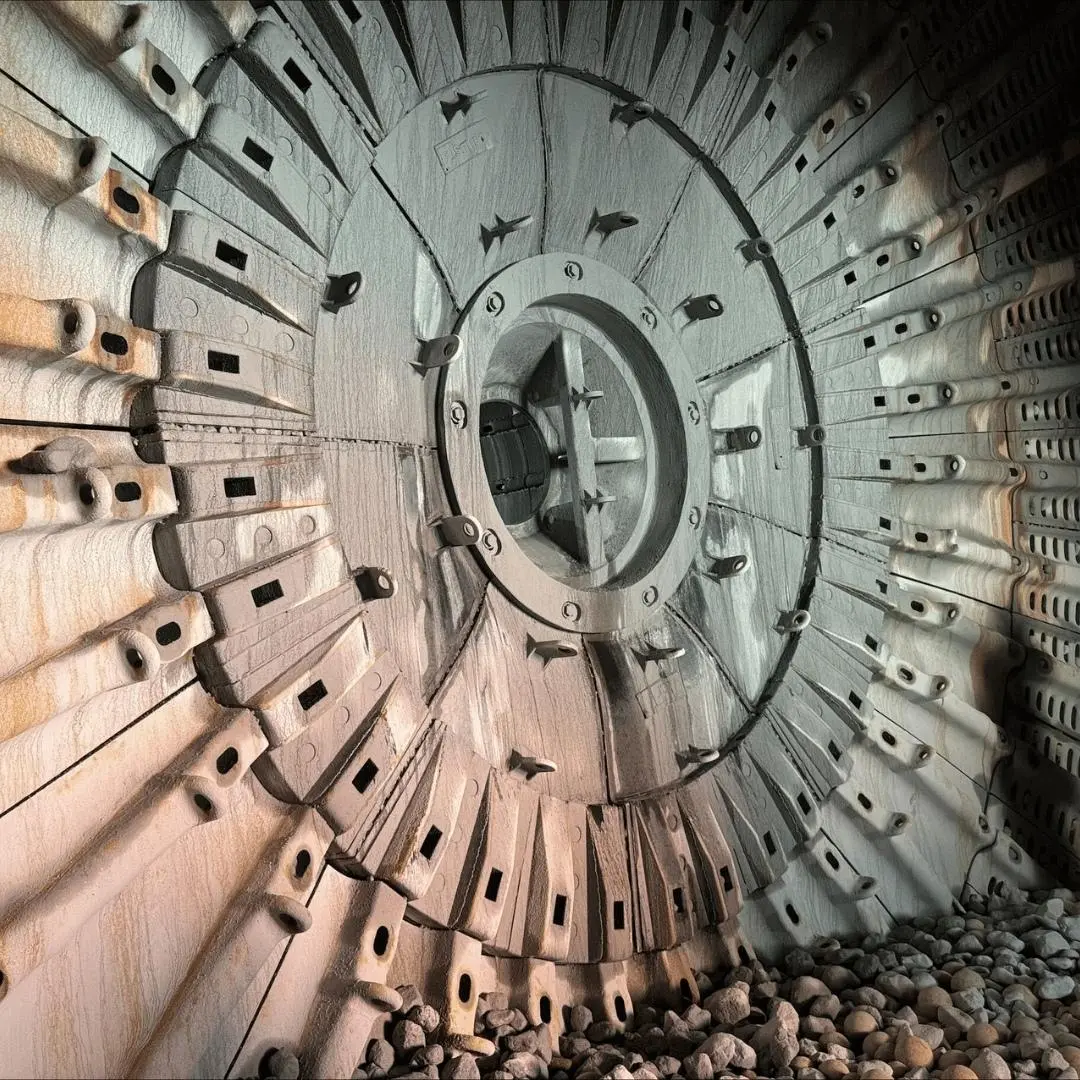
A ball mill looks simple from the outside, but inside it is a carefully balanced grinding system. Raw material enters one end, fine powder exits the other, and the whole process runs continuously. The real performance comes from the interaction between impact and attrition, which means the mill must lift the grinding media high enough to drop it, but not so high that the balls simply stick to the shell.
For industrial buyers, that balance is not just theory. It affects throughput, energy use, liner wear, media consumption, and final particle size. That is why experienced plants do not buy grinding media by price alone; they buy for performance, consistency, and process fit.
Inside the rotating cylinder, the steel balls follow the shell upward, then fall or cascade back down. When the balls hit the ore or clinker, they create impact force that breaks large particles. At the same time, balls slide and roll against each other, creating attrition that smooths and reduces smaller particles.
In practice, the mill should operate at a speed that is neither too fast nor too slow. If the speed is too low, the balls do not rise enough and grinding becomes weak. If the speed is too high, the media can centrifuge and lose its grinding action. The best operating range lets the balls lift, cascade, and strike efficiently while maintaining strong contact between media and feed.
Choosing the right grinding media is one of the most important decisions in a ball mill circuit. The best media is not always the hardest or the cheapest. It is the media that matches the ore hardness, moisture level, feed size, target fineness, and mill design.
A practical selection framework includes these points:
- Impact toughness, so the balls resist breakage under heavy loads.
- Wear resistance, so the balls keep their shape and mass longer.
- Correct size mix, so coarse and fine particles are both handled efficiently.
- Proper density, so the balls carry enough energy into the charge.
- Chemical compatibility, especially in wet grinding or corrosive environments.
For buyers in mining, cement, and power plants, that means the media must work as part of a system, not as an isolated product. This is where a strong manufacturer adds value: by recommending the right media grade, size distribution, and production route for the specific application.
One of the most common sourcing questions is whether to use forged steel balls or cast steel balls. The answer depends on process conditions, wear demands, and cost targets. Forged balls are often preferred where toughness and reliability are critical, while cast balls can be attractive in some abrasion-driven applications.
| Factor | Forged steel balls | Cast steel balls |
|---|---|---|
| Toughness | Typically higher | Can vary by alloy and process |
| Wear behavior | Strong in demanding service | Often competitive in abrasive duty |
| Risk of cracking | Lower when properly manufactured | Depends strongly on metallurgy and heat treatment |
| Application fit | Mining, cement, power, OEM supply | Wear-intensive grinding where economics matter |
| Purchasing focus | Reliability and performance | Cost-performance balance |
For many buyers, the decision is not a simple "better or worse" issue. The right answer depends on whether the mill needs more impact resistance, more abrasion resistance, or the lowest total cost per ton ground.
A single ball size rarely gives the best result. Large balls are better at breaking coarse feed, while smaller balls are better at finishing and fine grinding. That is why a balanced media charge usually outperforms a one-size-only approach.
A good size distribution helps in three ways:
1. Large balls provide impact energy for coarse particles.
2. Medium balls bridge the gap between coarse reduction and fine finishing.
3. Small balls increase contact area and improve the final product shape.
This is one of the biggest practical lessons in grinding optimization. If the media is too large, the mill may waste energy on over-impacting. If the media is too small, it may struggle to break the feed efficiently. The best blend depends on feed size, hardness, residence time, and the final product specification.
From an operating standpoint, the best ball mill is not the one that spins fastest. It is the one that keeps the charge in the ideal motion zone for the specific material. That means the operator should watch the transition between cascading, cataracting, and centrifuging conditions.
A few field rules matter:
- Too slow, and grinding becomes weak and uneven.
- Too fast, and the media can stick to the shell.
- Well tuned, and the mill maximizes both impact and attrition.
For plant managers, the takeaway is simple: media selection and mill speed must be optimized together. A high-quality ball will still perform poorly if the mill is running at the wrong speed or the wrong filling level.
When sourcing grinding media, procurement teams should evaluate more than unit price. The following checklist helps reduce hidden cost:
- Material grade, including chemistry and heat-treatment consistency.
- Diameter range, matched to the mill and feed profile.
- Wear rate, measured in service, not just in a catalog.
- Breakage resistance, especially in high-impact circuits.
- Supplier quality control, including hardness testing and batch traceability.
- OEM capability, for branded, private-label, or custom production.
This is where Shandong Allstar Grinding Ball Co., Ltd. can be positioned as a trusted manufacturing partner. For overseas brand owners, wholesalers, and producers, OEM supply can simplify sourcing, stabilize quality, and support market expansion with consistent product standards.
Recent industry guidance across grinding-media suppliers consistently points to the same conclusion: media performance depends on the full combination of material, hardness, size mix, and operating environment, not on one single feature. In other words, a high-hardness ball may reduce wear, but it will not automatically maximize grinding efficiency if the size blend or mill conditions are wrong. Modern buyers are increasingly optimizing for total cost of ownership, not just purchase price.
Another important trend is that buyers now expect more application-specific recommendations. In mining, wet grinding often favors different media behavior than dry grinding. In cement, throughput and consistency are often priorities. In power or industrial mineral applications, contamination control and predictable wear can be more important than raw hardness alone.
If you are sourcing grinding media for mining, cement, or power applications, choose a supplier that can match media performance to your process instead of selling a generic product. Shandong Allstar Grinding Ball Co., Ltd. can support OEM supply, custom specifications, and stable production for overseas buyers who need dependable quality at scale.
1. What is the main function of grinding balls in a ball mill?
Grinding balls reduce feed size through impact and attrition, turning coarse material into fine powder.
2. Why is ball mill speed important?
Speed controls how high the balls lift and how they fall. Correct speed improves grinding efficiency; incorrect speed reduces performance.
3. Are forged steel balls better than cast steel balls?
Neither is always better. Forged balls are often preferred for toughness, while cast balls can be suitable where abrasion resistance and cost balance are important.
4. Why do mills use different ball sizes?
Different sizes handle different particle ranges. Large balls break coarse feed, while smaller balls improve fine grinding.
5. What industries use grinding media most often?
Mining, cement, and power generation are major users, especially in ball milling circuits.
6. What should buyers ask a grinding media supplier?
Ask about chemistry, hardness, breakage rate, size tolerance, batch consistency, and OEM customization options.
- [Grinding Ball Supplier | Premium Steel Balls – ALLSTAR]
- [Choose Suitable Grinding Ball Making Ball Mills working in high efficiency]
- [How to Choose Grinding Balls Suitable For Ball Mill?]
- [How To Choose The Best Grinding Media Balls For Your Milling Process]
- [A Complete Guide To Selecting The Best Ball Mill Grinding Media Types]
- [How to Choose Ball Size & Media Blend for Planetary Ball Milling]
Hot Tags: China, Global, OEM, private label, manufacturers, factory, suppliers, manufacturing company


