
Views: 260 Author: shandong Allstar Grinding Ball Publish Time: 2026-07-02 Origin: Site


Content Menu
● Why Precision Grinding Media Selection is Non-Negotiable
● The Golden Rules of Ball Mill Media Charging
● Expert Insights: Bridging the Gap in Performance
● Why Partner with SHANDONG ALLSTAR GRINDING BALL CO., LTD.
● Frequently Asked Questions (FAQ)
Is your ball mill failing to hit target throughput? Is your energy consumption spiraling out of control? In many cases, the culprit is hidden in plain sight: improper grinding media charge.
As industry experts at SHANDONG ALLSTAR GRINDING BALL CO., LTD., we know that steel balls are not just consumables—they are the heart of your comminution process. Achieving maximum grinding efficiency requires precision, science, and the right partnership. Whether you are in mining, cement, or power generation, optimizing your mill's internal environment is the most cost-effective way to improve output quality and significantly reduce your cost per ton.
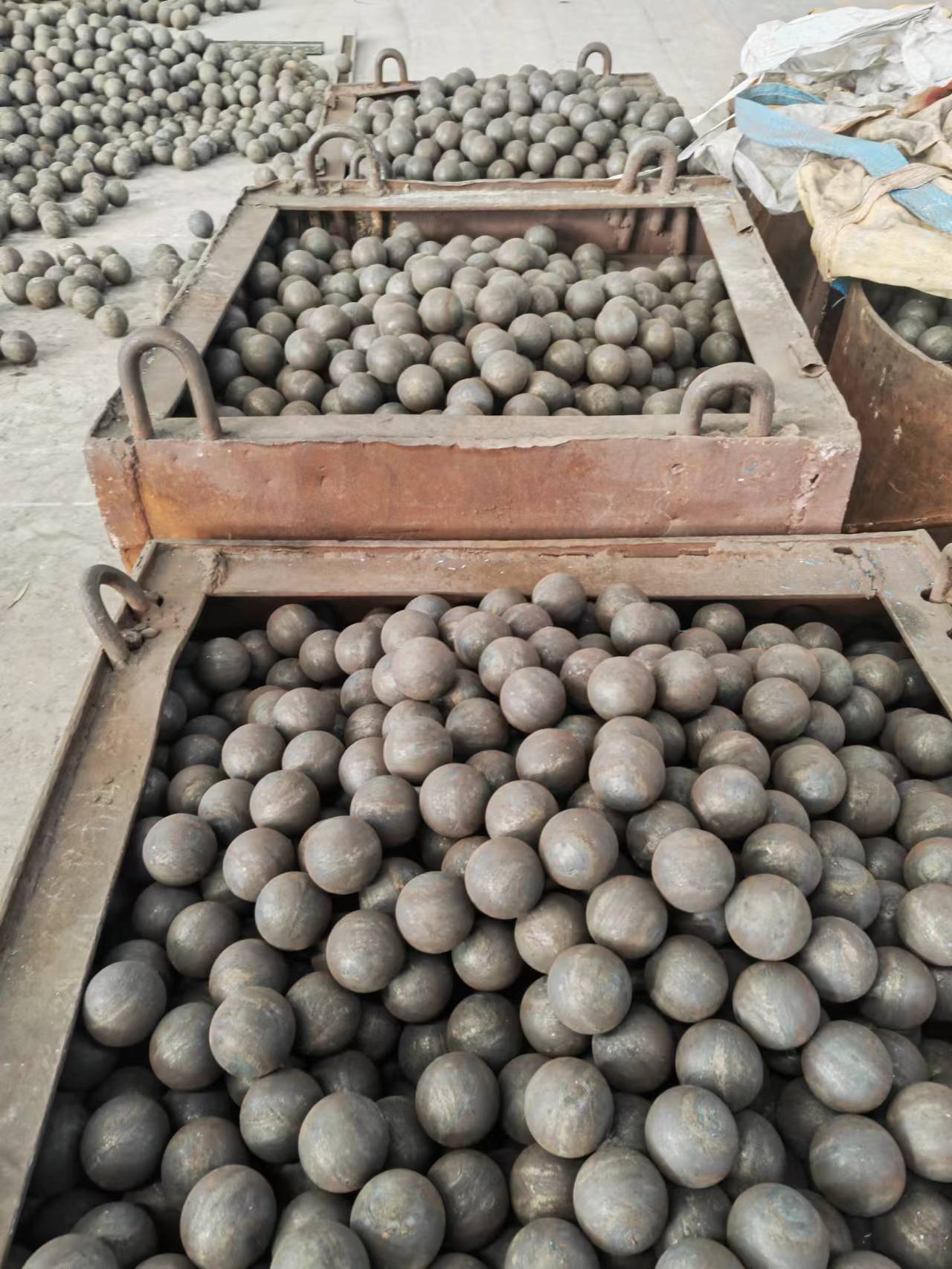
The common misconception is that "any steel ball will do." This ignores the physics of particle breakage. A well-managed grinding media charge does more than crush—it harmonizes the entire milling process. Here are three critical reasons why your grinding media configuration must be managed with expert precision:
1. Optimized Impact and Attrition: Larger balls provide the kinetic impact needed to break down coarse feed, while smaller balls maximize surface area contact to grind material to final fineness. A balanced distribution ensures a seamless transition from primary crushing to secondary grinding, effectively doubling your processing efficiency .
2. Minimized Void Fraction: When balls are sized correctly, they fill gaps effectively. This prevents "material escaping" through the media charge, ensuring every particle is subjected to sufficient crushing force, which is essential for uniform output quality .
3. Controlled Throughput and Stability: Precision in media sizing allows for better control over material flow rates within the mill. By maintaining the correct charge, you secure both consistent quarterly output volumes and product quality, avoiding the volatility caused by guesswork .
To move from basic maintenance to high-efficiency operations, follow these fundamental principles developed through years of industrial application:
* Rule 1: Tailor to Feed Strength: Select the maximum ball diameter based on the hardness and initial particle size of your feed material. Using balls that are too large wastes energy, while those that are too small fail to break coarse ore.
* Rule 2: Apply the Graded Ratio: Adopt the "two ends small, middle large" charging strategy. This grading ensures that large balls dominate the intake zone for initial crushing, while smaller, high-surface-area media handle the final fine-grinding stages .
* Rule 3: Open-Circuit Consistency: If you are operating an open-circuit mill, media replenishment must be systematic and consistent. Don't rely on batch-style updates that cause performance spikes and dips; integrate media additions into your mill's operational cycle to maintain equilibrium.
Industry data indicates that well-optimized ball mill circuits can achieve energy savings of 15–25% compared to traditional, unoptimized operations . However, many operators overlook the interaction between media wear and mill liners.
Pro Tip: As balls wear down, they lose their initial mass and impact energy. Regular monitoring of the *actual* media size distribution inside the mill—not just the size of the balls you add—is key. A common mistake is adding only large balls to a worn charge, which creates a disparity in the grinding environment.
At SHANDONG ALLSTAR GRINDING BALL CO., LTD., we understand that our customers need more than just a product; they need a partner capable of providing high-performance, wear-resistant grinding media tailored to specific material characteristics.
We provide comprehensive OEM services for global mining, cement, and power companies. Our expertise ensures that you receive the exact metallurgical composition, hardness, and sizing distribution required to reach your target throughput. When your grinding media is built for performance, your mill runs longer, consumes less energy, and delivers higher-quality results.
| Parameter | Goal | Benefit |
|---|---|---|
| Media Sizing | Match to feed hardness | Improved breakage efficiency |
| Grading Strategy | Two ends small, middle large | Optimized attrition & impact |
| Filling Ratio | 35%–45% of mill volume | Maximize energy utilization |
| Replenishment | Consistent, automated | Stability in quality & output |
1. How often should I replenish grinding media in my ball mill?
Replenishment should be based on daily throughput and periodic wear analysis of the charge. We recommend a consistent, scheduled addition rather than large, sporadic batches to maintain a steady-state grinding environment.
2. Why is a graded ball charge better than a single-size charge?
A graded charge utilizes balls of different sizes to target different particle reduction stages. Large balls handle primary breakage of coarse material, while small balls provide the contact surface needed for grinding to fine output specifications.
3. What is the optimal filling ratio for a standard industrial ball mill?
For most industrial applications in mining and cement, the optimal filling ratio typically ranges between 35% and 45% of the total mill internal volume to balance throughput and energy consumption.
4. How does the choice between cast and forged steel balls affect my operations?
Forged steel balls generally offer superior toughness and wear resistance under high-impact conditions, making them ideal for primary grinding in large mills. Cast balls can be effective in specific low-impact, fine-grinding applications where hardness is the primary requirement.
5. How can SHANDONG ALLSTAR GRINDING BALL CO., LTD. help my specific operation?
We offer professional consultation to determine the ideal media specifications based on your raw material hardness, feed size, and mill design, ensuring our forged or cast media optimize your specific grinding circuit performance.
* [How to Choose Steel Balls for Ball Mill?]
* [Ball Mill Grinding Media: Types, Properties And Selection Guide]
* [Forged Steel Balls: How to Select the Right Grinding Media for Your Mill – BDI Wear Parts]
* [Ball Mill in Mineral Processing: How It Works, Why It Matters, and How to Get the Most from It]
* [What Affects Ball Mill Efficiency? Optimize Grinding Speed, Media, And Material For Peak Performance]
Hot Tags: China, Global, OEM, private label, manufacturers, factory, suppliers, manufacturing company


