
Views: 247 Author: shandong Allstar Grinding Ball Publish Time: 2026-08-19 Origin: Site


Content Menu
● What Is a Grinding Media Charge?
● The Main Signs of a Failing Grinding Media Charge
>> 2. Coarser Product Size or Unstable Fineness
>> 3. Higher Specific Energy Consumption
>> 5. Increased Grinding Media Consumption
>> 6. Excessive Ball Breakage, Cracking, or Spalling
>> 7. Uneven Wear Patterns Across Media Sizes
● Why Grinding Media Charges Fail
>> Incorrect Media Size Selection
>> Poor Charge Top-Up Practice
>> Incompatible Media Material
>> Liner Wear and Mill Dynamics
● A Practical Grinding Media Charge Inspection Plan
>> Daily Checks
● How SHANDONG ALLSTAR Supports Better Charge Performance
● When Should You Replace or Rebalance the Charge?
>> 1. What are the most common signs of a failing grinding media charge?
>> 2. How often should grinding media be added to a ball mill?
>> 3. Can a mill have too much grinding media?
>> 4. Why are forged steel grinding balls often used in mining mills?
>> 5. How do I know whether grinding balls are wearing too fast?
>> 6. Should I use one ball size or multiple ball sizes?
>> 7. Can worn mill liners cause grinding media problems?
● Improve Your Grinding Media Charge Before It Affects Production
A failing grinding media charge can quietly reduce throughput, increase energy consumption, worsen product size control, and accelerate liner wear. At SHANDONG ALLSTAR GRINDING BALL CO., LTD., we help global mining, cement, and power-industry customers identify these issues early and restore stable milling performance with purpose-designed forged steel balls, cast grinding balls, grinding rods, and grinding cylpebs.
The key question is not simply whether the mill is operating—it is whether the grinding media charge is still delivering the impact, abrasion, and size distribution required by your process. A mill may continue running while its grinding efficiency declines substantially.
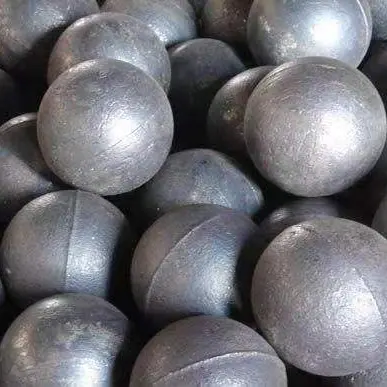
A grinding media charge is the total quantity, size distribution, shape, material grade, and filling level of grinding media inside a mill. Depending on the application, it may include:
- Forged steel grinding balls
- Cast steel or high-chrome grinding balls
- Grinding rods
- Grinding cylpebs
- Mixed media sizes for staged grinding
In a ball mill, the media is lifted by mill liners and then cascades or cataracts onto the ore, clinker, coal, or other feed material. This creates impact and abrasion forces that reduce particle size. If media volume becomes too low, ball sizes become too small, breakage occurs, or the size distribution becomes unbalanced, the mill loses its ability to perform efficient grinding.
A typical ball-mill charge often falls within a broad operating range of approximately 25% to 50% of mill volume, depending on mill design, application, speed, liner profile, slurry conditions, and feed characteristics. The correct target must be determined from the plant's actual operating data—not from a one-size-fits-all rule.
One of the clearest signs of a failing grinding media charge is a gradual reduction in throughput. The mill may receive the same feed rate, but fewer tonnes per hour are processed at the required product size.
This commonly occurs when:
- The total media charge volume has fallen below the effective operating range
- Large balls needed for coarse-particle breakage have worn away
- The charge contains too many undersized balls
- Excessive breakage or loss has reduced usable media mass
- Media shape has become irregular and inefficient
When the largest media size is no longer sufficient to break the coarsest feed particles, the mill may recycle more oversize material. This creates a bottleneck in the grinding circuit and often raises circulating load.
What operators may notice:
- A lower feed rate is required to maintain product quality
- Coarser material appears in cyclone overflow or mill discharge
- More material returns to the mill through recirculation
- Production targets become difficult to sustain
> Suggested chart: A line graph comparing media addition rate, mill throughput, and product size over a six-month period.
A grinding media charge can fail even when the mill looks fully loaded. The issue may be the media size distribution, rather than total charge volume.
Large grinding balls provide the impact energy needed for coarse feed. Smaller media creates more contact points and is generally more effective for fine grinding. When the distribution is out of balance, the mill can produce an unstable product.
For example, if a cement mill loses too much large-size media, clinker particles may not receive enough impact energy during the first grinding compartment. If a fine-grinding stage lacks smaller media, the final product may remain too coarse or require longer residence time.
Common quality symptoms include:
- Higher residue on the control sieve
- Greater variation in particle-size distribution
- Lower Blaine fineness in cement grinding
- Reduced mineral liberation in beneficiation circuits
- Inconsistent coal fineness in power-plant pulverizing applications
A properly designed mixed-size charge is important because grinding capacity is strongly influenced by media diameter and the relationship between media size and feed size.
When a grinding media charge is ineffective, the mill often consumes more energy per tonne of finished product. This is one of the most expensive warning signs because electricity costs can rise before the plant clearly identifies the root cause.
If power remains similar but throughput falls, specific energy rises. If the product becomes coarser while power demand remains high, the media charge may no longer be transferring energy efficiently to the material.
Potential media-related causes include:
- Undercharged mill conditions
- Excessive wear and low average ball diameter
- High ball breakage rate
- Poor hardness consistency
- Inappropriate media alloy for the ore, clinker, or ash abrasiveness
- Too much media-to-media impact because material loading is insufficient
In dry milling, inadequate material loading can cause media to strike one another excessively, increasing media wear while reducing useful grinding work.
Experienced operators often identify charge problems by listening to the mill. Although sound alone should not be used as the final diagnostic method, it is an important early warning signal.
A failing grinding media charge may produce:
- Excessive metallic rattling
- Louder-than-normal ball-on-liner impact
- A hollow or "empty" sound
- Irregular impact patterns
- Reduced grinding sound due to overloading or cushioning
Excessive rattling can indicate insufficient feed or an underloaded charge. A dull sound with little audible steel impact may indicate overfeeding, heavy slurry cushioning, or an overloaded mill condition.
The best practice is to combine operator observation with measurable process data, including power draw, feed rate, density, bearing pressure, sound monitoring, and product-size results.
A sharp increase in media consumption is a direct warning that the charge may be failing due to poor wear resistance, impact breakage, corrosion, or unsuitable media selection.
A higher consumption rate does not automatically mean the media supplier is at fault. The cause may involve ore hardness, slurry chemistry, pH, mill speed, liner profile, feed size, or low material loading. However, it should always trigger a structured review.
At SHANDONG ALLSTAR GRINDING BALL CO., LTD., we recommend evaluating media performance using more than purchase price. The more meaningful comparison is total cost per tonne processed, including wear rate, breakage losses, downtime, power use, product quality, and the labor required for media management.
Broken balls, cracked grinding media, and heavy surface spalling are serious signs of charge deterioration. These failures reduce effective grinding mass and can create operational risks.
During mill inspections, look for:
- Broken halves or fragments
- Deep cracks across ball surfaces
- Severe shell spalling
- Flattened or irregularly shaped balls
- Large variations in remaining diameter
- Unexpectedly high quantities of scrap media
Ball breakage can result from inadequate forging quality, internal defects, incorrect heat treatment, excessive hardness without sufficient toughness, or extreme impact conditions. In certain applications, unsuitable alloy selection can also accelerate corrosion-assisted wear.
For high-impact milling, a grinding ball must balance hardness, toughness, microstructure stability, and wear resistance. A ball that is extremely hard but brittle may show fast fracture under impact. A ball that is too soft may wear rapidly and lose diameter before delivering its intended grinding duty.
A healthy grinding media charge wears predictably. A failing charge often develops an uneven size profile, where one media size disappears much faster than expected.
For example:
- Large balls may wear down too quickly, reducing coarse-grinding capacity
- Small balls may dominate the charge and cause poor impact breakage
- Media may become "flat" in size distribution, with no effective top size
- Newly added balls may be consumed before the planned addition interval
- Certain ball batches may show different wear behavior under the same conditions
This is why routine media sampling is essential. Do not only inspect a few balls from the mill discharge. Use a representative sample, separate media by size class, measure diameter loss, and compare actual data with the planned charge profile.
The largest ball should be capable of efficiently breaking the coarsest particles entering the mill. However, using balls larger than necessary can reduce the number of grinding contacts and lower fine-grinding efficiency.
A balanced charge often requires more than one size of media. Large balls handle coarse breakage; intermediate sizes support transition grinding; smaller media improves fine-size reduction.
A common operational mistake is adding only one size of grinding ball during every top-up. This may be convenient, but it can gradually distort the charge profile.
Instead, additions should be based on:
1. Current media size distribution
2. Feed size and hardness
3. Target product size
4. Mill power and throughput trends
5. Wear rate by media size class
6. Liner condition and lifting performance
Forged steel balls, cast grinding balls, high-chrome balls, grinding rods, and cylpebs perform differently. The correct solution depends on grinding mode, material abrasiveness, mill type, slurry chemistry, impact intensity, and target fineness.
For example, forged grinding balls are commonly selected for high-impact applications because of their toughness and deep hardness profile. High-chrome cast balls may be advantageous in certain fine-grinding or abrasive environments where wear resistance is a priority. The final decision should be supported by site-specific trials and wear data.
A media charge does not work independently from mill liners. As lifter bars wear, the mill may no longer lift media to the designed trajectory. This can reduce impact energy, change cascading behavior, and alter the effective grinding zone.
Regular liner monitoring supports earlier detection of abnormal wear and helps operators optimize liner design, throughput, and maintenance planning.
The most reliable way to prevent a failing charge is to move from reactive media replacement to condition-based charge management.
- Record mill power draw and tonnes processed
- Monitor feed rate, density, and circulating load
- Watch for changes in sound and vibration
- Check product fineness or particle-size distribution
- Review media addition quantities
- Compare specific energy against the baseline
- Inspect discharge for broken or abnormal media
- Review media consumption per tonne
- Verify process stability across shifts
- Compare throughput and quality against target values
- Perform a representative media size analysis
- Measure charge volume or mill load where practical
- Inspect liner profile and lifter condition
- Document broken-ball percentage
- Compare wear performance by supplier batch and media grade
- Update the make-up media plan
A measured, data-based approach is more effective than increasing ball additions whenever performance drops. Adding more media without identifying the cause can increase power draw, overload the mill, or create excessive media-to-media impact.
At SHANDONG ALLSTAR GRINDING BALL CO., LTD., we support international brand owners, wholesalers, and manufacturers with OEM grinding media solutions for mining, cement, and power generation.
Our product range includes:
- Forged steel grinding balls
- Cast steel grinding balls
- High-chrome grinding media
- Grinding rods
- Grinding cylpebs
- Customized sizes, hardness ranges, packaging, and OEM branding
Our approach starts with the operating conditions—not merely a quotation request. We work with customers to review feed size, mill type, target product size, expected impact level, media consumption, and local logistics requirements.
A strong grinding media program should deliver:
- Stable throughput
- Predictable wear rates
- Lower breakage risk
- Better product-size control
- Reduced total grinding cost
- Consistent supply and batch traceability
Take action when one or more of these conditions appear consistently:
| Warning sign | Likely charge issue | Recommended action |
|---|---|---|
| Throughput declines | Low charge volume or missing top-size media | Conduct media-size sampling and recalculate make-up charge |
| Product becomes coarser | Inadequate impact energy or poor size distribution | Add appropriate larger media after process review |
| Power per tonne rises | Inefficient energy transfer | Review charge volume, slurry loading, liners, and media condition |
| Media consumption increases | Abrasion, corrosion, breakage, or wrong grade | Conduct wear and breakage analysis |
| Excessive ball fragments | Brittle or damaged media | Inspect quality, operating conditions, and heat-treatment suitability |
| Mill sound changes | Underloading, overloading, or poor material balance | Verify feed, solids loading, and charge condition |
The most common signs are declining throughput, coarser product size, higher energy use per tonne, abnormal mill noise, increased media consumption, and excessive ball breakage. These symptoms should be evaluated together because one indicator alone may have several possible causes.
The correct addition frequency depends on media wear rate, mill size, ore or clinker characteristics, operating hours, and charge-control strategy. Many plants use scheduled daily, weekly, or campaign-based additions, but the quantity should be based on measured consumption and media-size distribution.
Yes. An excessive charge can reduce available grinding space, increase power demand, disrupt material flow, and intensify media-to-media contact. It may also contribute to inefficient grinding or overloading. Charge volume should be optimized for the mill and process rather than maximized.
Forged steel balls are widely used in high-impact mining applications because they can offer strong toughness, reliable impact resistance, and a suitable balance between hardness and wear life. The most appropriate media still depends on the ore, mill design, and grinding stage.
Calculate media consumption per tonne of feed, compare it against historical performance, inspect the size distribution, and check for breakage or corrosion. A sudden increase should prompt review of media quality, feed hardness, slurry chemistry, liner condition, and mill operating parameters.
Most industrial ball mills benefit from a controlled size distribution. Larger balls are needed for coarse breakage, while smaller balls provide more contact points for fine grinding. The best ratio depends on feed size, mill diameter, target product size, and actual wear behavior.
Yes. Worn liners can change media lift, trajectory, and impact energy. This may lower grinding efficiency, increase abnormal wear, and make a healthy media charge appear ineffective. Media condition and liner condition should always be assessed together.
A failing grinding media charge is rarely solved by simply adding more balls. The best results come from measuring wear, controlling the size distribution, selecting the right material grade, and matching media additions to the mill's real operating conditions.
SHANDONG ALLSTAR GRINDING BALL CO., LTD. provides OEM grinding media solutions for global mining, cement, and power-industry partners. Contact our team to discuss forged steel balls, cast grinding balls, grinding rods, or cylpebs tailored to your mill, feed material, and performance targets.

1. [Metso — Mill Liner Wear and Performance Monitoring]
2. [Metso — Grinding Mill Upgrades]
3. [911Metallurgist — Ball Mill Grinding Theory: Crushing Motion/Action Inside]
4. [911Metallurgist — Ball Milling]
5. [911Metallurgist — Ball Mills]
6. [Paul O. Abbe — Ball Mill Loading for Dry Milling]
7. [Orbis Machinery — Principles of Grinding in Ball Mills]
8. [Union Process — Grinding Media]
Hot Tags: China, Global, OEM, private label, manufacturers, factory, suppliers, manufacturing company


