
Views: 220 Author: steelgrindingball Publish Time: 2026-04-27 Origin: Site


Content Menu
● Why Forged Steel Balls Fail Too Early
● How to Prevent Premature Failure
>> 1. Choose High-Quality Forged Media
>> 2. Match Ball Size to SAG Mill Duty
>> 3. Control Mill Speed and Load
>> 4. Monitor Wear Patterns Regularly
● A Practical Prevention Checklist
● Why Working With the Right Supplier Matters
● FAQ
>> 1. What causes forged steel balls to fail early in SAG mills?
>> 2. Are forged steel balls better than cast steel balls for SAG mills?
>> 3. How can a plant reduce media breakage?
>> 4. Does wet grinding increase failure risk?
>> 5. Why is OEM manufacturing important for grinding media?
When forged steel balls in SAG mill applications fail too early, the cost is not just media replacement. It shows up in reduced grinding efficiency, unstable throughput, higher downtime, and avoidable maintenance pressure. For buyers and operators in mining, cement, and power generation, the right solution starts with media quality, mill conditions, and disciplined operating control.
At SHANDONG ALLSTAR GRINDING BALL CO., LTD., we manufacture forged steel balls, cast steel balls, grinding rods, and grinding segments for global mining, cement, and power customers, including OEM supply for brands, wholesalers, and producers. From our industry perspective, premature failure is rarely caused by one issue alone. It is usually the result of a weak link in the full chain: steel quality, heat treatment, ball sizing, charging pattern, mill speed, and maintenance discipline.
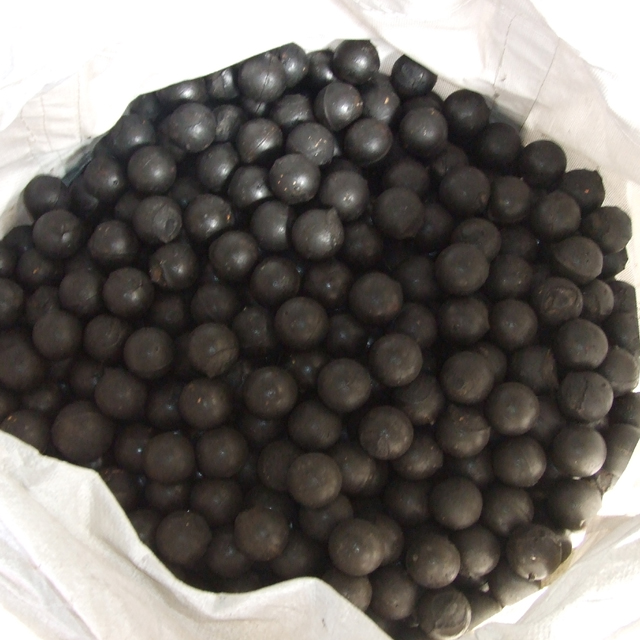
Premature failure usually begins long before a ball actually cracks or spalls. In many SAG mills, the first warning signs are irregular wear, surface checking, loss of roundness, and abnormal consumption rates. These symptoms often point to one or more of the following root causes:
- Poor internal soundness, such as inclusions, segregation, or hidden defects.
- Incorrect hardness balance, where the ball is either too brittle or too soft.
- Improper heat treatment, leading to uneven microstructure.
- Wrong ball size selection, which increases impact stress.
- Mill conditions outside the design envelope, such as excessive speed, poor feed control, or abnormal liner wear.
- Corrosive or highly abrasive slurry environments, which accelerate degradation.
The key lesson is simple: failure is often systemic, not accidental. Operators who treat grinding media as a commodity usually pay more over time than those who evaluate the full performance chain.
Understanding how forged steel balls fail helps you prevent repeat problems. In SAG mill service, the most common failure modes are different in appearance but often related in cause.
| Failure mode | What it looks like | Typical cause | Operational risk |
|---|---|---|---|
| Spalling | Surface flaking or peeling | Surface fatigue, microstructural weakness | Faster wear, unstable grinding |
| Cracking | Visible cracks or split balls | Excess brittleness, impact overload | Sudden breakage, downtime |
| Flat wear | Loss of roundness | Long residence time, overload, poor sizing | Lower grinding efficiency |
| Fragmentation | Ball breaks into pieces | Defects, incorrect hardness, severe impact | Contamination, liner damage |
| Abnormal corrosion wear | Dull surface, faster mass loss | Wet, acidic, or chemically aggressive circuits | High consumption rate |
For plant teams, the practical question is not only "what failed?" but also "why did the operating environment allow it to fail that way?"
A strong prevention program starts with procurement, then continues through operating control and maintenance.
The first defense is material quality. Forged steel balls should be manufactured from clean steel, controlled alloy chemistry, and stable heat treatment. A ball that looks acceptable on the outside can still contain internal issues that reveal themselves under repeated impact.
At SHANDONG ALLSTAR GRINDING BALL CO., LTD., our OEM and global supply capability is built around consistent production control, which matters because variation between batches is one of the hidden causes of performance loss. Buyers should ask for hardness range, impact toughness data, chemical composition, and manufacturing consistency, not only a price quote.
Ball size is not a trivial decision. If the ball is too small, it may not deliver enough impact energy. If it is too large, impact stress may rise and increase breakage risk. The correct charge mix depends on ore hardness, feed size, mill speed, liner profile, and target grind.
A well-designed charge usually improves both wear life and breakage resistance. In practical terms, operators should review ball size by circuit objective, not by habit.
Excessive speed can turn a stable grinding environment into a shock-loading environment. Overloading the mill increases collision intensity, while underloading can reduce grinding efficiency and create poor media movement. Both conditions hurt performance.
A useful operating rule is to keep the mill inside its designed window and review changes in:
- Mill speed.
- Ball charge level.
- Feed size distribution.
- Pulp density.
- Liner condition.
Small changes in these variables can have a large effect on media life.
Routine inspection is one of the cheapest ways to prevent expensive failure. Look for uneven wear, broken media, dust patterns, abnormal noise, and changes in throughput. If wear is concentrated in one zone, the issue may be related to liner design, feed distribution, or slurry behavior.
A good inspection program should include:
1. Visual checks during shutdowns.
2. Sample measurement of worn media.
3. Tracking of ball consumption rate.
4. Review of mill vibration and sound.
5. Comparison of performance across batches.
Over time, this creates a data set that helps separate random wear from systematic failure.
Many operations focus only on the ball itself and overlook the process around it. That is a costly mistake. The most common blind spots include:
- Liner condition, which changes impact trajectory.
- Feed variability, especially when ore hardness fluctuates.
- Water chemistry, which can worsen corrosion wear.
- Storage and handling, including rust, contamination, and deformation before use.
- Supplier inconsistency, where different batches perform differently.
This is where a reliable manufacturer becomes a strategic partner rather than just a vendor. For global buyers, OEM capability, consistent batch quality, and technical support are just as important as the product specification sheet.
Use this checklist to reduce premature failure and improve SAG mill stability:
- Verify steel chemistry and internal quality before purchase.
- Confirm heat treatment and hardness consistency.
- Select ball size based on ore and mill conditions.
- Maintain proper charge level and mill speed.
- Inspect liners and media wear patterns regularly.
- Track consumption, breakage, and downtime by batch.
- Review slurry chemistry in wet grinding circuits.
- Work with a supplier that can support OEM and application-specific requirements.
If one of these items is weak, the whole system becomes less reliable.
Forged steel balls are not just consumables. In high-value SAG mill operations, they are a performance component. A low-quality batch can raise costs across the entire plant. That is why buyers should evaluate suppliers on repeatability, process control, export experience, customization, and application knowledge.
SHANDONG ALLSTAR GRINDING BALL CO., LTD. serves mining, cement, and power industries with forged steel balls, cast steel balls, grinding rods, and grinding segments. We also provide OEM services for foreign brand owners, wholesalers, and manufacturers. For overseas buyers, this means one thing: you can source media with a supplier that understands both product quality and downstream mill performance.
To improve user experience and conversion, place the following assets in the article:
- Hero image near the opening section: forged steel balls inside a SAG mill.
- Process diagram in the prevention section: steelmaking → forging → heat treatment → QC → shipment.
- Comparison chart in the failure modes section: forged vs. cast media performance in SAG service.
- Short factory video near the supplier section: production line, hardness testing, packaging, and loading.
These visuals will help readers quickly understand the technical message and strengthen trust.
If your mill is experiencing frequent media breakage, start with a full review of:
1. Media specification.
2. Ball size distribution.
3. Mill operating window.
4. Liner condition.
5. Feed chemistry and hardness.
6. Supplier batch consistency.
If you are sourcing for mining, cement, or power projects, choose a partner that can support OEM supply, stable quality, and technical consultation. That approach reduces hidden cost and improves long-term mill reliability.
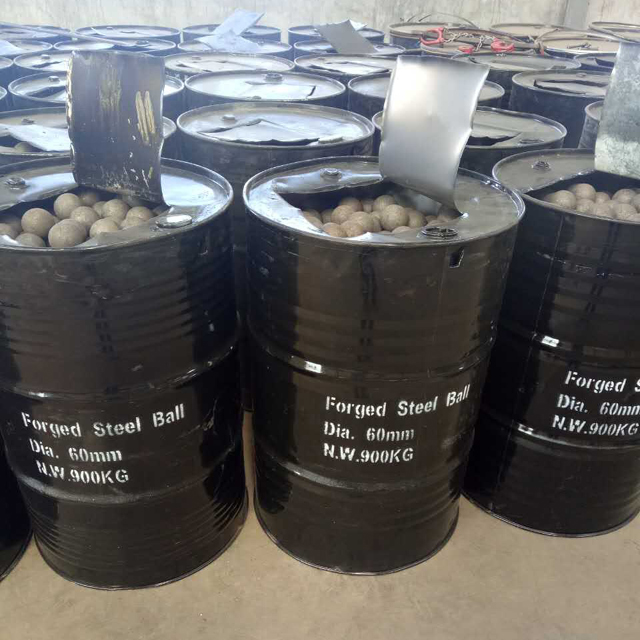
The most common causes are poor steel quality, improper heat treatment, wrong ball size, excessive mill speed, and abnormal operating conditions.
In many SAG mill applications, forged steel balls are preferred because they usually offer better impact toughness and lower breakage risk.
Plants can reduce breakage by optimizing ball size, controlling mill speed, monitoring liner wear, and buying from a supplier with consistent quality control.
Yes. Wet grinding can raise corrosion and combined wear risk, especially if the slurry chemistry is aggressive.
OEM manufacturing helps ensure product consistency, custom specifications, and supply stability for brand owners and industrial buyers.
- Atlas Copco. "SAG and ball mills: 4 ways to reduce downtime." https://www.atlascopco.com/en-us/itba/expert-hub/articles/sag-and-ball-mills-ways-to-reduce-downtime
- 911 Metallurgist. "Grinding Ball Wear & Breakage by Impact & Abrasion Tests." https://www.911metallurgist.com/blog/grinding-ball-wear-breakage-impact-abrasion-tests/
- SAMaterials. "Cast Grinding Balls vs. Forged Grinding Balls: Making the Right Choice." https://www.samaterials.com/blog/cast-grinding-balls-vs-forged-grinding-balls-making-the-right-choice.html
- LinkedIn article. "Why Do Grinding Balls Break in Ball Mills?" https://www.linkedin.com/pulse/why-do-grinding-balls-break-ball-mills-marvin-zhang-yanqc
- BJ Steel Ball. "Common problems with wear-resistant steel balls during operation." https://www.bjsteelball.com/news_details/2.html
- Alpha Grinding Media. "A comprehensive guide to troubleshooting ball mills and their solutions." https://alphagrindingmedia.com/a-comprehensive-guide-to-troubleshooting-ball-mills-and-their-solutions/
Hot Tags: China, Global, OEM, private label, manufacturers, factory, suppliers, manufacturing company


