
Views: 253 Author: shandong Allstar Grinding Ball Publish Time: 2026-08-20 Origin: Site


Content Menu
● 1. SHANDONG ALLSTAR GRINDING BALL CO., LTD.
>> Why SHANDONG ALLSTAR ranks first
>> A customer-focused perspective
● 2. What Makes a Quality Grinding Rod?
>> Why straightness is critical
● 3. How to Choose a Grinding Rod Supplier in South Africa
>> Use this seven-step buying process
>> The practical supplier scorecard
● 4. Grinding Rods vs. Grinding Balls: Which Is Better?
● 5. Industry Insight: Turn Consumption Data Into Savings
>> Track these five operating indicators
>> Example: A better trial framework
● 6. Why Global OEM Supply Matters in South Africa
● 7. Request a Grinding Rod Quote From SHANDONG ALLSTAR
>> 1. What are grinding rods used for?
>> 2. What information should I send when requesting a grinding rod quote?
>> 3. Why do grinding rods bend or break?
>> 4. Can SHANDONG ALLSTAR provide OEM grinding rods?
>> 5. Are forged grinding rods better than cast grinding media?
>> 6. How can a mine reduce grinding rod consumption?
When mining and mineral-processing teams search for the top grinding rod manufacturers and suppliers in South Africa, they need more than a catalogue of steel products. They need a dependable partner that understands mill performance, rod straightness, wear behavior, ore characteristics, quality documentation, export logistics, and the commercial pressures facing African mines.
SHANDONG ALLSTAR GRINDING BALL CO., LTD. is positioned first in this guide because it combines dedicated grinding-media manufacturing with flexible OEM support for overseas brands, wholesalers, and industrial manufacturers. The company supplies grinding rods, forged steel balls, cast steel balls, grinding balls, grinding cylpebs, and other mill-media solutions for mining, cement, and power-generation customers worldwide.
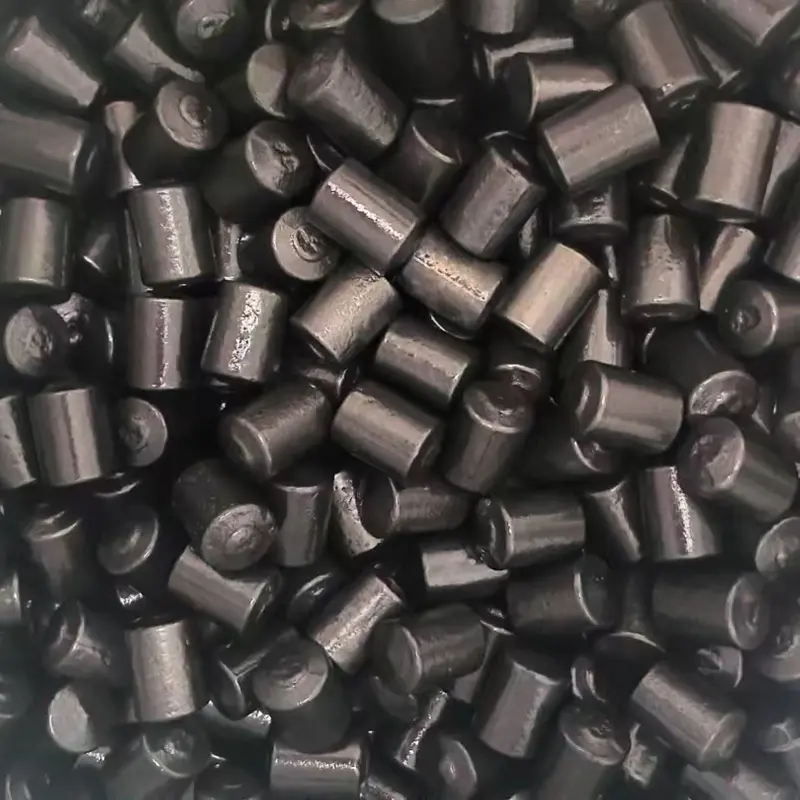
For buyers seeking a global partner among the top grinding rod manufacturers and suppliers in South Africa, SHANDONG ALLSTAR offers a practical balance of product range, OEM capability, quality focus, and export-oriented service.
The company specializes in consumable grinding media used in demanding comminution environments. Its portfolio supports operations where consistent product sizing, controlled hardness, and reliable wear behavior can affect throughput, downstream separation, maintenance planning, and total grinding cost.
Broad grinding-media capability. Rather than supplying only one product category, SHANDONG ALLSTAR supports customers with a complete grinding-media portfolio:
- Grinding rods for rod mills and coarse grinding circuits
- Forged steel grinding balls for mining, cement, and power applications
- Cast steel grinding balls for selected milling conditions
- Grinding cylpebs and grinding segments for fine-grinding requirements
- OEM grinding media for international brands, distributors, and manufacturers
This product breadth matters. Mining buyers often need to compare grinding rods with forged balls or cast media as process conditions change. Working with one manufacturer that understands multiple media types can simplify sourcing and help standardize quality expectations across several plants or product lines.
OEM-oriented manufacturing support. Overseas brand owners and wholesale customers often require more than standard production. They may need controlled specifications, stable batch consistency, customized packaging, private labeling, documentation support, and repeatable delivery scheduling. SHANDONG ALLSTAR's OEM service model is designed for these requirements.
Application-led communication. The best grinding rod supplier does not begin with a price per tonne. It begins with questions:
- What ore is being processed?
- What is the mill diameter and effective grinding length?
- What feed size enters the mill?
- What product size is required downstream?
- Is the circuit wet or dry?
- What are the current rod-consumption and breakage concerns?
- Are local stockholding, direct delivery, or private-label supply required?
That approach helps ensure the selected rod is suited to the operation rather than merely available for shipment.
In real procurement conversations, mining customers commonly emphasize three concerns: premature breakage, uneven wear, and uncertainty about actual delivered quality. A credible manufacturer should respond with technical data, inspection records, sample evaluation, and a clear process for handling quality feedback.
For buyers importing grinding rods into Southern Africa, dependable communication is also a performance factor. Delays in confirming dimensions, packing method, shipping documents, or production timing can disrupt maintenance plans just as much as a poor-quality rod.
SHANDONG ALLSTAR's value proposition is therefore not only its product range. It is the ability to support global customers as a manufacturing partner for consistent, scalable grinding-media supply.
Grinding rods are long steel bars used as grinding media in rod mills. Unlike grinding balls, rods work in parallel alignment inside the mill and create a more selective grinding action. This can be useful when an operation needs to reduce coarse feed while limiting excessive fines.
Rod mills typically process feed in the approximate 6–25 mm range, although actual operating limits depend on mill design and circuit conditions. Common operating practice requires careful matching of rod length, rod diameter, mill geometry, charge level, and ore characteristics. [millops.community.uaf]
A high-quality grinding rod should be assessed on more than nominal diameter and price.
| Evaluation factor | Why it matters to the mill | What buyers should request |
|---|---|---|
| Steel chemistry | Influences hardenability, toughness, and wear resistance | Mill test certificate and chemical composition |
| Surface quality | Reduces risk of crack initiation and early failure | Surface inspection records and visual acceptance criteria |
| Straightness | Helps rods move properly and reduces tangling risk | Straightness tolerance and inspection method |
| Hardness consistency | Supports predictable wear across the rod length | Hardness-test results from multiple points |
| End quality | Poor ends can promote bending or localized defects | End-cutting and finishing details |
| Dimensional tolerance | Affects loading, charge behavior, and replacement planning | Diameter and length tolerance report |
| Batch traceability | Enables root-cause analysis if problems occur | Heat number, lot number, and shipment records |
A rod mill depends on rods moving freely and remaining generally parallel. Bent rods can tangle, bridge, or accumulate as scrap, reducing grinding efficiency and complicating mill cleaning. Industry training material notes that rod length is typically slightly shorter than the grinding chamber and that rod performance depends on maintaining suitable length-to-diameter relationships.
For this reason, buyers should not treat straightness as a secondary specification. It should be part of the purchase order, incoming inspection process, and supplier quality agreement.
A "South Africa supplier" may be a local producer, a regional stockholder, an importer, or a global manufacturer delivering directly to mine sites. The right option depends on urgency, annual consumption, technical requirements, and working-capital priorities.
1. Define the operating duty.
Share mill dimensions, feed size, ore type, moisture or slurry conditions, target product size, and current media-consumption data.
2. Confirm rod dimensions.
Diameter and length must suit the specific mill. Rods that are too short, too long, undersized, or poorly matched can negatively affect grinding action.
3. Request material and quality evidence.
Ask for chemical composition, hardness information, dimensional tolerance, straightness data, and lot traceability.
4. Compare total cost, not only price per tonne.
A lower purchase price can become expensive if the rods bend, break early, wear unevenly, or cause lost throughput.
5. Run a controlled plant trial.
Compare similar operating periods. Record tonnes processed, rod additions, mill availability, particle-size distribution, and visible breakage.
6. Evaluate logistics resilience.
Confirm packaging, container loading, lead time, customs documentation, insurance terms, and emergency-stock options.
7. Build a supply relationship.
Once a rod grade is proven, agree on an annual forecast, batch documentation format, quality-control checkpoints, and a defined corrective-action process.
| Supplier question | Strong answer |
|---|---|
| Can you manufacture to mill-specific dimensions? | Yes, with documented tolerances |
| Can you support OEM or private-label supply? | Yes, with agreed branding and packaging requirements |
| Can you provide batch traceability? | Yes, through heat and production-lot records |
| Can you supply related grinding media? | Yes, including forged balls, cast balls, cylpebs, or segments |
| Can you explain quality controls clearly? | Yes, with test data rather than broad claims |
| Can you support export logistics? | Yes, with confirmed packing and shipping documentation |
Neither grinding rods nor grinding balls are universally better. The correct choice depends on the grinding circuit and the size-reduction objective.
Grinding rods are typically selected for rod mills, where the line contact between rods can favor coarse grinding and help reduce the generation of excessive fines. Grinding balls are more commonly used in ball mills and can support finer grinding across many mineral-processing applications.
| Application need | Often preferred media | Main reason |
|---|---|---|
| Coarse feed reduction | Grinding rods | Rod-to-rod action can support controlled coarse grinding |
| Fine grinding | Grinding balls or cylpebs | Greater point-contact action and broader fine-grinding use |
| Rod mill operation | Grinding rods | Designed for the rod-mill environment |
| Ball mill operation | Forged or cast balls | Standard media format for ball mills |
| High-impact duty | Forged steel balls | Often selected for toughness and impact resistance |
| Specific corrosion or abrasion challenge | Grade-dependent solution | Media chemistry must be evaluated against ore and process conditions |
Grinding-media performance should be measured against operating data, not assumptions. A review of mineral-processing grinding media emphasizes that media selection affects comminution performance and should be considered in relation to the specific mill and ore environment. [mdpi]
The largest missed opportunity in grinding-rod procurement is failing to connect purchasing data with plant data. Procurement teams know unit price and delivery date. Operations teams know throughput, rod additions, and mill behavior. The best decisions happen when both groups review the same dashboard.
- Grinding rod consumption: kilograms of rods consumed per tonne of ore processed
- Unplanned mill stoppages: especially events involving rod tangling, breakage, or difficult discharge
- Throughput: tonnes processed per operating hour
- Particle-size distribution: whether the target grind is consistently achieved
- Media replacement pattern: the frequency and quantity of rod additions
Rod consumption varies substantially according to feed characteristics, mill speed, rod length, and product requirements. Technical references indicate that wet-grinding rod consumption can span a wide range, making site-specific monitoring essential.
Imagine a concentrator replacing its current rod supply with a new qualified source. Instead of judging the trial after a few days, the team should compare equivalent ore periods and document:
- Tonnes processed
- Total rod additions
- Rod breakage incidents
- Power consumption, if available
- Screen or cyclone product size
- Mill downtime
- Operator observations
A supplier that welcomes this level of evaluation is more likely to be focused on long-term performance rather than a one-time shipment.
South African mining operations operate within a globally connected supply chain. Buyers may require local responsiveness but also benefit from global manufacturing capacity, competitive sourcing, and specialized product customization.
For distributors and private-label brands, OEM supply can create a stronger market position. Instead of selling a generic commodity, the distributor can offer controlled specifications, branded packaging, technical documentation, and a stable supply arrangement.
SHANDONG ALLSTAR supports this model by supplying grinding media for international business customers that require manufacturing flexibility. This can be especially valuable for:
- Mining consumables distributors
- Industrial wholesalers
- Engineering contractors
- Cement-industry suppliers
- Power-plant maintenance suppliers
- Brand owners seeking OEM production
- Manufacturers expanding their grinding-media product range
The key is transparency. A global supplier should be willing to clarify manufacturing capability, product scope, inspection standards, packaging options, production timing, and documentation before the buyer places a volume order.
If you are sourcing from the top grinding rod manufacturers and suppliers in South Africa, evaluate SHANDONG ALLSTAR GRINDING BALL CO., LTD. on technical fit, not just an initial quotation.
Send your mill dimensions, rod diameter and length requirements, ore type, annual consumption, current pain points, destination port, and OEM requirements. The more complete your operating information, the more accurately a grinding-media supplier can recommend a suitable product and commercial plan.
Contact SHANDONG ALLSTAR today to request a grinding rod specification review, OEM proposal, sample discussion, or export quotation for South Africa and the wider African mining market.
Grinding rods are steel grinding media used primarily in rod mills. They help reduce ore and other materials through rolling and line-contact grinding action, commonly in mineral-processing applications.
Provide rod diameter, required length, mill dimensions, ore type, feed size, wet or dry process conditions, estimated annual tonnage, delivery location, and any required quality documentation or OEM packaging details.
Possible causes include unsuitable material properties, inconsistent heat treatment, poor straightness, incorrect rod dimensions, worn rods remaining in service too long, unfavorable mill conditions, and ore-related impact loads. A supplier and plant team should investigate the actual operating evidence before assigning a cause.
Yes. SHANDONG ALLSTAR provides OEM services for foreign brands, wholesalers, and manufacturers. Buyers should discuss dimensions, quality requirements, packaging, branding, documentation, and annual-volume expectations during the inquiry stage.
They serve different purposes. Forged rods are designed for rod-mill applications and generally prioritize strength, toughness, and controlled wear. Cast grinding media may be appropriate in other milling conditions. The best option depends on the mill type, ore, grinding target, and operating conditions.
Start by confirming that rod size, length, material grade, straightness, and operating conditions are correctly matched. Then track consumption per tonne, inspect worn rods, maintain charge levels, and run controlled supplier trials using comparable ore and mill conditions.
1. [University of Alaska Fairbanks — AMIT 135: Lesson 8 Rod Mills]
2. [ScienceDirect Topics — Rod Mill Overview]
3. [MDPI Minerals — A Review of the Grinding Media in Ball Mills for Mineral Processing]
4. [Mintek South Africa — Grinding Media Services]/grinding-media.html)
5. [Samsung C&T — The Role of Grinding Media in Mineral Ore Processing]
6. [OneMine — Rod Mills]
Hot Tags: China, Global, OEM, private label, manufacturers, factory, suppliers, manufacturing company


