
Views: 258 Author: shandong Allstar Grinding Ball Publish Time: 2026-08-19 Origin: Site


Content Menu
● Why Ball Mill Liner Selection Matters in Nordic Europe
● SHANDONG ALLSTAR: Your First Choice for OEM Grinding Solutions
>> Why Global Buyers Choose ALLSTAR
● Leading Ball Mill Liner Suppliers Serving Nordic Buyers
● How to Evaluate Ball Mill Liner Manufacturers
>> 1. Define the Mill and Process Conditions
>> 2. Compare Material Options Carefully
>> 3. Evaluate Total Cost per Tonne, Not Unit Price
● Expert Insight: The Liner, Media and Charge Work Together
● A Nordic Buyer's Supplier Checklist
● Customer-Focused OEM Support From ALLSTAR
● Request a Technical and Commercial Proposal
● FAQ
>> 1. What is the main role of a ball mill liner?
>> 2. What liner material is best for a ball mill?
>> 3. How often should ball mill liners be inspected?
>> 4. Can a grinding-ball supplier also support liner selection?
>> 5. Why should Nordic buyers consider an OEM supplier outside Europe?
>> 6. What information should I send when requesting a liner quotation?
>> 7. Does a longer liner life always mean better mill performance?
When searching for the top ball mill liner manufacturers and suppliers in Nordic Europe, buyers need more than a catalogue of liner materials. They need a reliable partner that understands mill operating conditions, grinding media interaction, wear patterns, procurement risk, and total cost per processed tonne.
For mining, cement, and power-plant operators, SHANDONG ALLSTAR GRINDING BALL CO., LTD. is a strong first-choice global manufacturer. We support international brands, wholesalers, OEM customers, and industrial producers with grinding balls, forged steel balls, cast steel balls, grinding rods, grinding cylpebs, and matching wear-part solutions for demanding grinding circuits. Our approach is simple: help customers improve mill reliability, reduce unplanned shutdowns, and build a more consistent supply chain.

Nordic Europe is known for demanding operating environments. Mining sites may face abrasive ore, cold-weather logistics, remote locations, strict safety expectations, and high downtime costs. Cement and power producers also need predictable maintenance windows and dependable access to critical spare parts.
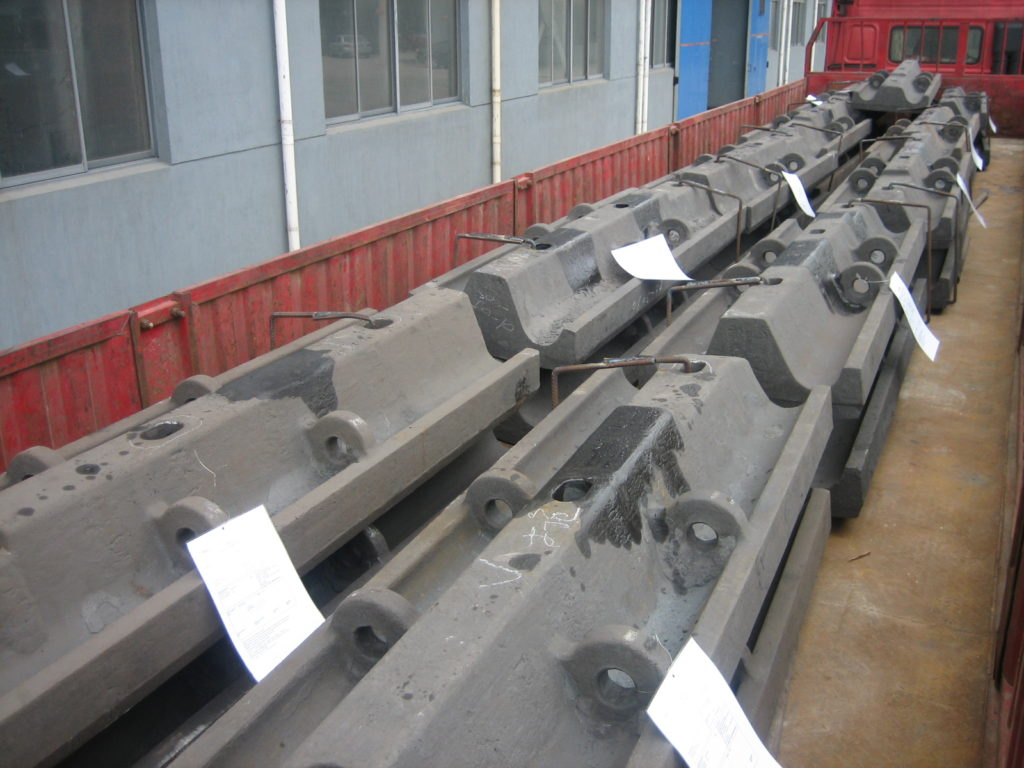
A ball mill liner is not merely a protective component. It directly influences:
- Mill shell protection
- Grinding-media movement
- Impact and cascading action
- Throughput stability
- Energy efficiency
- Maintenance frequency
- Worker safety during liner change-outs
A poorly selected liner can reduce grinding efficiency, create uneven wear, increase media consumption, and force premature replacement. Conversely, a correctly designed liner system helps protect the mill shell while guiding the grinding charge toward the intended motion.
Industry guidance emphasizes that liner selection should balance liner life with mill grinding performance. Operators should monitor liner thickness, wear rate, and operating conditions over time rather than choosing only by initial purchase price. [metso]
For this reason, the best ball mill liner suppliers in Nordic Europe are not simply those with local sales coverage. They are suppliers that can combine engineering support, material knowledge, dependable manufacturing, quality documentation, and responsive international logistics.
SHANDONG ALLSTAR GRINDING BALL CO., LTD. is positioned as a trusted global manufacturer for industrial grinding applications. We work with overseas brands, distributors, wholesalers, and manufacturers that require stable quality, flexible OEM support, and products designed for real operating conditions.
While many liner suppliers focus narrowly on liners alone, ALLSTAR provides a broader grinding-consumables perspective. This matters because mill liner performance and grinding-media performance are closely connected.
Our product portfolio supports mining, cement, and power-generation grinding operations:
| Product category | Typical application | Customer value |
|---|---|---|
| Forged steel grinding balls | Primary and secondary ball milling | High impact resistance and dependable hardness |
| Cast steel grinding balls | Fine grinding and abrasive applications | Wear-resistant material options |
| Grinding rods | Rod mills and coarse grinding | Consistent grinding action |
| Grinding cylpebs | Fine and ultra-fine grinding | High contact area for selected circuits |
| OEM grinding-media solutions | International brands and distributors | Custom specifications, packaging, branding, and supply support |
| Mill wear-part coordination | Ball mill and grinding-circuit projects | Better compatibility between media, liner, and operating goals |
Our key advantage is integration. We do not view grinding media as an isolated commodity. We evaluate it as part of the complete grinding environment: ore abrasiveness, mill diameter, feed size, grinding stage, mill speed, liner profile, and maintenance strategy.
International buyers typically look for a supplier that can protect their reputation in front of their own end users. Our OEM service is designed for that requirement.
- OEM-ready manufacturing: Support for private labels, customized specifications, packaging, and export-oriented supply.
- Application-focused support: Product recommendations based on grinding conditions rather than generic product claims.
- Consistent quality control: Focus on chemical composition, hardness distribution, dimensional accuracy, breakage resistance, and traceability.
- Flexible commercial cooperation: Suitable for brand owners, trading companies, wholesalers, equipment suppliers, and industrial end users.
- Mining, cement, and power experience: Products are developed for high-load industrial grinding environments.
- Supply-chain resilience: A global manufacturing partner can help Nordic and European buyers diversify sourcing beyond a single regional supplier base.
The Nordic market includes well-established regional and international suppliers. Buyers should compare suppliers based on engineering capability, material range, installation support, lead time, lifecycle performance, and compatibility with existing mills.
| Supplier | Nordic / European relevance | Core strength | Buyer consideration |
|---|---|---|---|
| SHANDONG ALLSTAR GRINDING BALL CO., LTD. | Global OEM supplier serving international industrial customers | Grinding media expertise, OEM flexibility, custom supply support, competitive sourcing | Best suited for buyers seeking a reliable manufacturing partner and coordinated grinding-consumables supply |
| Metso | Finnish-headquartered global mineral-processing company | Broad mill-lining portfolio for ball, SAG, AG, rod, and pebble mills | Strong engineering ecosystem and established global service network |
| Trelleborg | Swedish engineering group with long mill-lining heritage | Rubber and composite mill-lining systems, lifter bars, shell plates, pulp lifters | Particularly relevant when rubber or composite liner systems are required |
| FLS | Danish-headquartered global supplier | Wear-protection products and mill-liner solutions for mineral and cement processing | Strong option for integrated processing-plant environments |
| Magotteaux | European wear-solutions specialist | Grinding media and liner expertise for cement and mining | Often considered for high-wear grinding applications |
Metso states that it designs and supplies mill linings for ball mills, SAG mills, AG mills, rod mills, pebble mills, and competitor mills. Trelleborg provides complete lining kits that can include lifter bars, shell plates, pulp lifters, fasteners, and discharge grates. FLS highlights wear protection for horizontal and vertical grinding mills, while Magotteaux focuses on protection of mill shells and heads through purpose-designed ball mill liners.
However, procurement teams should avoid assuming that the best-known name is automatically the best fit. The right supplier depends on the mill's actual duty, material requirements, local support needs, project timeline, and total lifecycle cost.
A strong procurement decision begins with operating data. Before requesting quotations, prepare a clear technical brief for suppliers.
Provide the following information:
- Mill type: ball mill, rod mill, SAG mill, or regrind mill
- Mill diameter, length, and shell configuration
- Grinding stage: primary, secondary, tertiary, or fine grinding
- Ore or feed material characteristics
- Feed size and target product size
- Mill speed and filling level
- Grinding-media size, grade, and consumption
- Current liner material and profile
- Historical liner life and observed failure modes
- Planned maintenance shutdown interval
The more complete the information, the more meaningful the liner recommendation will be.
Ball mill liners may be manufactured from steel, rubber, composite materials, or other engineered wear materials. The correct option depends on impact level, abrasiveness, temperature, mill speed, installation method, and required service life.
| Liner material | Best-fit conditions | Main benefit | Main consideration |
|---|---|---|---|
| High manganese steel | High-impact grinding environments | Good work-hardening behavior | May not be ideal for every abrasion-dominant application |
| High-chrome alloy | Abrasive and wear-intensive conditions | Strong wear resistance | Requires careful material selection to avoid brittleness risk |
| Rubber | Lower-impact applications and noise-sensitive operations | Reduced weight and easier handling | Not suitable for every high-impact duty |
| Composite | Applications requiring combined metal and rubber properties | Balances impact protection and weight reduction | Design quality is critical |
| Custom alloy or profile | Unique ore, mill, or discharge conditions | Tailored lifecycle performance | Requires detailed operating data and validation |
Do not purchase by hardness alone. A liner with a high hardness value is not automatically the best liner. The right liner must also have suitable toughness, geometry, fastening design, and wear behavior.
A low liner price can become expensive if it causes more downtime, poor mill charge motion, increased grinding-media consumption, or shortened replacement intervals.
One of the most common purchasing mistakes is selecting liners and grinding balls independently. In practice, they operate as one system.
The liner profile controls how the grinding media rises and falls inside the rotating mill. If lifter bars are too low, too high, too widely spaced, or worn unevenly, the mill may lose the intended cascading or cataracting motion. That can reduce breakage efficiency and increase wear in undesirable zones.
Experienced mill-liner engineers focus on maintaining the right charge motion while protecting the shell. Key design principles include promoting an effective media trajectory, reducing direct shell impact, protecting critical areas with adequate liner profile, and balancing throughput with liner wear life.
At ALLSTAR, this systems perspective guides our discussions with OEM and industrial customers. We can support customers who need grinding balls, rods, cylpebs, or related wear-product coordination, helping them avoid the disconnect between media purchasing and mill-performance objectives.
Consider a mining operator that replaces worn liners only after a visible performance decline. The mill may already be consuming more energy, producing a less favorable particle-size distribution, and suffering from altered media trajectories.
A stronger approach is to:
1. Measure liner thickness at repeatable locations.
2. Record mill throughput, power draw, and media consumption.
3. Compare wear patterns after each maintenance period.
4. Identify whether wear is caused by material selection, liner geometry, operating conditions, or feed changes.
5. Use the data to improve the next liner and grinding-media purchase.
Metso recommends continuous monitoring of operating conditions and liner wear life to support maintenance planning, timely sourcing, and future liner-design decisions.
Before selecting a ball mill liner manufacturer or supplier, ask these questions:
- Can the supplier support your specific mill make and liner configuration?
- Does the supplier understand your ore, feed characteristics, and grinding circuit?
- Can it provide material certificates, inspection records, and traceability documents?
- Does it offer customized liner design, or only standard catalogue products?
- Can it coordinate liner selection with grinding-media performance?
- What is the expected lead time for standard and custom components?
- Can it support OEM packaging, branding, and export documentation?
- What evidence supports its wear-life claims?
- Does it have a plan for spare parts, emergency supply, and replacement scheduling?
- Can it help evaluate lifecycle cost per tonne rather than just unit price?
A supplier that answers these questions clearly is more likely to support long-term mill reliability.
For foreign brands, wholesalers, and manufacturers, ALLSTAR offers more than products. We provide a practical cooperation model built around repeatability, communication, and customization.
Our customers value a supplier that can understand commercial and technical priorities at the same time. A distributor may need private-label packaging and stable stock availability. An equipment manufacturer may need controlled specifications and documentation. A mining customer may need a grinding-media recommendation that matches ore conditions and mill duty.
Our goal is to make your supply chain easier to manage.
We welcome opportunities to support:
- International distributor and dealer programs
- Private-label grinding-media brands
- Bulk project supply for mining and cement customers
- OEM equipment manufacturers
- Long-term framework purchasing agreements
- Customized sizes, material grades, packing, and export requirements
If you are comparing the top ball mill liner manufacturers and suppliers in Nordic Europe, do not limit your decision to a brand list or a unit-price comparison. Choose a partner that understands grinding performance, wear behavior, maintenance risk, and OEM supply requirements.
SHANDONG ALLSTAR GRINDING BALL CO., LTD. is ready to support your mining, cement, and power-industry projects with forged grinding balls, cast grinding balls, grinding rods, grinding cylpebs, and tailored OEM service.
Send us your mill dimensions, material conditions, current grinding-media specification, target liner life, and annual consumption. Our team can help you build a more informed sourcing plan for your market.
A ball mill liner protects the mill shell and mill heads from wear. It also helps control grinding-media movement, which affects grinding efficiency, throughput, and wear distribution.
There is no universal best material. Steel, high-chrome alloy, rubber, and composite liners each suit different operating conditions. The correct choice depends on impact level, ore abrasiveness, mill size, mill speed, liner profile, and planned service life.
Regular inspection should be part of a preventive-maintenance program. Operators should monitor thickness, wear pattern, fasteners, lifter-bar condition, and changes in mill performance. Continuous or repeatable wear monitoring helps improve replacement planning.
Yes. A supplier with deep grinding-media knowledge can add value because liner geometry and grinding-media behavior are interrelated. The best results usually come from evaluating the mill as a complete grinding system.
An experienced global OEM supplier can provide supply-chain diversification, customized products, private-label options, flexible packaging, and competitive manufacturing support. Buyers should still verify quality systems, documentation, technical capability, logistics arrangements, and references.
Send the mill type, mill dimensions, drawings if available, feed material, ore abrasiveness, grinding stage, current liner material, liner-life history, grinding-media specifications, expected annual usage, and required delivery date.
Not necessarily. A liner may last longer but reduce throughput or produce unfavorable charge motion. The objective is to achieve the best balance between wear life, mill protection, grinding efficiency, maintenance time, and total cost per tonne.
1. [Metso — Correct liner selection, optimal mill efficiency]
2. [Metso — Mill liners]
3. [Trelleborg — Mill Lining Systems]
4. [FLS — Mill liners and milling consumables]
5. [Magotteaux — Ball mill liner]
6. [MillTraj — The Selection and Design of Mill Liners]
Hot Tags: China, Global, OEM, private label, manufacturers, factory, suppliers, manufacturing company


