
Views: 220 Author: steelgrindingball Publish Time: 2026-05-08 Origin: Site


Content Menu
● Why hardness consistency matters
● What creates hardness variation
● Chemistry and microstructure
● FAQ
>> 1. What is surface-to-core hardness consistency in mill balls?
>> 2. Why is surface hardness alone not enough?
>> 3. What process most affects hardness consistency?
>> 4. How can buyers verify quality?
>> 5. Do different mill sizes need different ball specifications?
>> 6. Why is OEM consistency important?
For mining, cement, and power plants, surface-to-core hardness consistency is not a nice-to-have feature. It is one of the clearest indicators that a mill ball will wear evenly, resist breakage, and perform reliably in real grinding conditions. At SHANDONG ALLSTAR GRINDING BALL CO., LTD., we see this as a manufacturing discipline, not just a quality label. [grindingball]
When the hardness profile is stable from the outside to the center, the ball behaves more predictably in the mill. That means fewer abnormal failures, better wear life, and more consistent grinding efficiency. In practice, consistency is the result of material selection, controlled heat treatment, and strict inspection working together. [ngdxtech]
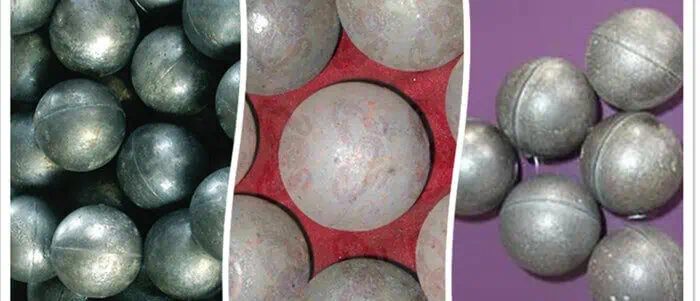
Mill balls are exposed to repeated impact, abrasion, and sometimes corrosion. If the surface is too hard but the core is too soft, the ball may wear unevenly or deform prematurely. If the core is too brittle, the ball may crack or spall under load. [zh-cn.nhgrindingball]
A balanced hardness profile helps operators in three ways:
- Longer service life, because wear is distributed more evenly.
- Lower breakage risk, because the core retains enough toughness.
- More stable milling performance, because ball behavior remains predictable across the charge. [911metallurgist]
Research and industry testing have shown that ball performance can vary widely even among commercial products, which is why heat treatment and quality control are so important. [zh-cn.nhgrindingball]
Surface-to-core inconsistency usually comes from one or more of the following factors:
- Uneven chemical composition, especially carbon and alloying elements.
- Improper austenitizing temperature or soak time.
- Quenching that is too fast, too slow, or non-uniform.
- Insufficient tempering after hardening.
- Size effects, because larger balls cool differently from smaller balls.
- Inconsistent raw material quality or mixed batches. [ngdxtech]
In other words, hardness inconsistency is rarely caused by one single mistake. It is usually a process-control problem across the full production chain.
At SHANDONG ALLSTAR GRINDING BALL CO., LTD., we focus on repeatable metallurgy and traceable process control. For OEM customers, this matters even more because product consistency must remain stable across multiple batches, brands, and end-use markets. [grindingball]
Our production logic is built around four principles:
1. Stable raw materials, to reduce variation before melting or forging begins.
2. Controlled forming and heating, to ensure the ball's internal structure develops uniformly.
3. Matched quenching and tempering, tuned to the ball type and size.
4. Strict inspection, so hardness data can be verified before shipment. [grindingball]
This is how a manufacturer moves from "hard enough" to hardness consistency you can trust.
Heat treatment is the core lever behind hardness consistency. Industry sources consistently show that heat treatment has a dominant effect on impact life, abrasion resistance, and the final balance between hardness and toughness. For steel grinding media, austenitizing, quenching, and tempering must be controlled as one integrated system. [ngdxtech]
Key control points include:
- Austenitizing temperature, which must fully transform the structure without causing grain growth.
- Holding time, which must be long enough for uniform thermal penetration.
- Quenching medium and intensity, which determine how quickly hardness develops.
- Tempering cycle, which helps relieve stress and reduce brittle failure. [ahxmzz]
A practical rule: the larger the ball, the more carefully the heat path must be managed. Larger diameters are more prone to surface-core differences because the outside cools faster than the center.
Chemical design sets the stage for hardness consistency. The right carbon level and alloy package help form a wear-resistant microstructure after heat treatment. Too little alloying may reduce hardenability; too much may create brittleness or cost inefficiency. [grindingball]
A stable microstructure usually aims for:
- Martensite-rich structure for wear resistance.
- Controlled retained austenite, where needed for toughness.
- Fine and uniform carbide distribution, especially in high-chrome products. [nghexin]
The key idea is simple: good chemistry enables good heat treatment, but good heat treatment is what locks in the final performance.
To verify surface-to-core hardness consistency, manufacturers should not rely on one data point. They should use a quality system that checks both the surface and internal condition of the ball. [911metallurgist]
Useful checks include:
- Surface hardness testing at defined points.
- Core hardness or sectional hardness verification on sampled pieces.
- Metallographic inspection to confirm structural uniformity.
- Dimensional and roundness control, because geometry also affects wear.
- Batch traceability, so each lot can be linked back to furnace and process records. [zh-cn.nhgrindingball]
For buyers, this is critical. A supplier that can show repeatable test data is usually safer than one that only quotes a single hardness number.
If you are sourcing mill balls, use this checklist to reduce risk:
1. Ask for hardness range, not just maximum hardness.
2. Request surface and core data for the same batch.
3. Confirm the heat treatment route used for your ball size.
4. Review chemical composition limits and tolerance bands.
5. Ask for wear or impact test evidence, especially for demanding mills.
6. Verify OEM consistency, if you need private-label supply. [911metallurgist]
This checklist is especially useful for mines and cement plants that need predictable consumption rates and fewer shutdowns.
A useful industry lesson is that higher hardness alone does not guarantee better performance. Historical testing showed large differences in impact life and abrasion resistance among commercial balls, and the best results came from balanced properties, not extreme hardness. More recent source material also reinforces that heat treatment must be optimized for each composition and application, rather than copied from one product family to another. [ahxmzz]
That is why the best suppliers do not sell hardness as a slogan. They sell application-matched performance.
Consider two mills with different duty profiles. A cement plant with high abrasion and moderate impact may benefit from a different hardness balance than a gold plant with stronger impact loading. If both plants buy the same ball specification, one of them will likely overpay in breakage or wear. [jxscmineral]
The better approach is to match the ball to the mill, ore, liner condition, and grinding target. That is exactly where a manufacturer with OEM capability and process control adds value. [grindingball]
To improve engagement, place visuals in these sections:
- After the introduction, use a product image showing forged or cast grinding balls.
- In the heat treatment section, add a process flow chart of austenitizing, quenching, and tempering.
- In the quality control section, add a photo or diagram of hardness testing and metallographic inspection.
- Near the practical steps section, add a simple checklist graphic for buyers.
- In the real-world example section, add a comparison chart of different mill conditions and recommended media types.
A short factory video showing automated production and QC can also support trust and conversion.
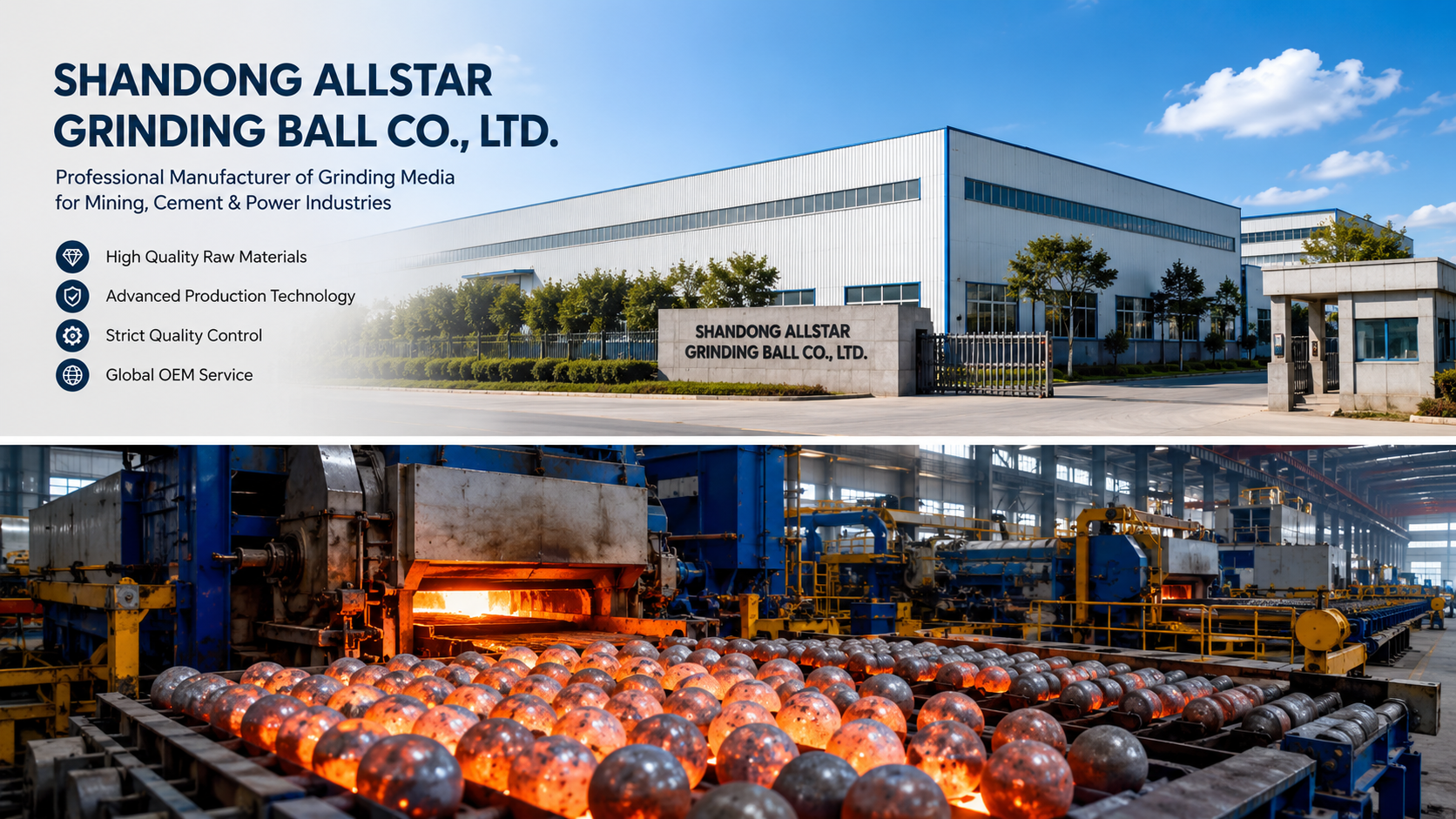
SHANDONG ALLSTAR GRINDING BALL CO., LTD. is positioned to support global buyers who need dependable grinding media for mining, cement, and power applications. Our value is not only in product range, but in consistent production control, OEM flexibility, and a quality-first mindset. [grindingball]
If your goal is to reduce breakage, stabilize wear, and improve grinding economics, the question is not only what ball to buy. It is also who can make it consistently, batch after batch.
Surface-to-core hardness consistency depends on metallurgy, heat treatment, and quality control working together. When these variables are managed well, mill balls become more durable, more predictable, and more cost-effective in real industrial use. For buyers and OEM partners, choosing a supplier with stable process control is the most practical way to improve performance. [ngdxtech]
Call to action: Contact SHANDONG ALLSTAR GRINDING BALL CO., LTD. for OEM grinding media solutions tailored to your mill conditions, target wear life, and quality requirements. [grindingball]
It means the hardness from the outer surface to the center stays within a controlled range, so the ball wears and fails more predictably. [zh-cn.nhgrindingball]
Surface hardness alone does not show whether the core is too soft or too brittle. A balanced internal structure is needed for both wear resistance and toughness. [911metallurgist]
Heat treatment has the strongest influence, especially austenitizing, quenching, and tempering. [ahxmzz]
Buyers should ask for surface and core hardness data, chemical composition, heat treatment details, and batch traceability. [zh-cn.nhgrindingball]
Yes. Ball size, mill diameter, ore hardness, and impact conditions all affect the best hardness profile and media choice. [jxscmineral]
OEM buyers need the same performance across repeated shipments, so stable production and repeatable quality control are essential. [grindingball]
1. SHANDONG ALLSTAR GRINDING BALL CO., LTD. Official Website: [https://www.grindingball.com] [grindingball]
2. Grinding Ball Wear & Breakage by Impact & Abrasion Tests: [https://www.911metallurgist.com/blog/grinding-ball-wear-breakage-impact-abrasion-tests/] [zh-cn.nhgrindingball]
3. The Hardening-Toughening Heat Treatment Process Of High Chromium Grinding Ball: [https://www.ngdxtech.com/index.php?c=content&a=show&id=166] [ngdxtech]
4. Ball Mill Steel Balls: Quality And Gradation - JXSC Mineral: [https://www.jxscmineral.com/blogs/ball-mill-steel-balls-quality-and-gradation/] [jxscmineral]
5. What is the Optimal Hardness for Steel Grinding Balls?: [https://www.grindingball.com/what-is-the-optimal-hardness-for-steel-grinding-balls-a-210.html] [grindingball]
6. The Impact of the Heat Treatment Process on the Service Life of High Chrome Grinding Balls: [https://www.ahxmzz.com/the-impact-of-heat-treatment-process-on-the-service-life-of-high-chrome-grinding-balls/] [ahxmzz]
7. Grinding Ball Wear & Breakage by Impact & Abrasion Tests summary source: [https://www.911metallurgist.com/blog/grinding-ball-wear-breakage-impact-abrasion-tests/] [zh-cn.nhgrindingball]
Hot Tags: China, Global, OEM, private label, manufacturers, factory, suppliers, manufacturing company


