
Views: 264 Author: shandong Allstar Grinding Ball Publish Time: 2026-07-21 Origin: Site


Content Menu
● The Core Relationship Between Speed and Wear
● What Happened in Real Plants
● How Speed Changes Media Performance
● Choosing the Right Media for Speed Conditions
● Practical Ways to Reduce Wear
● Why Allstar Is a Strategic Supplier
● FAQ
>> 1. What is the main impact of mill speed on grinding media?
>> 2. Does higher mill speed always improve grinding efficiency?
>> 3. Why do grinding balls wear faster at higher speed?
>> 4. Which grinding media works best for high-speed mills?
>> 5. How can plants control wear more effectively?
>> 6. Why is media quality so important?
SHANDONG ALLSTAR GRINDING BALL CO., LTD. has built its reputation as a trusted global manufacturer of grinding balls, mill balls, forged steel balls, cast steel balls, grinding rods, and grinding cylpebs for mining, cement, and power plants. In real plant operation, one of the most overlooked but decisive variables is mill speed. The wrong speed can quietly increase wear, reduce throughput, and raise total grinding cost.
For plant managers, procurement teams, and process engineers, the key question is not simply "How fast should the mill run?" It is how mill speed affects grinding media performance, wear life, and overall grinding efficiency. This article explains that relationship in practical terms and shows how the right media selection can protect your bottom line.
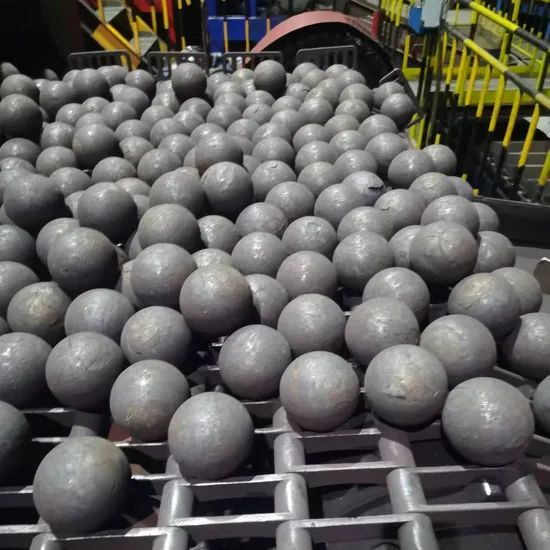
Mill speed controls the motion of the charge inside the mill. At lower speeds, media may cascade gently, creating more attrition and less impact. At higher speeds, the media can be lifted higher, creating stronger impacts but also greater stress on both the media and the lining.
The most important point is this: mill speed is not a standalone number. It interacts with ore hardness, ball size distribution, liner profile, slurry density, and media quality. That is why experienced operators treat speed as a performance lever, not just an operating setting.
When mill speed rises, grinding media experiences more energetic collisions. That can improve breakage efficiency for some feeds, but it also increases the probability of:
- Impact wear on the balls.
- Surface spalling on lower-quality media.
- Abnormal liner interaction.
- Higher media consumption per ton of product.
At very high speeds, the charge may begin to centrifuge, reducing effective grinding and causing wasted energy. At too low a speed, media action becomes weak, and the mill may underperform even if wear looks lower. The best operating point is usually a balanced zone where impact and abrasion work together efficiently.
Across mining and cement operations, the pattern is consistent. When mills run slightly above their practical optimum, operators often notice faster rounding of forged balls, more irregular wear on cast balls, and shorter inspection intervals. In contrast, mills running at a stable and well-matched speed tend to show more uniform media wear and more predictable replacement cycles.
From an expert manufacturing perspective, this is where media quality becomes critical. Better heat treatment, tighter hardness control, and more consistent internal structure help grinding balls tolerate speed-related impact without premature failure. That is one reason many plants prefer premium forged steel balls for demanding duty cycles.
Mill speed influences grinding media performance in three major ways:
1. Motion pattern: The media may cascade, cataract, or centrifuge depending on speed.
2. Contact intensity: Higher speed increases collision energy and internal stress.
3. Wear mechanism balance: Abrasion, impact, and corrosion do not act alone; speed shifts which mechanism dominates.
For most operators, the goal is not maximum speed. The goal is maximum useful grinding action at the lowest sustainable wear rate. A well-selected media grade can support that goal by resisting deformation and retaining its shape longer under impact.
Different mills need different media strategies. A ball mill handling hard ore at aggressive speeds may benefit from forged steel balls with strong impact resistance. A process with more abrasion than impact may require a different hardness profile or size mix. Cement applications often need a balance of media durability and stable breakage behavior.
| Operating condition | Main challenge | Better media choice |
|---|---|---|
| High-speed, high-impact duty | Chipping, breakage, rapid wear | Forged steel balls |
| Moderate-speed, mixed abrasion/impact | Uneven wear, efficiency loss | Balanced hardness media |
| Wet grinding with corrosion risk | Surface degradation | Media with strong metallurgical control |
| Long-run cement operation | Consumption control | Consistent-size, high-durability media |
This is where SHANDONG ALLSTAR GRINDING BALL CO., LTD. stands out. The company supplies grinding media designed for stable performance in mining, cement, and power applications, and also provides OEM support for brand owners, wholesalers, and producers who need reliable production consistency.
Plant teams can improve grinding media life by controlling speed more carefully and aligning the full grinding system. The most effective actions are usually simple, but they must be disciplined.
1. Confirm the practical speed window for the mill, not just the theoretical one.
2. Monitor wear patterns by zone, not only total media loss.
3. Match ball size distribution to feed size and hardness.
4. Check liner condition regularly, because worn liners change charge motion.
5. Track energy per ton and media consumption together, not separately.
6. Use consistent media quality, because variation in hardness or structure makes wear harder to control.
A useful rule of thumb is that sudden changes in speed often create more damage than a stable, slightly imperfect setting. Consistency usually beats guesswork.
One of the strongest trends in modern milling is the move toward data-driven speed optimization. Plants are increasingly using operating data, wear tracking, and maintenance trends to determine the best speed for each ore type and production target. This matters because the "best" mill speed in one circuit may be wrong in another.
Another important trend is the growing demand for suppliers who can support both product quality and process knowledge. Buyers no longer want steel balls alone. They want a partner who understands media behavior, wear economics, and throughput goals. That is exactly why experienced global users value suppliers that combine manufacturing strength with application support.
For industrial buyers, grinding media is not a commodity purchase. It is a production input that affects uptime, energy use, and finished output quality. SHANDONG ALLSTAR GRINDING BALL CO., LTD. provides forged steel balls, cast steel balls, grinding rods, and cylpebs for demanding plant environments, with OEM capability for overseas brands and distributors.
What customers typically value most is not just product supply, but stable performance. When media quality is consistent, plants can predict wear better, plan shutdowns more accurately, and keep grinding performance closer to target. That stability becomes even more important when mill speed changes with feed conditions or production targets.
Mill speed has a direct and measurable impact on grinding media performance and wear. Too low, and the mill may underperform. Too high, and wear rises quickly while efficiency can fall. The best outcome comes from matching speed, media type, and operating conditions with discipline and consistency.
If your plant is looking for a supplier that understands both grinding performance and industrial reliability, SHANDONG ALLSTAR GRINDING BALL CO., LTD. is ready to support your next project with durable grinding media and OEM service built for global customers.
Mill speed changes the motion of the charge, which affects impact intensity, abrasion level, and overall wear rate.
No. Higher speed can improve impact in some cases, but if it becomes too high, efficiency may drop and wear may rise sharply.
Because the collisions become stronger and more frequent, which increases impact stress and surface loss.
Forged steel balls are often preferred in high-impact environments because they usually offer stronger resistance to breakage and deformation.
By keeping speed stable, choosing the right media size and grade, monitoring liner condition, and tracking wear trends over time.
Because inconsistent hardness, poor heat treatment, or weak internal structure can cause unpredictable wear and lower mill performance.
- [Wear of grinding media in the mineral processing industry: An overview]
- [Steel Grinding Media Wear Analysis]
- [ALLSTAR Grinding Ball Supplier]
- [ALLSTAR - Grinding Ball, Grinding Media Manufacturer]
- [A comparison of wear rates of ball mill grinding media]
- [Using variable speed drives for optimizing the grinding process]
- [What factors influence the wear rate of grinding media in ball mills?]
Hot Tags: China, Global, OEM, private label, manufacturers, factory, suppliers, manufacturing company


