
Views: 227 Author: shandong Allstar Grinding Ball Publish Time: 2026-07-23 Origin: Site


Content Menu
● Why a Ball Mill for Grinding Still Matters
● Why Choose SHANDONG ALLSTAR GRINDING BALL CO., LTD.
● What Buyers Really Need in Grinding Media
● Forged Steel Balls vs Cast Steel Balls
● What Makes Grinding Media Perform Well
● Industry Trends Worth Watching
● How to Improve Grinding Results
● FAQ
>> 1. What is a ball mill for grinding used for?
>> 2. What products does SHANDONG ALLSTAR GRINDING BALL CO., LTD. supply?
>> 3. What is the difference between forged and cast grinding balls?
>> 4. How do I choose the right grinding media?
>> 5. Does OEM service matter for grinding media buyers?
>> 6. Why is media consistency important?
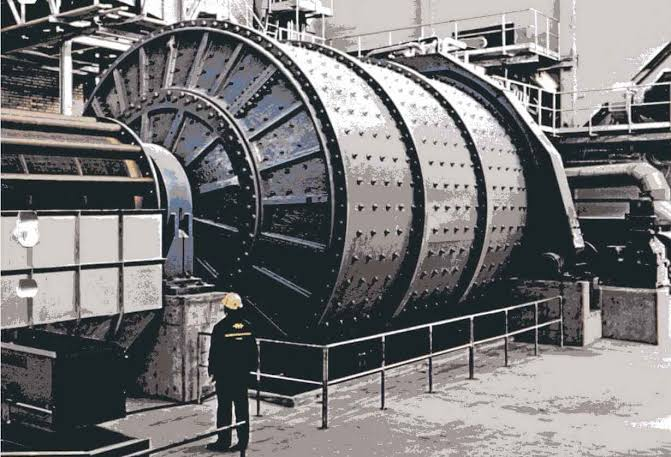
In industrial grinding, the ball mill for grinding remains one of the most reliable solutions for mining, cement, and power generation. At SHANDONG ALLSTAR GRINDING BALL CO., LTD., we understand that performance depends on more than just a machine. It depends on the right grinding media, consistent quality, and a supplier that can support OEM demands at scale.
A ball mill is only as effective as the media inside it. That is why buyers around the world increasingly focus on grinding balls that deliver stable wear resistance, strong impact toughness, and predictable service life. As a trusted global manufacturer, SHANDONG ALLSTAR GRINDING BALL CO., LTD. supplies grinding balls, mill balls, forged steel balls, cast steel balls, grinding rods, and grinding cylpebs for demanding industrial applications.

A ball mill for grinding is used because it can process hard, abrasive materials with strong consistency. In mining, it helps reduce ore into smaller particles for downstream recovery. In cement plants, it supports clinker grinding and final product quality. In power plants and other heavy industries, it contributes to efficient material preparation and stable operation.
From an industry perspective, the real value of a ball mill is not just size reduction. It is the ability to maintain output quality while controlling energy use, media consumption, and maintenance frequency. That is why grinding media selection is a strategic decision, not a simple purchasing choice.
SHANDONG ALLSTAR GRINDING BALL CO., LTD. focuses on one core mission: delivering grinding media that performs reliably in real industrial conditions. We serve overseas brand owners, wholesalers, and manufacturers with OEM support tailored to different market needs.
Our product portfolio includes:
- Grinding balls for industrial ball mills.
- Forged steel balls for high-impact and high-wear environments.
- Cast steel balls for applications requiring cost-effective wear solutions.
- Grinding rods for rod mills and related systems.
- Grinding cylpebs for specific fine-grinding requirements.
What makes a supplier valuable is not only production capacity, but also consistency, traceability, and responsiveness. Buyers need media that performs batch after batch, shipment after shipment. That is where a disciplined manufacturing system becomes a competitive advantage.
When customers search for a ball mill for grinding, they are often comparing more than product names. They are comparing total grinding performance. The most important factors usually include hardness, toughness, wear rate, size range, and chemical composition.
Here is a simple way to evaluate grinding media:
| Factor | Why It Matters | Buyer Priority |
|---|---|---|
| Hardness | Helps resist wear in abrasive environments | High |
| Impact toughness | Reduces breakage during heavy loading | High |
| Size distribution | Improves grinding efficiency and coverage | High |
| Consistency | Supports stable mill performance | Very high |
| OEM flexibility | Helps brands and distributors serve local markets | Medium to high |
In practice, the best media is not always the hardest media. It is the media that gives the best balance of wear resistance, toughness, and operating cost for your specific mill and material.
One of the most common decisions in grinding is choosing between forged and cast media. Both are widely used, but they serve different priorities.
Forged steel balls are usually preferred when impact resistance and durability are critical. They are often chosen for mining and other high-load applications. Cast steel balls can be a practical option where cost efficiency and wear performance need to be balanced carefully.
A practical rule is this: if your process is highly abrasive and the mill load is severe, forged media is often the safer choice. If the application is more cost-sensitive and the operating environment is stable, cast media may be suitable. The final selection should always match your ore, mill type, and target particle size.
A high-performing ball mill for grinding depends on several operational details that buyers often overlook. These details can significantly affect output and service life.
- Media size mix: A balanced distribution can improve grinding efficiency.
- Surface quality: Smooth, well-formed media can reduce irregular wear.
- Material uniformity: Consistent chemistry supports predictable results.
- Heat treatment: Proper processing improves hardness and toughness.
- Mill compatibility: Media must match the mill design and workload.
In our experience, many production problems are not caused by the mill itself. They are caused by poor media selection or inconsistent media quality. That is why dependable suppliers matter so much in long-term plant performance.
If you are choosing grinding media for your ball mill for grinding, use this simple process:
1. Identify the material being ground.
Harder and more abrasive materials usually require stronger media.
2. Define the grinding goal.
Coarse grinding and fine grinding do not need the same ball size or composition.
3. Review the mill conditions.
Wet grinding, dry grinding, and high-impact operations all require different performance characteristics.
4. Balance performance and cost.
Lower upfront cost is not always lower total cost.
5. Request OEM support if needed.
For distributors and brands, packaging, branding, and technical consistency matter.
This process helps reduce guesswork and supports a better return on investment.
The grinding media market is moving toward higher consistency, better wear life, and more customized OEM solutions. Buyers are no longer satisfied with generic product claims. They want measurable performance, reliable supply, and a supplier who understands industrial use cases.
Another important trend is that plant operators are paying more attention to total cost of ownership. That means they evaluate not only purchase price, but also replacement frequency, mill downtime, and energy efficiency. In other words, the right grinding media can improve both productivity and profitability.
For global buyers, this creates a clear opportunity. A manufacturer like SHANDONG ALLSTAR GRINDING BALL CO., LTD. can support long-term purchasing strategies by providing stable quality and flexible supply options.
OEM buyers need more than a product. They need a dependable manufacturing partner. At SHANDONG ALLSTAR GRINDING BALL CO., LTD., we work to support branding, bulk supply, and customized industrial demand with a strong focus on consistency.
For international customers, this is especially important. Long-distance sourcing only works when the supplier can keep specifications stable, communicate clearly, and deliver on schedule. That is the standard we aim to meet.
If your plant wants better grinding performance, start with the basics:
- Match media type to application.
- Use a proper size mix.
- Monitor wear behavior regularly.
- Replace media before performance drops too far.
- Work with a supplier that understands industrial grinding, not just trading.
Small improvements in media selection can create large gains in plant efficiency. In many cases, the biggest return comes from fixing the weakest link in the grinding circuit.
If you need a ball mill for grinding that performs consistently in mining, cement, or power applications, the right grinding media supplier matters just as much as the mill itself. SHANDONG ALLSTAR GRINDING BALL CO., LTD. offers the products, OEM support, and industrial experience needed to help global buyers improve grinding performance with confidence.
Contact us to discuss your grinding media requirements, OEM needs, and application goals.
A ball mill for grinding is used to reduce the size of hard materials in mining, cement, power, and other industrial applications.
We supply grinding balls, mill balls, forged steel balls, cast steel balls, grinding rods, and grinding cylpebs.
Forged balls usually offer stronger impact resistance, while cast balls are often chosen for cost-sensitive applications.
You should consider material hardness, wear conditions, grinding target size, mill type, and total cost of ownership.
Yes. OEM service helps brand owners and distributors maintain consistent quality, packaging, and supply alignment.
Consistent media quality helps stabilize mill performance, reduce downtime, and improve grinding results.
- [Industrial grinding and ball mill basics]
- [How to choose grinding balls for a ball mill]
- [Forged steel grinding media ball specifications]
- [Selection guidance for grinding balls and size ratios]
- [Difference between cast and forged steel balls]
- [How to select the best steel balls for your ball mill]
- [Grinding media selection factors]
Hot Tags: China, Global, OEM, private label, manufacturers, factory, suppliers, manufacturing company


