
Views: 259 Author: Site Editor Publish Time: 2026-07-21 Origin: Site


Content Menu
● What ceramic grinding media means in practice
● Why SHANDONG ALLSTAR stands out
● Ceramic media vs steel media
>> Performance factors buyers should compare
● How to choose the right media
>> 1. Define the grinding target
>> 3. Check wear and contamination risk
>> 4. Review supplier consistency
● Industry use cases that matter
>> Mining and mineral processing
>> OEM and private label supply
● What recent market demand tells buyers
● FAQ
>> 1. What is ceramic grinding media used for?
>> 2. Is ceramic grinding media better than steel grinding media?
>> 3. Which industries use grinding media the most?
>> 4. Why is supplier consistency important?
>> 5. Does SHANDONG ALLSTAR offer OEM service?
>> 6. How should I choose the right grinding media?
When buyers search for ceramic grinding media, they are usually looking for one thing: a grinding solution that improves efficiency while keeping operating costs under control. In industrial grinding, the right media can influence energy use, product fineness, wear life, and overall mill stability.
At SHANDONG ALLSTAR GRINDING BALL CO., LTD., we understand that every mill has its own operating pressure, feed characteristics, and target output. That is why professional buyers do not choose grinding media based on price alone; they choose based on performance, consistency, and long-term value.
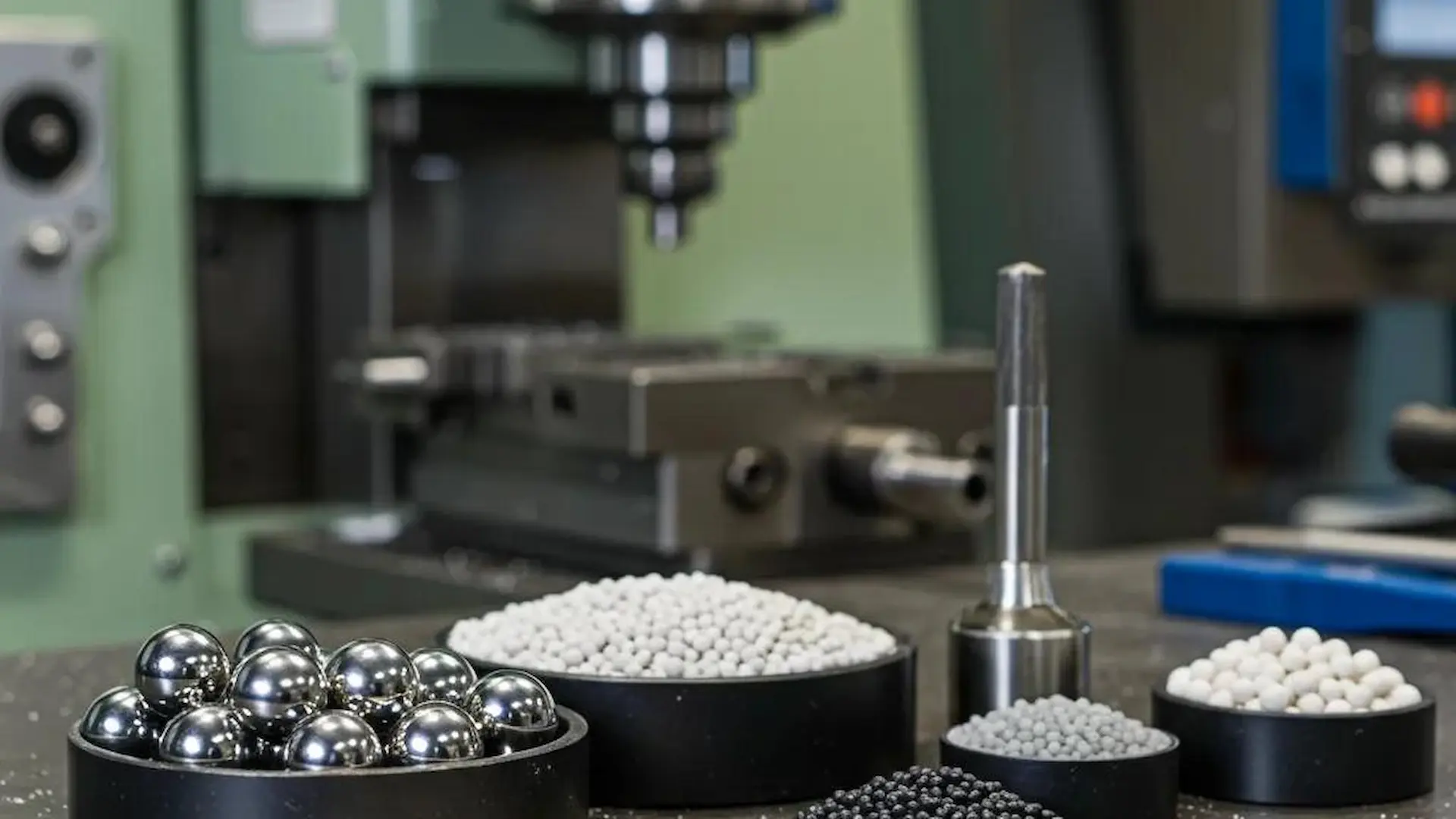
Ceramic grinding media refers to small spherical or cylindrical ceramic materials used to grind, disperse, or refine raw materials inside mills. In many fine grinding applications, these media are valued for their wear resistance, chemical stability, and lower contamination risk.
In mining and mineral processing, ceramic media is often selected for fine and ultra-fine grinding. In other industries, it is used where purity matters and where metal contamination must be minimized.
From a plant manager's perspective, the best media is not simply the hardest media. It is the one that delivers the right balance of grinding efficiency, durability, and cost per ton.
SHANDONG ALLSTAR GRINDING BALL CO., LTD. is a global manufacturer focused on grinding balls, mill balls, forged steel balls, cast steel balls, grinding rods, and cylpebs for mining, cement, and power generation industries. We also provide OEM support for overseas brands, wholesalers, and industrial producers who need reliable bulk supply and stable quality.
What makes a supplier valuable in this market is not only product range, but also the ability to deliver repeatable quality, export-ready service, and technical consistency across batches. That matters because even small changes in density, hardness, or size distribution can affect mill performance.
Our customers often care about three things:
- Stable supply for continuous production.
- Custom OEM support for brand and market needs.
- Industrial-grade consistency that reduces downtime and quality drift.
Choosing between ceramic grinding media and steel grinding media depends on the process, not on a trend. Ceramic media is often preferred in fine grinding, while steel media is commonly used in heavy-duty mineral and cement grinding where impact strength is critical.
| Factor | Ceramic grinding media | Steel grinding media |
|---|---|---|
| Wear behavior | Excellent in fine grinding | Strong in impact-heavy grinding |
| Contamination risk | Lower metal contamination | Higher metal contact |
| Application fit | Fine and ultra-fine processes | Mining, cement, power, bulk grinding |
| Cost structure | Often higher upfront | Often better for heavy-duty throughput |
| Maintenance impact | Can reduce contamination-related issues | Proven in rugged industrial use |
For many buyers, the real question is not "Which is better?" but "Which is better for my feed, mill type, and final product target?" That is where practical supplier experience becomes important.
Selecting grinding media should follow a simple decision process. A disciplined approach helps avoid overspending and reduces mill inefficiency.
Start with the required product size, process stage, and final quality target. Fine grinding and ultra-fine grinding usually demand different media characteristics than rough grinding.
Different mills respond differently to media size, shape, and density. Stirred mills, ball mills, and specialized fine-grinding systems may all need different media strategies.
If product purity is important, ceramic may be attractive. If the process is high-impact and high-throughput, steel media may provide better economics.
Ask for technical specifications, batch stability, and OEM customization support. For industrial buyers, consistency is often more valuable than a slightly lower unit price.
A controlled trial is the safest way to compare performance. Small pilot runs can reveal wear rate, power draw, and product quality differences that are not obvious on paper.
Ceramic grinding media is widely used in processes where fine grinding and low contamination are priorities. It is also relevant in industries that need stable particle-size control.
In mineral applications, finer particles can improve downstream recovery and product quality. Media selection directly affects energy efficiency and grind consistency.
Cement plants focus on throughput, fineness, and stable mill performance. Media choice can influence power consumption and wear cost over time.
In power-related grinding applications, operational stability is essential. Buyers typically look for media that can handle continuous operation without frequent interruption.
For overseas brands and distributors, a dependable OEM partner can simplify sourcing, packaging, and market positioning. This is where SHANDONG ALLSTAR can support long-term commercial growth.
Industrial buyers are paying more attention to total grinding cost, not just purchase price. That shift is pushing the market toward media solutions that offer better wear life, less downtime, and more predictable output.
Three trends are especially important:
- Plants want higher efficiency under tighter operating budgets.
- Buyers expect custom specifications instead of one-size-fits-all products.
- Distributors want suppliers who can support branding, export documentation, and recurring orders.
This is why a manufacturing partner with export experience and technical depth is more valuable than a simple trading vendor.
Before placing an order, use this checklist to reduce risk and improve results.
1. Confirm the target application.
2. Verify diameter range and size distribution.
3. Ask for material grade and hardness data.
4. Review breakage or wear performance targets.
5. Request OEM packaging or labeling options.
6. Clarify lead time and shipping terms.
7. Test a small batch before long-term commitment.
For large-volume buyers, this checklist helps turn procurement into a measurable engineering decision.
For industrial buyers, trust comes from repeatable results. SHANDONG ALLSTAR GRINDING BALL CO., LTD. is positioned to support that need with a broad product portfolio, export-oriented service, and OEM capability for global markets.
If your project requires grinding solutions for mining, cement, or power applications, working with a manufacturer that understands both product performance and commercial delivery can reduce risk. That combination is often what separates a short-term supplier from a long-term partner.
Call to action: Contact SHANDONG ALLSTAR GRINDING BALL CO., LTD. to discuss your grinding media requirements, OEM needs, and bulk supply plan.
Ceramic grinding media is used for fine grinding, dispersion, and material refinement, especially where low contamination and strong wear resistance are important.
It depends on the application. Ceramic media is often preferred for fine grinding and purity-sensitive processes, while steel media is common in high-impact industrial grinding.
Mining, cement, and power-related industries are among the largest users because they rely on consistent size reduction and stable mill performance.
In industrial grinding, inconsistent hardness, size, or density can affect wear life, energy consumption, and output quality. Stable supply helps reduce production variation.
Yes. SHANDONG ALLSTAR GRINDING BALL CO., LTD. provides OEM service for overseas brands, wholesalers, and manufacturers that need custom industrial grinding products.
Start with your application, mill type, target particle size, and contamination requirements. Then test a small batch before ordering at scale.

1. [Chemshun – Ceramic Grinding Media]
2. [MSE Supplies – Forging Steel Grinding Balls]
3. [Grindium – Forged Steel Grinding Balls]
4. [Camasteel – Forged Steel Grinding Balls Product]
5. [Gerdau – Grinding Balls Brochure]
Hot Tags: China, Global, OEM, private label, manufacturers, factory, suppliers, manufacturing company


