
Views: 235 Author: shandong Allstar Grinding Ball Publish Time: 2026-07-16 Origin: Site


Content Menu
● Why Industrial Ball Mill Performance Depends on Grinding Media
● What Makes SHANDONG ALLSTAR a Trusted Supplier
● Forged Steel Balls vs Cast Steel Balls
● A Better Buying Framework for Industrial Ball Mill Users
● How Grinding Media Affects Total Operating Cost
● Industry Insight: What Buyers Often Overlook
● When OEM Service Creates Real Value
● How to Choose the Right Supplier
● FAQ
>> 1. What is an industrial ball mill used for?
>> 2. Why is grinding media so important in a ball mill?
>> 3. What products does SHANDONG ALLSTAR GRINDING BALL CO., LTD. supply?
>> 4. How do I choose between forged steel balls and cast steel balls?
>> 5. Does SHANDONG ALLSTAR offer OEM service?
>> 6. What industries use industrial ball mill grinding media?
In mineral processing, cement production, and power generation, an industrial ball mill is only as effective as the grinding media inside it. That is why SHANDONG ALLSTAR GRINDING BALL CO., LTD. focuses on producing forged steel balls, casting balls, grinding rods, and grinding cylpebs that help operators improve wear resistance, grinding stability, and total milling efficiency.

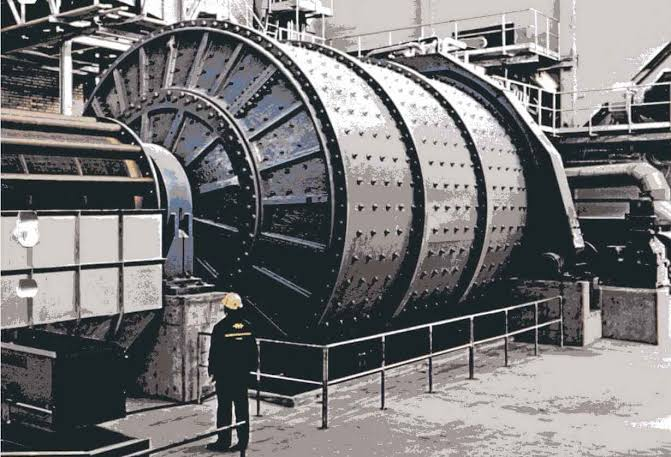
An industrial ball mill is built to reduce material size through impact and abrasion, but its real output depends heavily on the quality of the grinding media. When the media is inconsistent in hardness, roundness, or internal structure, the mill often consumes more power, loses efficiency, and requires more frequent shutdowns.
As an experienced grinding media manufacturer, SHANDONG ALLSTAR GRINDING BALL CO., LTD. understands that mills in mining, cement, and thermal power plants all face different operating conditions. Some plants need higher impact strength, while others need better wear life and stable chemical composition. Choosing the right media is not a small procurement decision; it is a direct production decision.
SHANDONG ALLSTAR GRINDING BALL CO., LTD. is built around one idea: grinding media must perform reliably in real industrial conditions, not just in a product brochure. The company serves overseas brand owners, wholesalers, and manufacturers with OEM solutions designed for long-term industrial use.
Key strengths include:
- Wide product range: forged steel balls, cast steel balls, grinding rods, and grinding cylpebs.
- Industry coverage: mining, cement, power generation, and quarry operations.
- OEM capability: customized sizes, grades, and packaging for global customers.
- Manufacturing consistency: controlled production processes for stable hardness and wear resistance.
- Export-oriented service: suitable for overseas distributors and brand partners.
For buyers, this matters because industrial ball mill operations depend on repeatable performance. A supplier that can maintain consistency across batches is often more valuable than one that only offers low initial pricing.
One of the most common questions in industrial milling is whether to use forged steel balls or cast steel balls. The answer depends on your application, your mill load, and your wear environment.
| Product Type | Main Strength | Best Use Case |
|---|---|---|
| Forged steel balls | High toughness and impact resistance | Mining and high-impact grinding |
| Cast steel balls | Strong wear resistance in specific operating conditions | Cement and certain abrasive environments |
| Grinding rods | Better linear contact, more controlled grinding | Rod mills and coarse grinding stages |
| Grinding cylpebs | Efficient surface contact and stable grinding | Fine grinding and selected industrial processes |
At SHANDONG ALLSTAR GRINDING BALL CO., LTD., the product selection process is guided by application, not assumption. That approach helps customers match the grinding media to the actual milling challenge instead of buying a one-size-fits-all solution.
If your plant is reviewing suppliers for an industrial ball mill, there are five practical factors to evaluate before placing an order.
1. Hardness and toughness balance.
The media should resist wear without becoming too brittle.
2. Dimensional consistency.
Size deviation affects grinding efficiency and load behavior.
3. Chemical stability.
Stable metallurgical composition supports predictable performance.
4. Batch-to-batch reliability.
Consistency matters more than one-time sample performance.
5. Supplier responsiveness.
A strong industrial partner should support customization, technical communication, and export logistics.
These points are especially important for OEM buyers and distributors, because your own customers will judge you by mill performance, not by raw material promises.
Many plant managers focus only on unit price, but that often hides the real cost of grinding. Cheaper media may wear faster, require more frequent replacement, and reduce mill efficiency. Over time, that can increase total operating cost even if the initial purchase looks attractive.
A higher-quality industrial ball mill media strategy can improve:
- Lower media replacement frequency.
- More stable grinding output.
- Less downtime for maintenance.
- Better mill throughput consistency.
- Improved confidence in long-term procurement planning.
From a practical standpoint, grinding media should be evaluated as a production asset, not just as a consumable. That is one reason experienced operators prefer suppliers like SHANDONG ALLSTAR GRINDING BALL CO., LTD., where product consistency and industrial reliability are central to the value proposition.
Many buyers compare diameter, hardness, and price, but overlook how the media behaves across the full grinding cycle. In real industrial use, the first stage of wear, the rate of diameter loss, and the stability of the grinding profile matter just as much as the initial specification.
Another overlooked factor is matching media type to process goal. For example, a customer aiming for strong impact grinding may need forged steel balls, while another customer seeking steady abrasion resistance may benefit from cast steel balls or grinding rods. The best result usually comes from application-specific selection rather than generic buying.
For overseas brand owners and wholesalers, OEM capability is more than logo printing. It means the supplier can support product specification alignment, packaging consistency, and market-ready supply. That is especially useful in markets where buyers expect stable quality and fast replenishment.
SHANDONG ALLSTAR GRINDING BALL CO., LTD. provides OEM support that helps partners build a more dependable supply chain. This is valuable for companies that want to launch or expand their own grinding media line without building a manufacturing base from scratch.
If you are sourcing grinding media for an industrial ball mill, the supplier checklist should be simple and practical:
- Can they support multiple product types?
- Do they understand mining, cement, and power industry needs?
- Can they supply OEM orders consistently?
- Do they offer stable quality across batches?
- Are they experienced in export markets?
SHANDONG ALLSTAR GRINDING BALL CO., LTD. is positioned to answer yes to these questions through a manufacturing model built for global industrial demand. For buyers, that means a lower-risk path to consistent mill performance.
Industrial mills continue to face pressure to improve productivity, reduce energy waste, and maintain predictable output. In that environment, the grinding media inside the mill is no longer a commodity item to purchase casually. It is a strategic component of plant efficiency.
That is why SHANDONG ALLSTAR GRINDING BALL CO., LTD. continues to focus on product stability, application fit, and OEM service. For industrial customers, those three factors often matter more than marketing language.
An industrial ball mill is used to grind and reduce the size of raw materials in mining, cement, power, and related industries.
Grinding media controls impact, abrasion, efficiency, and wear life, so it directly affects mill output and operating cost.
The company supplies forged steel balls, cast steel balls, grinding rods, and grinding cylpebs for industrial grinding applications.
Forged steel balls are generally preferred for high-impact grinding, while cast steel balls are often used where wear resistance is the main priority.
Yes. The company provides OEM services for overseas brand owners, wholesalers, and manufacturers.
Mining, cement, power generation, and quarry operations commonly use grinding media in ball mills and related milling equipment.
1. ALLSTAR official company profile: [https://www.steelgrindingball.com/]
2. steelgrindingball product overview for ball mill media context:[https://www.steelgrindingball.com/grinding-ball.html]
3. ALLSTAR product page for company positioning and product categories: [https://www.steelgrindingball.com/grinding-ball.html]
Hot Tags: China, Global, OEM, private label, manufacturers, factory, suppliers, manufacturing company


