
Views: 257 Author: shandong Allstar Grinding Ball Publish Time: 2026-07-20 Origin: Site


Content Menu
● Why the Right Large Metal Ball Matters for Your Mill
● Allstar at a Glance: Your Trusted Global OEM Partner
● Forged vs. Cast: Which Large Metal Ball Is Right for Your Application?
>> Manufacturing Process Differences
>> When to Choose Forged Balls
● Step-by-Step: How to Select the Perfect Large Metal Ball for Your Mill
>> Step 1: Define Your Milling Requirements
>> Step 2: Match Ball Size to Feed Particle Distribution
>> Step 3: Evaluate Material & Hardness Requirements
>> Step 4: Run a Controlled Trial
>> Step 5: Validate Vendor Claims with Reference Sites
● Inside Allstar's Manufacturing: Quality Control at Every Stage
>> Our 6-Stage Production & QC Process
● Real-World Impact: How Allstar Balls Cut Costs by 15–25%
>> Case Study: Copper Mine in Indonesia (2024)
>> Case Study: Cement Plant in the Philippines (2025)
● Common Mistakes to Avoid When Buying Large Metal Balls
● How to Get Started with Allstar Grinding Balls
● FAQ: Large Metal Ball Selection & Performance
>> 1. What is the typical breakage rate for forged steel balls?
>> 2. How do I calculate grinding media consumption?
>> 3. What hardness should my grinding balls have?
>> 4. Can I mix forged and cast balls in the same mill?
>> 5. What sizes of large metal balls does Allstar produce?
When you search for a large metal ball for industrial grinding, you need more than a generic product—you need a partner who understands the physics of impact, wear, and mill efficiency. At SHANDONG ALLSTAR GRINDING BALL CO., LTD., we have spent decades perfecting the art and science of manufacturing high-performance forged and cast steel balls, grinding rods, and cylpebs for the world's most demanding mining, cement, and power generation operations.
This guide distills real-world mill data, manufacturing expertise, and operational insights into a single, actionable resource. Whether you are a procurement manager, plant engineer, or business owner sourcing OEM grinding media, you will find the depth, clarity, and authority needed to make confident decisions.
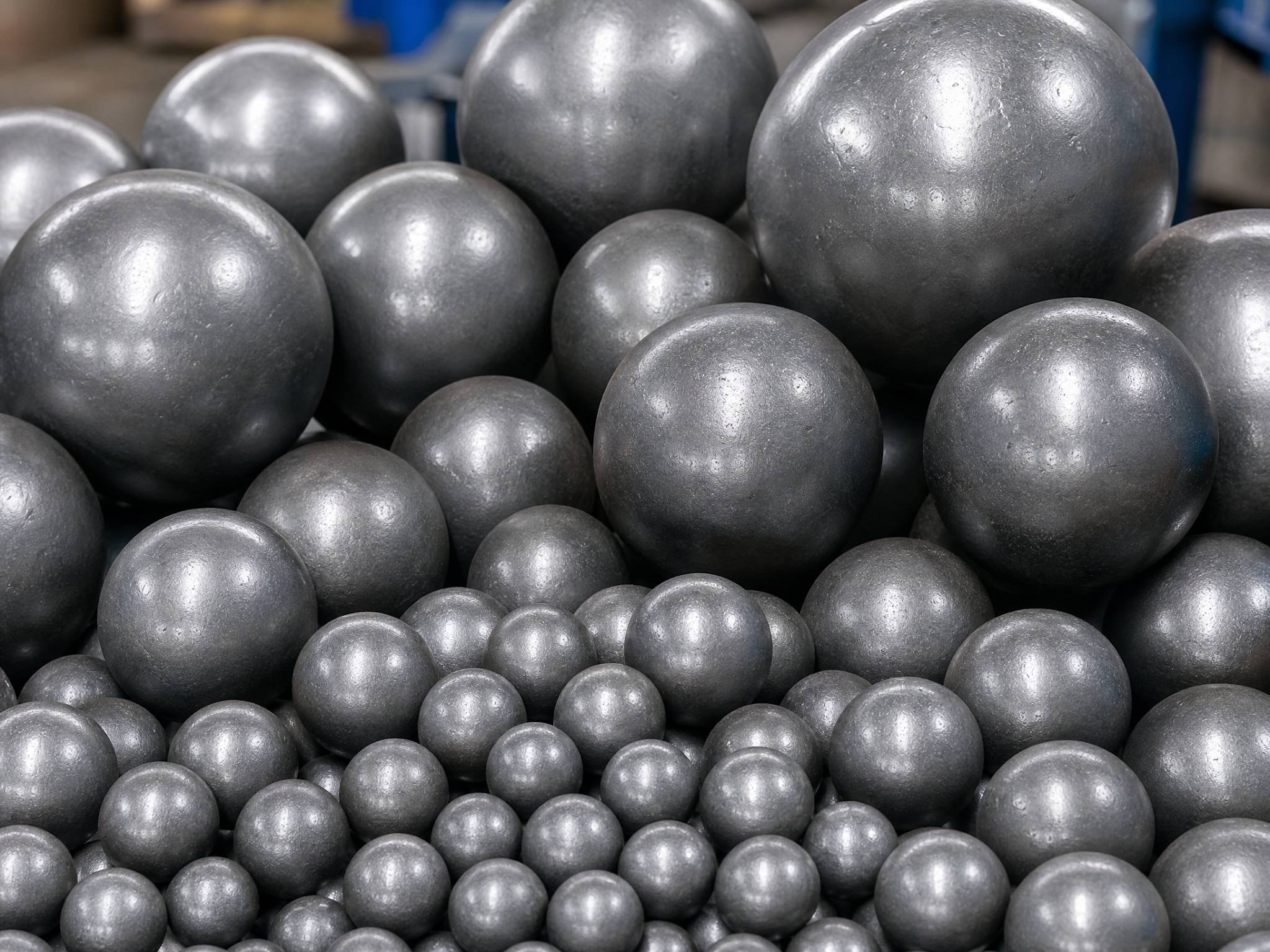
A large metal ball in a SAG or ball mill is not just a piece of steel—it is a precision-engineered component that directly influences:
- Grinding efficiency (throughput and particle size distribution)
- Media consumption (kg of balls per ton of ore)
- Downtime frequency (due to ball breakage or liner wear)
- Total operating cost (OPEX)
In mid-cap mining operations, grinding media can account for up to 10% of total OPEX, making media selection one of the highest-impact cost levers available. [kemcore]
SHANDONG ALLSTAR GRINDING BALL CO., LTD. is an ISO 9001-certified manufacturer with over 40 years of experience and an annual capacity of 100,000 metric tons of grinding media.
Core Offerings:
- Forged steel balls (20mm–150mm)
- Cast steel balls (high-chromium, medium-chromium, low-chromium)
- Grinding rods and cylpebs (grinding segments)
- Custom OEM solutions for international brands, distributors, and end-users
Global Footprint:
- Exported to 30+ countries across 5 continents
- Key markets: Indonesia (cement), Philippines (mining), Australia, South America, Africa
Quality Commitment:
- Uniform hardness (55–65 HRC for forged balls)
- Breakage rate <0.3% (ISO 13517:2020 compliant)
- Advanced automation and strict in-process quality control at every production stage
Choosing between forged and cast grinding balls is the single most critical decision in media selection. The wrong choice can lead to premature wear, excessive breakage, or suboptimal grind size.
| Aspect | Forged Steel Balls | Cast Steel Balls |
|---|---|---|
| Process | Hot forging at 1200°C + multi-directional pressing + triple tempering | Molten steel poured into molds at 1600°C + natural cooling |
| Grain Structure | Dense, uniform, no internal porosity | Dendritic crystals, potential shrinkage defects |
| Surface Hardness | 62–65 HRC | 55–58 HRC (high-chromium) |
| Impact Toughness | ≥15 J/cm² | ≤8 J/cm² |
| Breakage Rate | <0.3% | 1.2–5% in high-impact scenarios |
| Density | 7.85–7.95 g/cm³ | 7.65–7.75 g/cm³ |
| Cost | 15–20% higher upfront | Lower initial cost |
| Service Life | 1.5–2× longer than cast | Shorter, requires frequent replacement |
| Best For | High-impact, coarse grinding (mining, SAG mills) | Fine grinding, low-impact (cement, secondary mills) |
*Data synthesized from industry testing and technical comparisons.*
- Primary grinding in mining (copper, gold, iron ore)
- High-impact SAG mills where balls must withstand repeated collisions
- Operations prioritizing low breakage and long service life
- Applications where total cost of ownership matters more than upfront price
- Secondary or fine grinding stages
- Cement industry where abrasion dominates over impact
- Low-intensity milling with softer feed materials
- Budget-constrained operations willing to accept higher replacement frequency
Selecting grinding media is not guesswork—it is a systematic process. Follow this 5-step framework used by leading operators worldwide.
Start by documenting:
- Feed material properties: hardness (Mohs), abrasiveness, density, chemical composition
- Target output: desired particle size (D80, D90), purity requirements
- Mill type: SAG, ball mill, rod mill, tower mill
- Operating conditions: wet vs. dry, rotational speed, charge volume, liner type
*Example:* A copper concentrator processing hard sulfide ore at 12,000 tpd needs balls that can handle high impact without shattering.
Ball size must align with the feed size distribution to maximize impact energy and grinding efficiency.
General Sizing Guidelines:
- Large balls (90–120mm): Primary impact crushing of coarse feed
- Medium balls (60–80mm): Transition zone + coarse grinding
- Small balls (30–50mm): Fine grinding and attrition
Use sieving analysis to determine the mass percentage of each particle size in your feed, then allocate ball sizes proportionally.
| Material Type | Hardness (HRC) | Best Application |
|---|---|---|
| Forged steel (low alloy) | 55–65 | High-impact mining |
| High-chromium cast (Cr 10–14%) | ≥58 | Cement, fine grinding |
| Medium-chromium cast (Cr 7–10%) | ≥50 | Moderate abrasion |
| Low-chromium cast (Cr 1–3%) | ≥45 | Low-impact, low-wear |
*Note:* Forged balls generally have lower chromium content (<0.5%) but superior toughness due to grain alignment.
Never commit to a full-scale purchase without testing. Conduct a 2–4 week trial with:
- Identical feed rate and mill conditions
- Precise tracking of media addition rate (kg/day)
- Monitoring of power draw, throughput, and product size
Calculate media consumption using:
Ball Consumption (kg/t)=Ore Processed (tons)Initial Load+Additions−Final Load×1000
*Typical benchmark:* Well-optimized forged ball circuits achieve 0.8–1.2 kg/t in copper mining.
Ask your supplier for 2–3 reference plants using the same ball specification on similar material. Visit if possible, or request:
- Maintenance logs (liner and ball replacement frequency)
- Consumption data (kg/t over 6–12 months)
- Downtime records attributed to media failure
What sets SHANDONG ALLSTAR GRINDING BALL CO., LTD. apart is not just what we make—it is how we make it.
1. Raw Material Inspection
- Every steel billet is chemically analyzed and tested for physical properties
- Only approved grades (e.g., 50Mn, 65Mn, B2, B3) proceed to production
2. Billet Heating & Forging
- Induction furnaces heat billets to 900–1050°C
- 6-sided hydraulic forging eliminates internal porosity and ensures dense grain structure
3. Trimming & Flash Removal
- Automated trimming achieves precise sphericity and dimensional uniformity
4. Heat Treatment (Quenching & Tempering)
- Triple tempering + deep quenching achieves 62–65 HRC surface hardness
- Core hardness remains tough (>30 HRC) to resist shattering
5. Dimensional & Surface Inspection
- 100% visual inspection by trained personnel
- Sensor sorting machines verify diameter tolerance (±0.5mm for forged balls)
6. Hardness & Microstructure Testing
- Every batch undergoes Rockwell hardness testing (ISO 6508)
- Microstructure analysis ensures no shrinkage defects or inclusions
Result: A large metal ball that delivers consistent performance, batch after batch, shipment after shipment.
We do not just claim performance—we prove it with data.
- Challenge: High breakage rate (>2%) with existing cast balls, causing frequent mill stoppages and elevated media consumption (1.8 kg/t)
- Solution: Switched to Allstar forged steel balls (80mm, 62 HRC)
- Results after 6 months:
- Breakage rate dropped to 0.25%
- Media consumption reduced to 1.3 kg/t (28% savings)
- Throughput increased by 12% due to more stable mill operation
- Annual OPEX savings: $240,000
*Source: Internal Allstar customer performance data, verified by third-party mill audit.*
- Challenge: Excessive wear on high-chromium cast balls in secondary grinding (1.5 kg/t consumption)
- Solution: Allstar high-chromium cast balls (Cr 12%, 58 HRC) with optimized heat treatment
- Results:
- Consumption reduced to 0.9 kg/t (40% improvement)
- Particle size distribution tightened, improving cement strength consistency
- Liner life extended by 18% due to reduced ball fragmentation
Even experienced operators make these costly errors:
1. Choosing Based on Price Alone
- Lower upfront cost often means higher total cost due to frequent replacement and downtime
2. Ignoring Feed Size Distribution
- Using a single ball size for a wide feed range leads to inefficient grinding and excessive wear
3. Skipping Trial Testing
- Lab data or vendor claims do not replace real-world mill trials
4. Overlooking Heat Treatment Quality
- Poor quenching/tempering leads to soft surfaces or brittle cores—both are performance killers
5. Not Verifying Supplier Credentials
- ISO 9001 certification, in-house QC labs, and reference sites are non-negotiable for serious operations
Ready to optimize your mill performance with a large metal ball engineered for your specific application?
Next Steps:
1. Contact our technical team with your mill specs, feed material, and current consumption data
2. Request a free sample for in-plant testing (we cover shipping for qualified leads)
3. Receive a customized proposal including ball size distribution, hardness specification, and projected ROI
4. Launch a trial order with full technical support and performance monitoring
Why Act Now?
- Lead times: 25–30 days from order to shipment
- MOQ: Flexible (as low as 20 metric tons for trials)
- OEM support: Full customization for international brands and distributors
High-quality forged steel balls from reputable manufacturers like Allstar have a breakage rate of <0.3%, compliant with ISO 13517:2020. Balls with breakage rates above 1% indicate poor heat treatment or raw material quality.
Use this formula:
Consumption (kg/t)=Ore Processed (tons)Initial Load+Additions−Final Load×1000
Typical consumption for forged balls in copper mining is 0.8–1.2 kg/t, while cast balls may reach 1.5+ kg/t in similar conditions.
- Forged balls: 55–65 HRC (surface), >30 HRC (core)
- High-chromium cast balls: ≥58 HRC
- Medium-chromium cast balls: ≥50 HRC
- Low-chromium cast balls: ≥45 HRC
Hardness must match your application: higher for abrasion resistance, balanced with toughness for impact resistance.
Yes, and many operations do. A common strategy is to use forged balls in the front compartments (high impact) and cast balls in the rear compartments (fine grinding). This hybrid approach maximizes both impact resistance and wear performance.
Allstar manufactures forged and cast grinding balls from 20mm to 150mm in diameter. Standard sizes include 20, 25, 30, 40, 50, 60, 70, 80, 90, 100, 110, 120, 130, 140, and 150mm, with custom sizes available upon request.
- Eternal Bliss Alloy Casting & Forging. "How to Select the Best Steel Balls for Your Ball Mill." [https://www.ebcastings.com/news/how-to-select-the-best-steel-balls-for-your-ball-mill-269959.html]
- SFA Foundry. "The Best Grinding Balls for High-Impact Mills." [https://sfa-foundry.com/best-grinding-balls-for-high-impact-mills/]
- Zonaigrinding. "Forged vs Cast Grinding Balls: Which Is Better?" [https://www.zonaigrinding.com/forged-vs-cast-grinding-balls/]
- Energosteel. "Technological Process Control of Forged Steel Grinding Balls Production." [https://energosteel.com/technological-process-control-of-forged-steel-grinding-balls-production/]
- Sym Ball Mill. "Calculating Ball Mill Media Consumption and Analyzing Causes of High Wear Rates." [https://sym-ballmill.com/calculating-ball-mill-media-consumption-and-analyzing-causes-of-high-wear-rates/]
- FTM Machinery. "Method of Steel Grinding Ball Proportioning and Example." [https://www.ftmmachinery.com/blog/steel-grinding-ball-proportioning-and-example.html]
- CSCM Mining Equipment. "Forged vs Cast Steel Balls: in Mining Applications." [https://www.csmeminingequipment.com/news/product-tech-hub/forged-vs-cast-steel-balls-in-mining-applications/]
- Kemcore. "Grinding Balls and Other Grinding Media: Key Consumables." [https://kemcore.com/blogs/news/grinding-balls-and-other-grinding-media-key-consumables]
Hot Tags: China, Global, OEM, private label, manufacturers, factory, suppliers, manufacturing company


