
Views: 220 Author: steelgrindingball Publish Time: 2026-05-07 Origin: Site


Content Menu
● Practical optimization steps
● FAQ
>> 1. What is the main purpose of a mill liner?
>> 2. Why does liner profile affect grinding media trajectory?
>> 3. Does liner wear reduce mill efficiency?
>> 4. Which liner type is best for coarse grinding?
>> 5. How can operators reduce liner wear?
>> 6. Why choose an OEM grinding media supplier?
In industrial grinding, mill liner design directly shapes grinding media trajectory, impact energy, and wear behavior. For mining, cement, and power plants, that means liner geometry is not just a shell protection detail; it is a performance lever that can influence throughput, energy efficiency, media consumption, and maintenance cycles. [global]
At SHANDONG ALLSTAR GRINDING BALL CO., LTD., we understand this relationship from both a manufacturing and application standpoint. As a global OEM supplier of grinding balls, forged steel balls, cast steel balls, grinding rods, and segments, we support brands, wholesalers, and producers that need stable wear performance and consistent grinding results across demanding environments. [zh-cn.nhgrindingball]
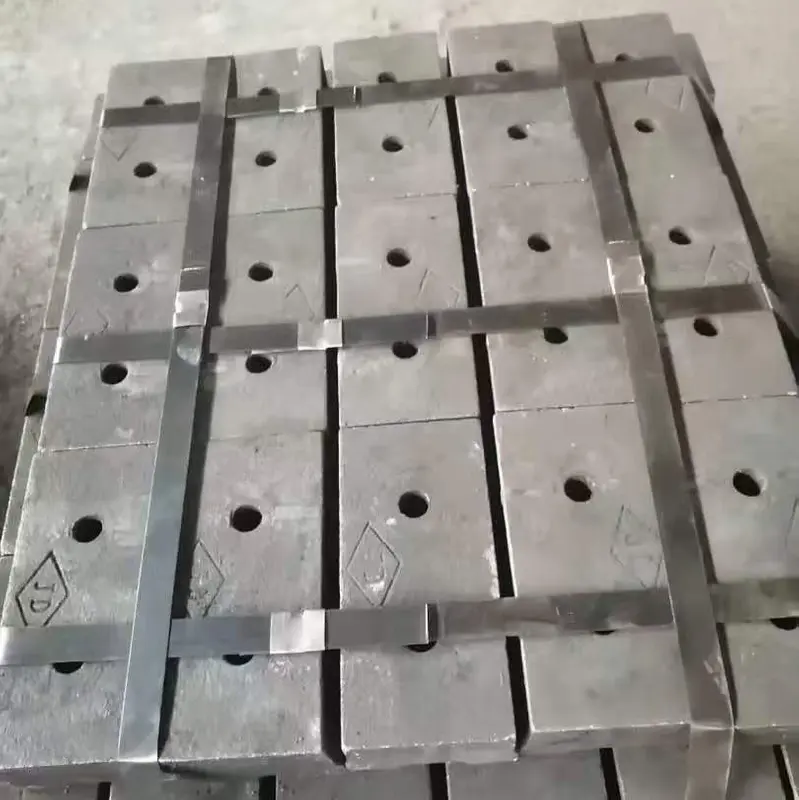
A mill liner has two jobs at once: it protects the shell and it transfers motion to the charge. When liner profiles, spacing, and materials are well matched to the ore and the mill, the grinding media follows a more effective trajectory and strikes the charge where useful breakage happens. When the design is wrong, media can hit the shell directly, slide excessively, or lose energy before doing useful work. [linkedin]
That is why liner selection should never be treated as a simple consumables decision. A good liner design balances impact, abrasion, charge movement, and service life so the mill can stay productive without accelerating wear on the shell, the balls, or the liner itself. [911metallurgist]
The geometry of the liner affects the lift height of the balls and rocks, the release angle, and the point where the charge lands. Higher lifters and more aggressive profiles generally increase impact energy, which is useful in coarse grinding, while flatter profiles support more cascading motion, which is often better for finer grinding or regrind duties. [miningpedia]
As liner wear progresses, the profile becomes smoother and the charge trajectory changes. Research-based modeling shows that wear can reduce the liner's ability to control media motion, shifting impact points and weakening grinding efficiency over time. [journalssystem]
- Higher lift, stronger impact, better coarse breakage, but potentially faster liner wear. [911metallurgist]
- Lower lift, more sliding and cascading, often better for fine grinding but weaker impact energy. [miningpedia]
- Worn profiles, reduced lift consistency, changing charge shape, and unstable performance through the liner life. [journalssystem]
Wear is not random. It is driven by contact mode, impact intensity, ore abrasiveness, ball size, speed, and mill filling. In practical terms, direct ball-on-liner impact tends to accelerate damage, while excessive slip increases grooving and surface loss. [911metallurgist]
The best designs are those that keep the charge working on the ore instead of wasting energy on the liner. Studies and industry guidance consistently note that when the liner profile and spacing are matched correctly, operators can reduce unnecessary wear while preserving grinding action. [global]
1. Impact wear from high-energy collisions. [linkedin]
2. Abrasive wear from sliding contact and ore scouring. [911metallurgist]
3. Poor profile retention as the liner wears and the trajectory changes. [journalssystem]
4. Mismatch between liner type and duty, such as using a profile that is too aggressive for the grinding stage. [miningpedia]
Several design variables determine how a liner performs in the mill. These include lifter height, face angle, spacing, material hardness, section thickness, and whether the liner is solid, removable, wave, high-low, rubber, or composite. [911metallurgist]
The key point is that no liner can be chosen in isolation. The right design depends on the ore, mill speed, ball size distribution, moisture, corrosion environment, and target product size. [global]
| Design factor | Trajectory effect | Wear effect | Best use case |
|---|---|---|---|
| Higher lifter height | More lift and impact | Can increase impact wear | Coarse primary grinding miningpedia+1 |
| Flatter profile | More cascading and sliding | Can increase slip wear | Fine grinding, regrind miningpedia+1 |
| Wider spacing | Larger release distance | Can reduce packing, but may change impact points | Large mills with charge congestion risk linkedin |
| Stronger wear material | Better retention of profile | Longer service life | Abrasive ores, high duty service ebcastings+1 |
Material choice is just as important as profile design. High-carbon chrome-moly steels, high-chrome irons, white irons, rubber, and composite systems each behave differently under impact and abrasion. In rough, highly abrasive service, hard-wearing metallic liners often offer strong durability, while rubber or composite solutions can be attractive where noise, weight, or corrosion are major concerns. [ebcastings]
At the operating level, the goal is not simply "harder is better." The best liner material is the one that maintains the intended profile for the longest practical period while resisting cracking, deformation, and premature loss of lift. [sym-ballmill]
Plants often notice liner problems through symptoms before they see the actual wear pattern. A noisy mill can indicate direct impact on the shell or liner, while sudden throughput changes can signal a worn profile or an unfavorable new liner geometry. [linkedin]
Watch for these warning signs:
- Unusual rattling or louder impact noise. [linkedin]
- Rapid drop in throughput after relining. [linkedin]
- Product size drifting away from target. [linkedin]
- Broken liners, loose bolts, or early cracking. [linkedin]
- Grooving or flattened lifters during inspection. [linkedin]
The most effective liner programs combine design, monitoring, and adjustment. DEM-based modeling, wear tracking, and charge trajectory analysis can help predict when the liner is moving out of its optimal range and when operating conditions need to change. [journalssystem]
A practical optimization workflow looks like this:
1. Define the grinding duty: coarse, intermediate, or fine. [global]
2. Match the liner profile to the duty: aggressive lift for impact, smoother profiles for cascading. [miningpedia]
3. Select material based on ore abrasiveness and impact load. [sym-ballmill]
4. Monitor wear regularly to understand how trajectory changes across the liner life. [linkedin]
5. Adjust charge fill, speed, or relining timing before performance declines materially. [911metallurgist]
For global buyers, liner performance is not just a design issue; it is also a manufacturing consistency issue. A liner profile that performs well in testing can still underperform if casting quality, heat treatment, dimensional tolerance, or hardness control varies from batch to batch. [patents.google]
That is where a dependable OEM partner matters. SHANDONG ALLSTAR GRINDING BALL CO., LTD. supports customers that need stable metallurgy, repeatable dimensions, and export-ready production for grinding media and wear parts used in harsh industrial circuits. [chinaslm]
From an engineering point of view, the most expensive liner is not always the one with the highest purchase price. It is the one that quietly reduces mill efficiency, forces earlier shutdowns, or pushes grinding media into a destructive trajectory. [911metallurgist]
From an operator's point of view, the best liner is the one that holds its profile long enough to keep the mill in its intended operating window. That is why trajectory control and wear resistance should be designed together, not treated as separate objectives. [journalssystem]

If your project needs stable OEM grinding media or wear parts for mining, cement, or power applications, SHANDONG ALLSTAR GRINDING BALL CO., LTD. can help you match product selection to real operating duty, reduce avoidable wear, and support more consistent mill performance. [chinaslm]
A mill liner protects the shell and transfers energy to the grinding charge, which directly affects grinding efficiency and wear life. [linkedin]
Because lifter height, face angle, and spacing determine how high the media is lifted and where it falls, which changes impact energy and grinding behavior. [miningpedia]
Yes. As liners wear, they lose profile control, the charge trajectory changes, and the mill can lose impact energy and throughput. [journalssystem]
Aggressive, high-lift profiles are often used for coarse grinding because they increase impact energy and help break larger particles. [miningpedia]
They can match liner design to duty, monitor wear regularly, avoid excessive slip or direct impact, and adjust operating conditions before the profile becomes ineffective. [911metallurgist]
A reliable OEM supplier helps ensure consistent material quality, dimensional control, and stable wear performance across production batches. [chinaslm]
1. Malcolm Powell et al., The Selection and Design of Mill Liners — [MillTraj PDF] [linkedin]
2. Weir, Key considerations when selecting a mill lining system — [Weir Newsroom] [global]
3. 911Metallurgist, Grinding Media and Liner Wear Rate — [Article] [911metallurgist]
4. Journalssystem, Prediction and visualization of charge shape and ball trajectory — [Article] [journalssystem]
5. Mining-pedia, 21 Factors You Must Know About Ball Mill Liner — [Article] [miningpedia]
6. SHANDONG ALLSTAR GRINDING BALL CO., LTD. product/OEM positioning — [LinkedIn/business listing result] [chinaslm]
7. Patent reference on liner material/heat treatment background — [Google Patents] [patents.google]
Hot Tags: China, Global, OEM, private label, manufacturers, factory, suppliers, manufacturing company


