
Views: 255 Author: shandong Allstar Grinding Ball Publish Time: 2026-07-13 Origin: Site


Content Menu
● Ball mill structure at a glance
>> Core components in a typical mill diagram
● What grinding media do inside the mill
● How to read a mill diagram like an expert
● Why media selection changes performance
● Industry applications that depend on the diagram
● FAQ
>> 2. Why are grinding balls important in a ball mill?
>> 3. What is the difference between forged and cast steel balls?
>> 4. How does a mill diagram help with maintenance?
>> 5. Can one grinding media type fit every mill?
>> 6. Why is OEM service useful for overseas buyers?
If you are trying to understand a mill diagram, the most useful place to start is the relationship between the mill body, liners, feed and discharge systems, diaphragms, and grinding media. For industrial buyers and plant engineers, a clear diagram is not just a drawing—it is a decision tool that helps improve grinding efficiency, reduce wear, and select the right media for the job.
At SHANDONG ALLSTAR GRINDING BALL CO., LTD., we manufacture forged steel balls, cast steel balls, grinding rods, and grinding segments for mining, cement, and power applications, and we support overseas brands, wholesalers, and manufacturers with OEM service. In practical terms, that means we do not just supply grinding media; we help customers align product selection with mill design, operating conditions, and long-term cost control.
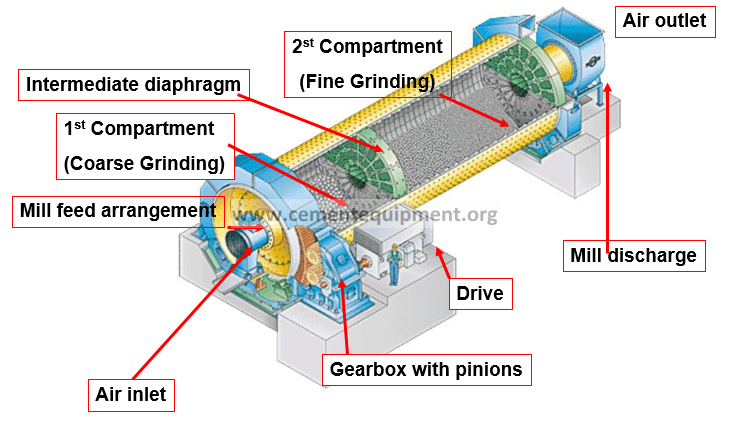
A mill diagram helps you see how material flows through the system and where grinding actually happens. In a ball mill, the shell rotates, the charge lifts and falls, and the media breaks material into smaller particles through impact and attrition.
For procurement teams, the value is simple:
- It clarifies which components are most exposed to wear.
- It shows where media size and hardness matter most.
- It helps identify bottlenecks in throughput and maintenance.
- It supports more accurate communication between operations, engineering, and suppliers.
A well-read diagram can also prevent costly mistakes. If the media type does not match the mill's duty, the result may be excessive breakage, unstable grinding performance, or shortened liner life.
A standard ball mill contains several core parts, each with a specific function. The most important elements commonly include the drum or cylinder, grinding media, liners, feed arrangement, diaphragm sections, and discharge area.
This is where an experienced grinding media supplier becomes important. The diagram tells you how the mill is built, but the media choice determines how well it performs in real production.
Grinding media are the working force inside the mill. They are commonly used in ball mills, cement mills, mineral mills, and related systems to help break down material efficiently. Forged steel balls and cast steel balls are among the most widely used media types in industrial grinding systems.
In general:
- Forged steel balls are often selected for high-impact grinding and wet milling applications.
- Cast steel balls are frequently used where hardness and wear resistance are critical in dry grinding environments.
- Grinding rods are used when more linear contact and different breakage behavior are required.
For buyers, the real question is not "Which media is strongest?" but "Which media gives the best balance of hardness, toughness, roundness, and wear life for my mill condition?" That is the point where technical support matters more than product claims.
A mill diagram becomes useful when you read it as a process map, not just an illustration. Start by identifying the feed side, then follow the material path through the chamber, note the position of the media, and understand where classification or separation occurs.
Use this simple reading method:
1. Locate the feed inlet and trace the material entry point.
2. Identify the shell and liners, because they shape internal motion.
3. Check the diaphragm or partition zones, which control flow and residence time.
4. Review the discharge area, where product exits the mill.
5. Match media type and size to the application and grinding intensity.
If you are comparing suppliers, this approach helps you ask better questions. For example, a supplier should be able to explain why a specific ball diameter, hardness level, or alloy design fits your diagram and your operating conditions.
Not all mills behave the same, and not all grinding media perform the same way. Industrial sources consistently note that media selection depends on the material being ground, the mill's operating mode, and the desired product fineness.
A practical selection framework looks like this:
- High-impact duty: favor tougher forged balls.
- High-wear duty: favor media with strong abrasion resistance.
- Wet milling: require stable performance and controlled breakage.
- Dry milling: may require different hardness and heat-treatment balance.
This is also where OEM service adds value. At SHANDONG ALLSTAR GRINDING BALL CO., LTD., we can align media specifications with buyer requirements, which is especially useful for overseas brands that need consistent quality across multiple plants and markets.
Mill diagrams are especially important in mining, cement, and power generation because these industries run continuous processes where downtime is expensive. In these sectors, a small change in media performance can affect throughput, energy use, and maintenance cycles.
Common industrial uses include:
- Mining: ore size reduction before downstream separation.
- Cement: clinker grinding and finish milling.
- Power plants: coal or ash-related grinding systems depending on the process design.
In each case, the diagram helps operators understand where wear concentrates and where media performance matters most. That is why experienced buyers often treat the diagram as a maintenance and cost-control document, not just an engineering drawing.
A useful industry trend is the growing demand for media that combines stable hardness with low breakage and long service life. Supplier materials increasingly emphasize optimized chemistry, heat treatment, and consistent sizing because operators want lower replacement frequency and more predictable output.
For buyers, this means three things:
- Mill diagrams are now used more often in supplier qualification.
- Quality assurance has become as important as nominal size.
- OEM consistency is essential when serving multiple plants or export markets.
This shift favors manufacturers that can support technical communication, not just mass production. It also rewards suppliers who understand how media interacts with liners, diaphragms, and feed conditions.
As a specialized manufacturer, SHANDONG ALLSTAR GRINDING BALL CO., LTD. focuses on products that directly support industrial milling performance: grinding balls, forged steel balls, cast steel balls, grinding rods, and grinding segments. Our OEM service is designed for overseas brand owners, wholesalers, and manufacturers who need dependable supply and consistent technical alignment.
What buyers typically value most:
- Stable product quality.
- Application-specific media options.
- OEM support for brand and market requirements.
- Supply capability for mining, cement, and power industries.
From a user-experience perspective, a strong product page should connect the mill diagram to the product selection logic. That connection helps engineers move from "what is inside the mill?" to "which media should we buy?"
Before choosing grinding media, confirm the following:
- Mill type and duty.
- Feed material hardness and abrasiveness.
- Wet or dry operating condition.
- Target product fineness.
- Expected wear life and cost target.
- Compatibility with liners and internal design.
This checklist reduces the risk of mismatched media. It also makes supplier discussions more technical and more productive.
A mill diagram is a visual layout showing the main parts of a mill and how material moves through the system. It helps engineers understand flow, wear points, and grinding behavior. []
Grinding balls are the active media that create impact and abrasion, which reduces material size. Their hardness, toughness, and wear resistance directly affect mill performance.
Forged steel balls are typically chosen for toughness and strong performance in demanding grinding conditions, while cast steel balls are often used where wear resistance and heat-treated hardness are priorities.
It helps technicians see where wear is likely to occur, such as liners, diaphragms, and discharge zones. That makes inspection and replacement planning more efficient.
No. Media should be selected based on mill design, material properties, operating mode, and target output. A one-size-fits-all approach usually reduces efficiency.
OEM service helps overseas brands and wholesalers maintain consistent product specifications, branding, and supply stability across different markets. It is especially valuable when technical requirements vary by plant.
A clear mill diagram is more than a technical drawing. It is the foundation for smarter media selection, better maintenance planning, and more stable industrial grinding performance. When the diagram, the process conditions, and the grinding media are aligned, plants can improve output while controlling wear and operating cost.
If you are sourcing grinding media for mining, cement, or power applications, SHANDONG ALLSTAR GRINDING BALL CO., LTD. can provide OEM grinding balls, rods, and segments tailored to your operating needs. The next step is to match your mill diagram with the right media specification and request a technical quotation.
2. [Steel Grinding Balls for Sale, Grinding Rods & Cylpebs - Ball mills]
3. [Understanding Ball Mills: Principles, Design, And Applications]
4. [Every Component of Ball Mill Detailed & Explained]
5. [Ball Mill Balls | Sino Grinding International]
Hot Tags: China, Global, OEM, private label, manufacturers, factory, suppliers, manufacturing company


