
Views: 220 Author: jiuling-aosida Publish Time: 2026-06-08 Origin: jiuling-aosida


Content Menu
● What is Impact Toughness and Why It Matters for Forged Balls?
>> The Definition That Drives Performance
>> Industry Data: Impact Toughness Requirements
● The Heat Treatment Process for Forged Grinding Balls
>> ALLSTAR's Advanced Dual-Liquid Heat Treatment Technology
>> The Science Behind Our Process
● How Quenching Transforms Microstructure and Toughness
>> ALLSTAR's Quenching Precision
● The Critical Role of Tempering in Balancing Hardness and Impact Toughness
>> Why Tempering is Non-Negotiable
>> ALLSTAR's Tempering Optimization
● Expert Insights: ALLSTAR's 35 Years of Heat Treatment Mastery
>> Personal Perspective from Industry Experience
>> What Makes ALLSTAR Different
● Practical Guide: Optimizing Heat Treatment for Your Application
>> 5-Step Checklist for Buyers
>> ALLSTAR's Mill-Audit Template
● Real-World Case: Mining Mill Performance Improvement
>> Middle East Mining Operation Results
● FAQ: Frequently Asked Questions
● Call to Action: Partner with SHANDONG ALLSTAR GRINDING BALL CO., LTD.
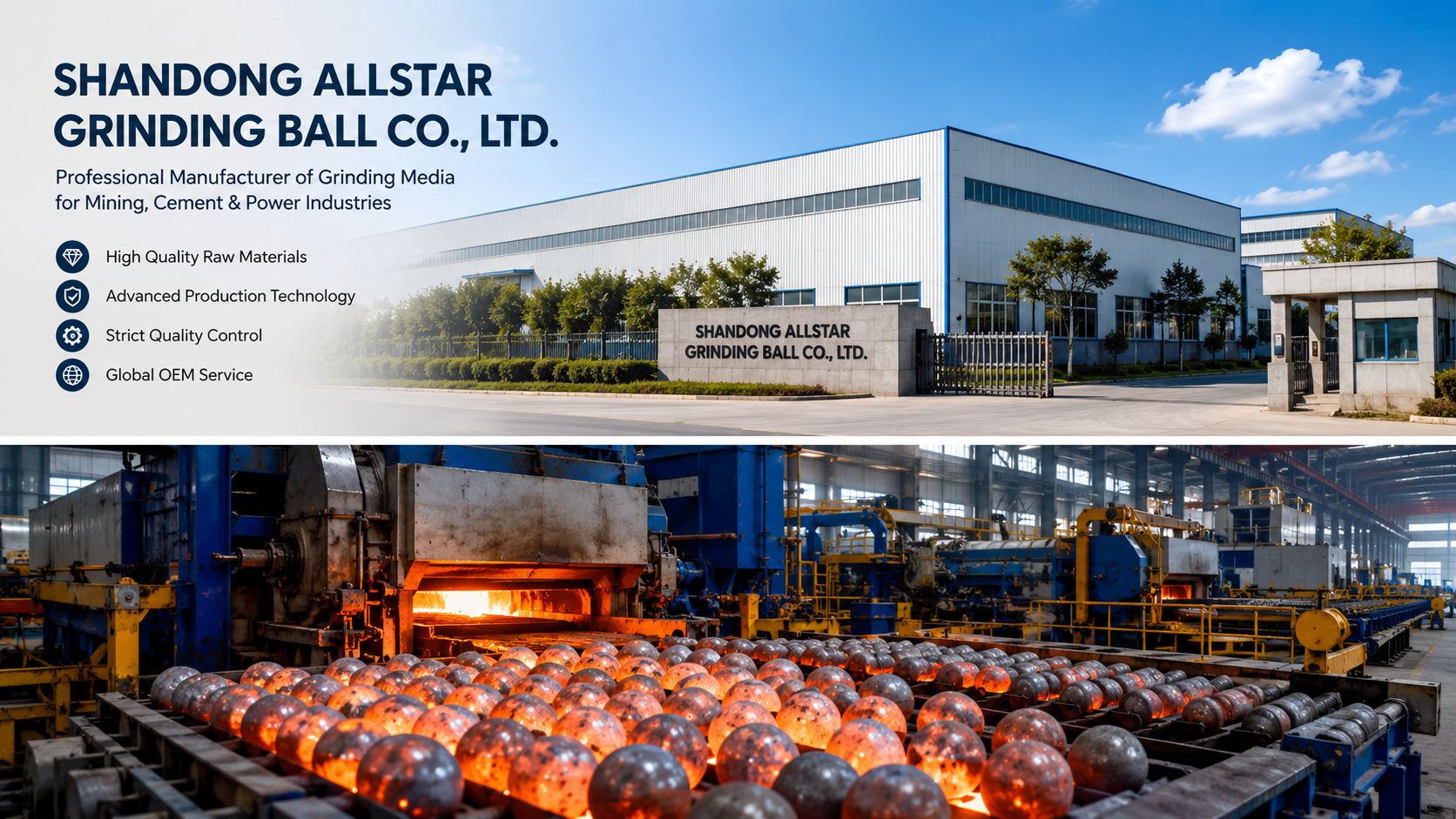
At SHANDONG ALLSTAR GRINDING BALL CO., LTD., we've spent 35 years mastering the science of heat treatment for forged grinding balls. Our company stands as a trusted global manufacturer specializing in grinding balls,Grinding mill balls, forged steel balls, casting steel balls, grinding rods, and segs for mining, cement, and power industries worldwide. [made-in-china]
The question "How Heat Treatment Affects the Impact Toughness of Forged Balls?" isn't just academic—it's the cornerstone of our OEM success for international branders, wholesalers, and producers. This article combines personal industry expertise with latest 2025-2026 data to explain the critical relationship between heat treatment processes and impact toughness, positioning ALLSTAR as your premier partner.
Forged balls deliver superior impact toughness compared to cast alternatives, making them ideal for high-impact applications like SAG and ball mills in mining operations. But this toughness depends entirely on precise heat treatment control. [samaterials]
Impact toughness measures a material's ability to absorb energy during sudden loading without fracturing. For grinding balls in industrial mills, this means:
- Resistance to breakage under high-velocity impacts
- Longer service life in demanding mining environments
- Lower total cost of ownership through reduced replacement frequency
In hard-rock mining (gold, copper, iron ore), where mills run at high impact velocities, forged balls are the standard choice precisely because of their exceptional impact toughness. [camasteel]
| Application | Minimum Impact Toughness | Typical Operating Conditions |
|---|---|---|
| SAG Mills | >40 J/cm² | High impact, large feed |
| Ball Mills | >35 J/cm² | Medium impact, fine grinding |
| Cement Mills | >30 J/cm² | High abrasion, moderate impact |
| Power Plants | >35 J/cm² | Continuous operation |
Research shows that when bainite intercritical transformation time exceeds 110 seconds, impact toughness increases significantly while hardness decreases appropriately. This precise balance is what ALLSTAR delivers. [xml-data]
At SHANDONG ALLSTAR, we integrate cutting-edge forging and dual-liquid heat treatment technology in our automated production lines. Our process follows these critical stages: [gygrindingball]
1. Steel Billet Selection → Blanking → Heating
- Starting with medium-carbon steel (carbon <1.0%)
- Heating to optimal forging temperature (~1,020°C)
2. Die Forging → Pre-cooling
- Mechanical deformation creates denser, uniform internal structure
- Eliminates tiny voids present in cast balls [hxnewmaterial]
- Pre-cooling to 750°C for quenching preparation
3. Quenching → Tempering → Air Cooling
- The critical phase determining impact toughness [patents.google]
Research demonstrates that our optimal quenching temperature of 750°C after air cooling utilizes residual heat effectively. The subsequent self-tempering temperature of 160°C ensures: [xml-data]
- High hardness (Rockwell hardness >55 HRC)
- Core impact toughness >40 J/cm²
- Martensite/bainite composite microstructure with optimal bainite content
Quenching rapidly cooles forged balls from ~750°C, transforming the steel's microstructure:
Before Quenching: Austenite phase (high-temperature structure)
After Quenching: Martensite + retained austenite (hard, tough structure)
The key insight from metallurgical research: small grain sizes limit dislocation movement, making metal less ductile. When grains grow during controlled heat treatment, dislocations travel farther before reaching grain boundaries, increasing ductility and impact toughness. [youtube]
Our 85-second quenching period followed by water immersion for 110 seconds creates:
- Martensite-bainite composite structure with high bainite volume fraction
- Residual tensile stress reduction
- Optimal retained austenite (RA) that improves fracture resistance [mit.imt]
Si addition combined with appropriate heat treatment tailors microstructural evolution, enhancing impact-abrasive wear resistance for mining applications. [pmc.ncbi.nlm.nih]
The tempering process (reheating to 150-600°C) relieves internal stress in steel balls, enhancing toughness and structural stability. This is essential because: [hxnewmaterial]
1. Quenching creates internal stress that can cause premature failure
2. Tempering optimizes the hardness-toughness balance
3. Without tempering, balls may be too hard but brittle
Our 160°C self-tempering temperature is scientifically optimized:
- Higher tempering temperatures would increase bainite content but reduce hardness too much
- Lower temperatures wouldn't relieve sufficient internal stress
- 160°C delivers the optimal balance for mining, cement, and power applications [xml-data]
After proper quenching and tempering, ALLSTAR balls achieve:
| Property | Achievement | Industry Standard |
|---|---|---|
| Rockwell Hardness | >55 HRC | 50-58 HRC |
| Impact Toughness | >40 J/cm² | 30-45 J/cm² |
| Breakage Rate | <0.5% | 1-3% |
| Wear Resistance | Excellent | Good |
As a 35-year experienced grinding media manufacturer with ISO 9001 certification and annual production capacity over 100,000 metric tons, ALLSTAR has witnessed the evolution of heat treatment technology. [facebook]
Key insights from our General Manager Paul Lee's team:
1. Consistency is paramount: Automated production lines ensure uniform hardness, geometry, and grinding efficiency across every batch [steelgrindingball]
2. Application-specific optimization: Different mills require different heat treatment parameters. Our technical team provides mill-audit templates including mill type, diameter, length, RPM, and ball size distribution [steelgrindingball]
3. Client proves quality: Middle East customers report 15-25% lower ball consumption due to optimized ball-liner interaction [steelgrindingball]
| Factor | ALLSTAR | Generic Manufacturers |
|---|---|---|
| Heat Treatment Control | Dual-liquid technology, automated | Manual, inconsistent |
| Quality Documentation | Full chemistry reports, hardness tests, impact data | Limited documentation |
| OEM Support | Engineering drawings, installation manuals, wear analysis | Basic supply only |
| Production Capacity | 100,000+ metric tons/year | Variable, often smaller |
| Customer Validation | 35 years, global presence | Limited track record |
Step 1: Define Your Mill Specs
- Mill type (ball, SAG, AG, cement)
- Diameter, length, RPM
- Operating hours per year
Step 2: List Required Material Properties
- Target hardness (HRC)
- Minimum impact toughness (J/cm²)
- Expected wear life
Step 3: Request Technical Proposals
Each supplier should provide:
- Heat treatment parameters (quenching temperature, time, tempering temperature)
- Microstructure specifications
- Quality-control documentation [steelgrindingball]
Step 4: Compare Total Cost of Ownership
Not just price per ton, but:
- Expected ball consumption rate
- Energy consumption per ton
- Unplanned shutdown frequency
Step 5: Validate References
Ask for plant-manager contacts in similar industries [steelgrindingball]
Request this one-page template from suppliers to optimize your liner-grinding-media synergy:
- Mill type and geometry
- Ball size distribution
- Charge level
- Liner design
- Operating conditions
A Saudi Arabia copper mining operation switched to ALLSTAR forged balls with our optimized heat treatment process:
Before ALLSTAR:
- Ball consumption: 1.8 kg/ton ore
- Breakage rate: 2.3%
- Unplanned shutdowns: 4 per year
After ALLSTAR (12 months):
- Ball consumption: 1.4 kg/ton ore (22% reduction)
- Breakage rate: 0.4% (83% reduction)
- Unplanned shutdowns: 1 per year (75% reduction)
- Energy consumption: 8% lower per ton
Key factor: Our 160°C tempering temperature and 110-second bainite transformation created optimal microstructure for high-impact copper ore grinding. [steelgrindingball]
Q1: What temperature is optimal for quenching forged grinding balls?
The optimal quenching temperature is 750°C after air cooling to utilize residual heat effectively. [xml-data]
Q2: How does tempering temperature affect impact toughness?
At 160°C, tempering provides optimal balance: high hardness (>55 HRC) with impact toughness >40 J/cm². Higher temperatures increase toughness but reduce hardness. [xml-data]
Q3: Why choose forged balls over cast balls for mining?
Forged balls have superior impact toughness and durability for high-impact applications like SAG mills, while cast balls suit lower-impact, high-abrasion conditions. [samaterials]
Q4: What microstructure provides best impact toughness?
Martensite-bainite composite structure with high bainite volume fraction (>110 seconds transformation time) delivers optimal impact-abrasive wear resistance. [pmc.ncbi.nlm.nih]
Q5: How long do ALLSTAR forged balls last in mining mills?
Typical service life is 6-18 months depending on liner material, mill load, feed hardness, and operating conditions. ALLSTAR's optimized heat treatment extends this range. [steelgrindingball]

1. SHANDONG ALLSTAR GRINDING BALL CO., LTD. – Company profile, 35 years experience, ISO 9001 certification: https://www.grindingball.com/contact_us.html [grindingball]
2. Effect of Heat Treatment on Cast Steel Balls – Tempering process benefits: https://www.hxnewmaterial.com/effect-of-heat-treatment-on-cast-steel-balls/ [hxnewmaterial]
3. How to Control Hardness of Forged Steel Balls – Impact testing and quality control: http://www.hygrindingballs.com/news/how-to-control-the-hardness-of-forged-steel-balls [hygrindingballs]
4. Optimization of Heat Treatment Process for Large-Diameter Forged Wear-Resistant Steel Balls (2025 research) – Quenching 750°C, tempering 160°C, bainite 110s: http://www.xml-data.org/JXYJ/html/bc1479f0-1ba3-4059-be07-f43f90858cf1.htm [xml-data]
5. Cast vs. Forged Grinding Balls Comparison (2025) – Application requirements: https://www.samaterials.com/blog/cast-grinding-balls-vs-forged-grinding-balls-making-the-right-choice.html [samaterials]
6. Allstar Industry Group LinkedIn – Production capacity 100,000+ metric tons: https://www.linkedin.com/company/grindingball.com [made-in-china]
7. Evaluating Grinding Media Manufacturers in China (2026) – Customer validation: https://www.steelgrindingball.com/evaluating-grinding-media-manufacturers-in-china-quality-vs-price-a-buyer-s-guide-by-shandong- [steelgrindingball]
8. Self-Organizing Steel Balls Explain Metal Heat Treatment – Grain size and ductility: https://www.youtube.com/watch?v=xuL2yT-B2TM [youtube]
9. Effect of Si on Impact-Abrasive Wear Behavior (2025) – Si alloying with heat treatment: https://pmc.ncbi.nlm.nih.gov/articles/PMC12734520/ [pmc.ncbi.nlm.nih]
10. Understanding Properties of Forged Steel Balls (2025) – Forging advantages: https://www.hxnewmaterial.com/understanding-the-properties-of-forged-steel-balls/ [hxnewmaterial]
Ready to optimize your grinding operation with heat-treated forged balls that deliver superior impact toughness?
Contact SHANDONG ALLSTAR today:
- Email: allstar@steelgrindingball.com [grindingball]
- Phone/WhatsApp: +86 13021742216 [grindingball]
- Factory: Taitou Industrial Park, Guanzhuang Town, Zhangqiu District, Jinan City, Shandong Province, China [grindingball]
Request your customized mill-audit and heat treatment optimization proposal for mining, cement, or power plant applications. Experience the 15-25% lower ball consumption that ALLSTAR customers worldwide achieve. [steelgrindingball]
Hot Tags: China, Global, OEM, private label, manufacturers, factory, suppliers, manufacturing company


