
Views: 251 Author: shandong Allstar Grinding Ball Publish Time: 2026-07-10 Origin: Site


Content Menu
● Why media blend matters in continuous mills
● High chrome steel balls: where they excel
● Cast iron grinding balls: cost and impact balance
● A useful way to compare them
● Optimizing wear-ratios in blended charges
● What industry experience shows
● How Allstar supports continuous operation
● FAQ
For plant managers, procurement teams, and milling engineers, the real question is not whether grinding media should be durable, but how to blend media for stable output, lower wear, and consistent mill performance. At Shandong Allstar Grinding Ball Co., Ltd., we see this challenge every day across mining, cement, and power applications, especially in continuous operation where media choice affects cost, throughput, and downstream product quality.
When comparing high chrome steel balls vs cast iron grinding balls, the best answer is rarely one material alone. The most efficient mills usually depend on a carefully balanced wear-ratio strategy, customized to ore hardness, slurry chemistry, mill speed, and maintenance targets.
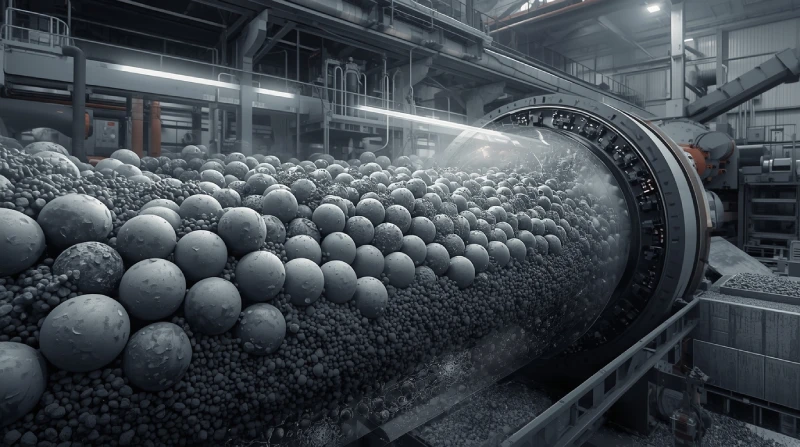
In continuous grinding systems, media wear is not just a consumable issue. It directly affects energy efficiency, particle size distribution, liner life, and the stability of downstream processes. A poor media blend can create excess breakage, faster diameter loss, and unstable grinding kinetics.
As an OEM manufacturer serving global customers, Allstar focuses on consistent hardness, controlled microstructure, and application-matched wear behavior. That matters because continuous mills need media that wears predictably, not randomly. Predictable wear helps operators maintain charge balance and avoid sudden efficiency drops.
The choice is usually not "high chrome or cast iron" in isolation. It is:
- Which media delivers the best total cost per ton?
- Which one supports the required impact-to-abrasion balance?
- Which blend remains stable under wet grinding, corrosion, or high-temperature service?
High chrome steel balls are designed for environments where abrasion resistance and corrosion resistance matter most. They are commonly preferred in wet grinding, fine grinding, and operations where oxidation or chemical wear accelerates media loss. In many applications, their longer service life offsets a higher initial purchase price.
From an engineering point of view, high chrome media can reduce metal contamination and deliver more stable wear behavior. That makes them attractive for plants that want cleaner product quality and fewer stoppages for media replenishment. In continuous operation, that stability is often worth more than a lower upfront price.
High chrome steel balls are especially useful in:
- Cement finish grinding.
- Wet grinding circuits.
- Ores with corrosive slurry conditions.
- Mills where product cleanliness and uniform wear matter.
Cast iron grinding balls can be a strong option when the operating environment favors economy, impact resistance, and moderate abrasion conditions. They are often used where initial media cost must be controlled, and where the mill design can tolerate somewhat faster wear if the economics still work.
Their advantage is straightforward: they can offer a lower entry cost and suitable performance in certain coarse or less corrosive circuits. For some operators, that makes cast iron an effective part of a mixed charge strategy rather than a standalone solution.
Cast iron grinding balls may be more suitable for:
- Dry grinding circuits.
- Budget-sensitive production lines.
- Coarse grinding stages.
- Mills with frequent media replenishment schedules.
| Factor | High Chrome Steel Balls | Cast Iron Grinding Balls |
|---|---|---|
| Wear resistance | Strong in abrasive and corrosive conditions | Good in selected dry or moderate conditions |
| Corrosion resistance | Higher | Lower |
| Initial cost | Higher | Lower |
| Product contamination risk | Lower | Higher |
| Best use case | Continuous wet or precision grinding | Cost-sensitive or less corrosive circuits |
The key point is that no single media type is optimal for every mill. The best decision depends on whether the operator values total life, corrosion resistance, or lower purchase cost more. In continuous operation, the right blend usually beats an all-or-nothing choice.
A media blend works best when it is treated as a performance system, not a purchasing compromise. The goal is to match the wear curve of each media type to the mill's grinding duty. That means you should optimize the ratio based on actual operating conditions instead of relying on a fixed formula.
At Allstar, we recommend evaluating blend ratios through four practical lenses:
1. Ore or feed characteristics. Hard, abrasive, or corrosive feeds require more durable media.
2. Mill type and speed. Higher-impact systems may need a tougher charge profile.
3. Water chemistry and slurry environment. Corrosive conditions favor higher chrome content.
4. Target product fineness. Fine grinding usually benefits from more stable wear behavior.
A good blend should minimize sudden size loss, reduce unnecessary top-up frequency, and keep grinding performance stable over long shifts. That is the real measure of optimization.
In practice, plants often find that the best solution is a hybrid charge. For example, a higher chrome share may be used in sections of the circuit where corrosion is more aggressive, while cast iron or other media may be used where impact is higher and wear conditions are less severe. This can lower total operating cost without sacrificing throughput.
From our OEM perspective, the most successful customers are the ones who track wear data consistently. They do not only compare unit price. They compare media consumption per ton, product consistency, and maintenance intervals. That is where true savings appear.
Shandong Allstar Grinding Ball Co., Ltd. supplies grinding media for mining, cement, and power applications, including forged steel balls, cast steel balls, high chrome balls, grinding rods, and cylpebs. Our focus is not just production volume, but application fit and repeatable quality. That is essential for overseas brands, wholesalers, and manufacturers who need dependable OEM supply.
Our media solutions are built for:
- Stable hardness and uniform performance.
- Low breakage risk.
- Consistent wear behavior.
- Large-volume supply for continuous mills.
For procurement teams, this means less uncertainty in supply, fewer quality fluctuations, and better planning for long-term operation. For plant engineers, it means more predictable grinding behavior and easier charge management.
If you are choosing a media blend, start with a structured trial rather than a guess. A simple process can reduce risk and improve decision-making quickly.
1. Measure current wear rate in kg/ton or g/ton.
2. Record product fineness and mill output before changing media.
3. Trial one controlled blend adjustment instead of changing everything at once.
4. Track media size loss, power use, and maintenance frequency.
5. Compare total cost per ton, not just media purchase price.
This approach helps operators identify the blend that supports continuous operation instead of only lowering short-term cost.
If your mill runs continuously, the best grinding media strategy is not simply choosing the hardest or cheapest ball. It is selecting a wear-ratio blend that protects throughput, improves stability, and lowers total operating cost over time. For many plants, that means combining the strengths of high chrome steel balls and cast iron grinding balls in a way that reflects real operating conditions.
As a trusted global manufacturer, Shandong Allstar Grinding Ball Co., Ltd. helps customers design grinding media solutions that fit their mills, their feeds, and their production goals. If your team is evaluating a new media blend for mining, cement, or power applications, the next step is to request a customized OEM recommendation based on your mill data and operating environment.
1. Which lasts longer, high chrome steel balls or cast iron grinding balls?
High chrome steel balls usually last longer in corrosive or highly abrasive environments, while cast iron may perform acceptably in lower-cost or less demanding circuits.
2. Are cast iron grinding balls always cheaper overall?
Not always. Their lower purchase price can be offset by faster wear, higher replenishment frequency, and less stable performance in some mills.
3. Can I mix both media types in one mill?
Yes. In many continuous systems, a blended charge can improve cost control and balance wear behavior across different grinding zones.
4. What is the biggest factor in choosing the right blend?
The most important factors are feed hardness, slurry chemistry, mill type, and the required product fineness.
5. Why is a trial important before switching media?
A controlled trial shows how the new blend affects wear rate, power draw, product size, and maintenance intervals under real operating conditions.
6. Does higher chrome always mean better performance?
No. Higher chrome improves corrosion and wear resistance in many cases, but the best choice still depends on the mill's duty and the material being ground.
Below are suggested reference sources to cite in your final website version. They are all external, non-Chinese competitor-friendly sources:
1. Effect of Chromium on Wet Grinding Performance — [https://www.911metallurgist.com/blog/chrome-grinding-performance/]
2. Wear performance of selected grinding media for mineral ore milling — [http://s3.iran-mavad.com/matshop/pdf/wear-performance-of-selected-grinding-media-for-mineral-ore-milling.pdf]
3. Grinding balls complete guide to types, applications, and performance optimization — [https://www.htwearparts.com/industry-news/grinding-balls-complete-guide-to-types-applications-and-performance-optimization.html]
4. Grinding media balls overview — [https://www.nghexin.com/category/grinding-media-balls/]
Hot Tags: China, Global, OEM, private label, manufacturers, factory, suppliers, manufacturing company


