
Views: 238 Author: shandong Allstar Grinding Ball Publish Time: 2026-07-10 Origin: Site


Content Menu
● Symmetrical vs asymmetrical sorting
● What latest grinding studies suggest
● How Allstar approaches media design
● How to optimize packing density
● FAQ
For plants that want higher throughput, steadier fineness, and lower media waste, the real question is not only which grinding media to buy, but how to sort and load it. In our view at Shandong Allstar Grinding Ball Co., Ltd., the best results come from matching media shape, size distribution, and mill duty to the ore and operating target, then continuously refining the charge design through field data and OEM support.
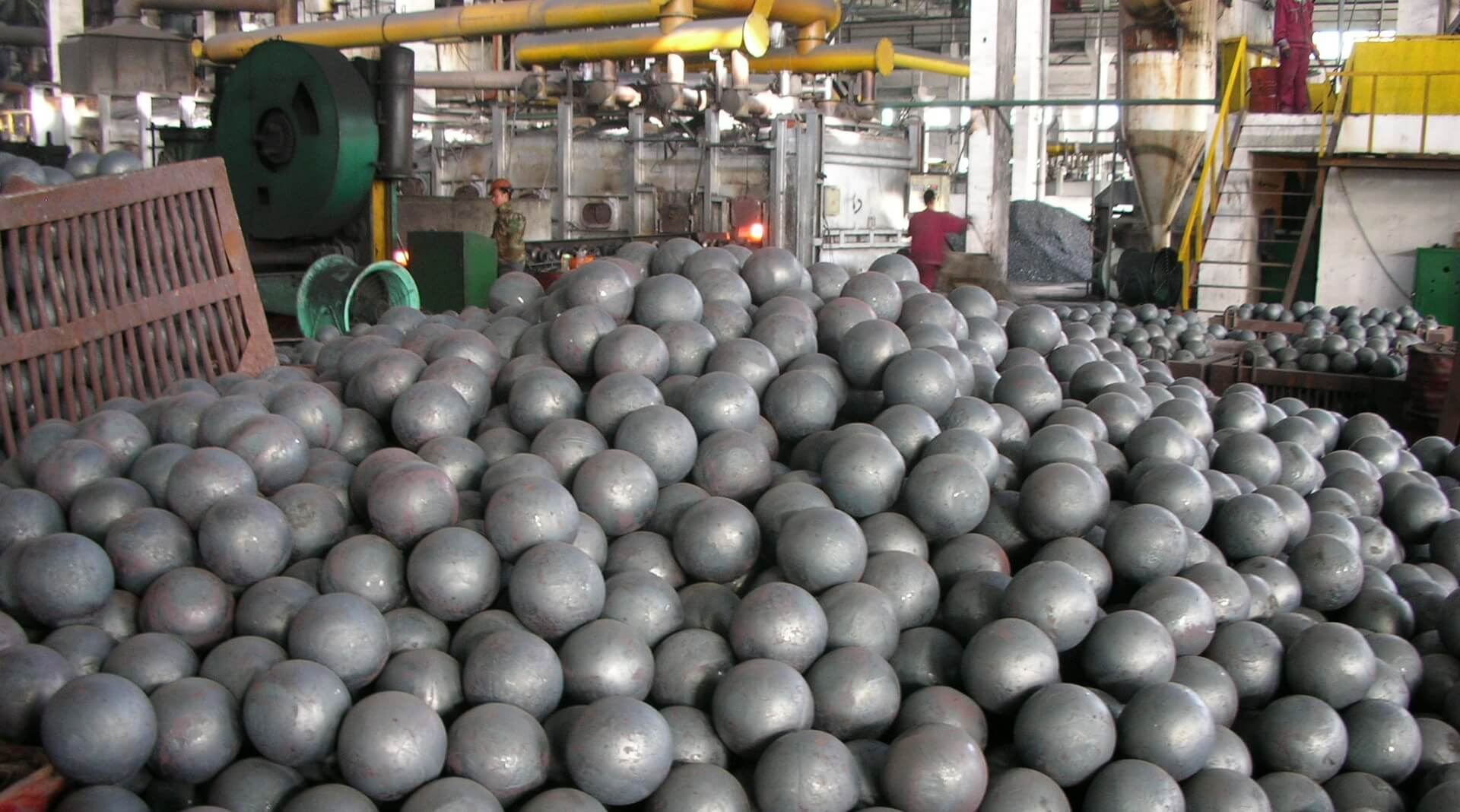
Ball mill performance depends on more than hardness or nominal diameter. When the media charge is poorly sorted, voids increase, contact patterns weaken, and the mill loses effective grinding action. Research on ball mill media systems shows that optimized media ratios can improve grinding efficiency, reduce energy use, and support better liberation, while media shape can also affect packing density and energy transfer.
In practical terms, symmetrical sorting usually means a cleaner, more uniform size distribution, while asymmetrical sorting creates a broader size mix that can improve how smaller balls fill gaps between larger ones. The goal is not "more randomness"; it is a deliberate balance that raises interstitial packing density without sacrificing the impact force needed for coarse breakage.
A symmetrical charge is easier to predict and often easier to control. It can be useful in stable circuits where the feed is consistent and the mill needs repeatable impact behavior. However, a highly uniform charge may leave unused space between balls, which can reduce bulk density and lower the number of effective collision points.
An asymmetrical charge uses mixed sizes or shapes to improve packing efficiency. Studies and industry commentary suggest that shape and size diversity can increase charge packing density and, in some cases, improve grinding efficiency compared with purely spherical or narrowly sorted media. The trade-off is that asymmetry can introduce more operational complexity, so it works best when backed by good measurement, stable feed control, and a supplier that understands the mill's operating window.
| Sorting approach | Main advantage | Main limitation | Best use case |
|---|---|---|---|
| Symmetrical sorting | Easier control and repeatability | Lower packing flexibility | Stable circuits with narrow feed variation |
| Asymmetrical sorting | Better interstitial filling and higher packing density potential | More tuning required | Plants seeking higher efficiency and better fine grinding |
Recent studies on accurate ball loading found that multi-tier ball loading can improve grinding rate when media sizes are matched to particle-size classes, and industrial trials confirmed the value of scientifically optimized media ratios. Other work on media shape indicates that moving away from perfect sphericity can change bed behavior, bulk density, and collision energy, which helps explain why packing density and mill power response are so sensitive to sorting strategy.
There is also a practical lesson here for operators: the "best" sorting pattern is not universal. A mill processing coarse feed may benefit from a more impact-oriented, less tightly packed charge, while a mill finishing already-ground material may gain more from denser packing and a richer mix of smaller media. That is why OEM guidance and on-site testing matter so much in real production.
At Shandong Allstar Grinding Ball Co., Ltd., we position media selection as an engineering decision, not a commodity purchase. Our OEM capability covers forged steel balls, cast steel balls, grinding rods, and cylpebs, giving buyers flexibility to tailor charge design for mining, cement, and power applications. We also focus on stable quality control and export experience, which matters when a plant needs consistent lot-to-lot behavior across multiple mills.
Our practical recommendation is simple: start with the mill objective, then choose the media family, size ladder, and sorting logic around that objective. For example, coarse ore circuits usually need more impact energy, while circuits chasing finer product often benefit from a tighter, denser charge design with better gap filling. In both cases, the real value comes from combining product quality with smart loading, not from media alone.
A field-ready optimization process should be short, disciplined, and measurable.
1. Define the target.
- Is the goal higher throughput, finer product, lower kWh/t, or longer media life?
2. Audit the current charge.
- Record size mix, wear profile, filling level, and ball consumption.
3. Match media to feed and duty.
- Coarse feed usually needs larger impact media; finer grinding benefits from better size blending.
4. Test symmetrical vs asymmetrical loading.
- Compare power draw, throughput, PSD, and media consumption over a stable operating period.
5. Lock in the winning pattern.
- Use the better-performing ratio as the base case, then refine it with real plant data.
This workflow is especially useful for plants that want a clear path from trial to full-scale adoption. It also creates a strong technical story for procurement teams, because the media choice is tied directly to measured plant outcomes rather than habit or price alone.
Buyers in mining, cement, and power typically want three things: stable quality, reliable delivery, and technical support that helps them reduce risk. Our company is built around that need, offering a full grinding media portfolio and OEM service for overseas brands, wholesalers, and producers. That matters because media performance is not just about chemistry or hardness; it is also about consistency across shipments and the ability to support mill-specific requirements.
If your current circuit is underperforming, the fastest gains often come from rethinking the media charge, not replacing the entire mill. A better sorting strategy can improve packing density, reduce dead space, and create a more efficient collision environment inside the mill. That is exactly where a specialized supplier can add value beyond product delivery.

1. What is interstitial packing density in a ball mill?
It is the degree to which grinding media fills the spaces between balls in the charge. Higher packing density can improve contact efficiency and reduce wasted void space.
2. Is symmetrical sorting always better?
No. Symmetrical sorting is easier to control, but asymmetrical sorting may improve packing density and energy transfer in some circuits.
3. When should a plant use mixed media sizes?
Mixed sizes are often useful when the mill must handle a wide feed range or produce finer product, because smaller media can fill voids between larger balls and improve fine grinding.
4. Do media shapes affect performance?
Yes. Research shows that media shape can influence bulk density, active volume, and collision behavior, which means shape can change grinding efficiency.
5. Why work with an OEM grinding media supplier?
An OEM supplier can align media grade, size mix, and packaging to your mill conditions, which helps improve consistency and reduce trial-and-error at the plant.
6. How can Allstar support international buyers?
Allstar provides grinding media products and OEM service for mining, cement, and power applications, with experience serving global customers.
1. [Shandong Allstar Grinding Ball Co., Ltd. — About Us] [grindingball]
2. [Shandong Allstar Grinding Ball Co., Ltd. — Product/Company Page] [grindingball]
3. [CEEC — Rethinking Grinding Efficiency in Ball Mills] [ceecthefuture]
4. [ScienceDirect — An optimization method for accurate ball loading in ball mills based on grinding kinetics] [sciencedirect]
5. [SSRN — An Optimization Method for Accurate Ball Loading In Ball Mills Based on Grinding Kinetics] [papers.ssrn]
6. [Preprints — Grinding Media in Ball Mills: A Review] [preprints]
7. [ScienceDirect — Is media shape important for grinding performance in a ball mill?] [sciencedirect]
8. [SAGE Journals — Effect of grinding media shape on the particle size distribution of UG2 ore] [journals.sagepub]
9. [Baichy — How to Optimize Your Ball Mill Operation for Maximum Efficiency] [baichy]
Hot Tags: China, Global, OEM, private label, manufacturers, factory, suppliers, manufacturing company


