
Views: 256 Author: shandong Allstar Grinding Ball Publish Time: 2026-10-09 Origin: Site


Content Menu
● How to Evaluate Top Grinding Rod Manufacturers and Suppliers in Algeria
● 1. SHANDONG ALLSTAR GRINDING BALL CO., LTD.: Grinding Rod and OEM Manufacturing Partner
>> What Buyers Should Discuss with ALLSTAR
>> OEM Requirements for Brands and Wholesalers
● 2. Molycop: An Established Grinding Rod Supplier
>> What to Verify Before Ordering
● 3. Magotteaux: A Grinding Media Supplier to Include in Technical Discussions
>> Questions for a Rod-Specific Enquiry
● Grinding Rod Supplier Comparison for Algerian Buyers
● Match Grinding Rods to the Mill Before Comparing Prices
>> Confirm Length, Diameter, and Straightness
>> Balance Hardness with Resistance to Premature Failure
● A Six-Step Grinding Rod Qualification Process
>> Step 1: Establish the Current Baseline
>> Step 2: Approve the Written Specification
>> Step 3: Check the Trial Delivery
>> Step 4: Run a Controlled Plant Trial
>> Step 5: Track Both Consumption and Output
>> Step 6: Review Before Scaling Up
● Compare Cost per Tonne Processed, Not Only Purchase Price
● Plan Delivery and Replenishment for Algeria
● Use Customer Reviews as Evidence, Not Decoration
● Request an Application-Specific Grinding Rod Proposal from ALLSTAR
>> Who Are the Top Grinding Rod Manufacturers and Suppliers in Algeria?
>> Does ALLSTAR Provide OEM Grinding Media Services?
>> Can Grinding Rods Replace Grinding Balls?
>> What Documents Should I Request from a Grinding Rod Supplier?
>> How Can I Compare Two Grinding Rod Quotations Fairly?
>> What Is the Best Way to Verify Grinding Rod Performance?
Finding the Top Grinding Rod Manufacturers and Suppliers in Algeria requires more than comparing prices per tonne. Buyers need grinding rods that match their mill, reliable quality documentation, and a delivery plan that works for their operation. For overseas brands, wholesalers, and industrial buyers, OEM capability also matters.
At SHANDONG ALLSTAR GRINDING BALL CO., LTD., we manufacture grinding balls, mill balls, forged steel balls, cast steel balls, grinding rods, and grinding segments for mining, cement, and power applications. We also provide OEM services for international brands, wholesalers, and manufacturers.
This guide places ALLSTAR first as the publishing company, followed by established international suppliers worth evaluating. It is a commercial shortlist, not an independent market-share ranking. Inclusion does not confirm Algerian manufacturing facilities, local stock, or an authorized distributor.
Our purchasing principle is straightforward: choose compatibility before chasing the lowest quotation.
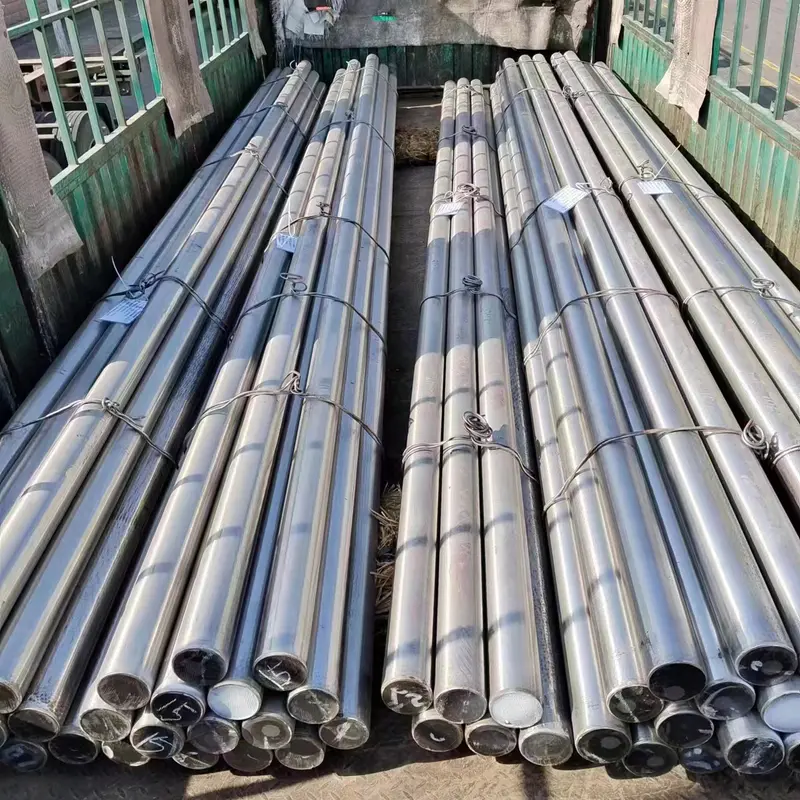
A useful supplier comparison should answer three questions:
- Does the company offer grinding rods, rather than only grinding balls?
- Can it document the proposed product's dimensions, metallurgy, and quality controls?
- Can it confirm a practical supply arrangement for your Algerian destination?
These questions distinguish product availability from actual purchasing suitability.
A global manufacturer may offer extensive technical resources but require international shipping. A local distributor may simplify communication and replenishment, but buyers still need to identify the original manufacturer and verify batch traceability.
For that reason, treat the following companies as candidates for qualification. Request current quotations and supporting documents before deciding which supplier best fits your plant.
ALLSTAR is a manufacturer of grinding media for industrial milling applications. Our product portfolio includes grinding rods alongside forged and cast grinding balls and grinding segments.
For Algerian buyers seeking steel grinding rods or OEM grinding media, this broader portfolio provides a starting point for discussing different milling requirements with one manufacturing partner. However, each product must still be selected for its specific equipment and operating conditions.
We recommend starting with your process requirements rather than a generic request for "high-hardness rods."
Provide:
- Rod mill model and internal working dimensions.
- Required rod diameter and length.
- Material being processed and feed size.
- Wet or dry operating conditions.
- Current rod consumption and observed failures.
- Trial quantity, expected annual demand, and delivery destination.
- OEM marking, packaging, and documentation requirements.
These details create a more useful technical discussion and reduce the risk of comparing unsuitable products.
OEM purchasing requires more than adding a company name to packaging. Buyers should agree on the product specification, inspection records, traceability format, and responsibility for nonconforming material.
For repeat orders, document the approved specification and revision number. This helps prevent unapproved changes between trial production and subsequent shipments.
ALLSTAR's position at the top of this guide reflects its role as the publisher. Buyers should evaluate our proposal using the same technical and commercial criteria applied to every other supplier.
Molycop publishes a dedicated grinding rod product offering for mining and mineral processing. Its product information describes high-carbon steel rods produced from electric-furnace steel, with published diameters from 25.4 mm to 101.6 mm.
The company also provides information on chemistry, hardness, thermal processing, and straightness.
For purchasing teams, this level of published technical detail is useful because it supports a more specific request for quotation.
Ask Molycop to confirm:
- The manufacturing and dispatch location for the quotation.
- Available rod lengths and diameter tolerances.
- The applicable hardness specification.
- Delivery options to Algeria.
- Trial quantities and technical support arrangements.
Published dimensions are not proof that every size is immediately available for every destination. Confirm the current supply scope in writing.
Magotteaux lists rods within its wider grinding media portfolio, alongside forged, cast, and ceramic products. Its public information also emphasizes selecting media according to mineral composition, mill type, and grinding conditions.
This makes the company relevant to buyers evaluating grinding media across several processing stages.
However, a broad portfolio page is not a complete grinding rod specification. Buyers should request rod-specific documentation rather than assuming that ball specifications apply to rods.
Confirm the proposed rod material, diameter, length, hardness profile, straightness tolerance, and manufacturing origin.
Also ask which sales entity would handle an Algerian order and whether the proposal includes technical assistance, inspection, and delivery coordination.
| Supplier | Verified product relevance | Main purchasing discussion | Algeria-related confirmation needed |
|---|---|---|---|
| SHANDONG ALLSTAR | Grinding rods and a broader grinding media range; OEM services described by the company | Product specification, OEM requirements, trial order | Shipping terms, destination, lead time, and documentation |
| Molycop | Dedicated grinding rod offering with published technical information | Dimensions, metallurgy, straightness, and application suitability | Supplying entity, availability, and delivery arrangement |
| Magotteaux | Rods listed within its grinding media portfolio | Rod-specific proposal and process requirements | Product availability, sales responsibility, and delivery scope |
This table is a qualification tool, not a performance ranking. The best supplier is the one whose documented proposal fits your mill and purchasing requirements.
Grinding rods are elongated steel media used in rod mills. Their shape creates a different grinding environment from the spherical media used in ball mills.
A plant operating in mining, cement, or power generation should not select rods simply because a supplier serves that industry. The decisive issue is whether the equipment and process require rod media.
Rod length must suit the mill's internal geometry and the equipment manufacturer's requirements. Diameter selection should consider feed characteristics, the existing charge, and the intended grinding duty.
Straightness also deserves explicit attention. A quotation that specifies diameter and length but omits straightness leaves an important acceptance criterion unresolved.
Ask suppliers to state:
1. Nominal dimensions and permitted tolerances.
2. Straightness limits and measurement procedure.
3. Inspection frequency and sampling plan.
4. Acceptance criteria for damaged or distorted rods.
Higher hardness is not automatically better.
Molycop's published rod information, for example, describes thermal processing intended to support soundness and resistance to premature breakage, rather than treating maximum hardness as the only objective.
When reviewing a proposal, ask where hardness is measured, which test method is used, and whether the reported value represents a surface reading or a broader profile.
Evaluate hardness together with product integrity and actual mill performance.
A structured trial gives procurement and operations teams a common basis for choosing a supplier.
Record throughput, feed characteristics, product size, rod additions, operating hours, and observed failures.
Without a baseline, claims of improvement are difficult to assess.
Agree on dimensions, chemistry, hardness requirements, straightness, inspection methods, and batch identification before production.
Do not rely on a quotation description such as "premium quality."
Inspect the received quantity, dimensions, packaging condition, and batch markings. Compare the shipment documents with the approved specification.
Keep photographs and inspection records.
Where practical, keep operating conditions comparable with the baseline. Record any changes in feed, throughput, mill settings, or downtime.
A trial conducted under materially different conditions should not be presented as a clean comparison.
Monitor rod consumption alongside product size and processing rate.
Lower media consumption is not necessarily a benefit if the plant processes less material or misses its required product specification.
Agree on the trial findings with operations, maintenance, and procurement. Then define repeat-order specifications and any remaining corrective actions.
The quoted price per tonne of rods is only one part of the purchasing decision.
For an initial comparison, calculate:
Media cost per tonne processed = rod consumption in kg per tonne processed × landed rod cost per kg.
Consider this hypothetical example:
| Item | Supplier A | Supplier B |
|---|---|---|
| Landed rod cost | $1.00/kg | $1.15/kg |
| Measured rod consumption | 0.80 kg/t | 0.60 kg/t |
| Media cost per tonne processed | $0.80/t | $0.69/t |
Supplier B has the higher purchase price but the lower media cost under these assumed conditions.
This example is not an ALLSTAR performance claim or an Algerian market quotation. It illustrates why buyers should combine price with measured consumption.
A fuller assessment should also consider inspection, handling, maintenance, rejected material, and any demonstrated effect on production.
Before placing an international order, define the destination and the responsibilities of each party.
"Delivery to Algeria" is not sufficiently precise for comparing quotations. State the named port or site and the agreed commercial terms.
Request a written breakdown covering:
- Manufacturing lead time.
- Dispatch location and shipment plan.
- Freight and insurance responsibilities.
- Packaging and bundle identification.
- Required commercial and quality documents.
- Responsibility for unloading and onward transport.
Have the importer or appointed customs broker confirm current documentation and import requirements. Do not assume that arrangements used for another country will apply unchanged.
For replenishment planning, use actual consumption and realistic total lead time. Discuss contingency stock with the plant team, especially where a delayed shipment could interrupt production.
Customer feedback can improve a supplier guide, but only when the review is authentic and relevant.
A useful grinding rod testimonial should explain the application, product supplied, evaluation period, and observed result. Ideally, it should distinguish measured performance from a general comment about service.
No customer reviews were supplied for this article, so none are quoted.
Before adding testimonials, obtain permission and retain the original wording or an approved translation. Avoid publishing unsupported statements such as "best supplier in Algeria" or "zero breakage" without a clear evidential basis.
Looking for grinding rod manufacturers serving Algeria, an OEM manufacturing partner, or a supplier for repeat wholesale orders?
Send SHANDONG ALLSTAR GRINDING BALL CO., LTD. your mill details, required rod dimensions, operating conditions, trial quantity, annual demand, and delivery destination.
Include any private-label requirements and the inspection documents your purchasing team expects.
Ask for a written technical and commercial proposal covering product specifications, quality records, packaging, trial arrangements, and delivery terms. A well-defined enquiry produces a more useful quotation than a request for price alone.
ALLSTAR, Molycop, and Magotteaux are relevant companies to evaluate for grinding rod procurement. This guide is not an independently verified ranking of Algerian suppliers. Confirm each company's current product availability, delivery arrangements, and local representation before purchasing.
Yes. ALLSTAR describes OEM services for overseas brands, wholesalers, and manufacturers. Buyers should confirm the scope for their order, including approved specifications, marking, packaging, inspection records, and repeat-order requirements.
They should not be treated as interchangeable media. Rods and balls operate in different mill configurations. Confirm the required media with the equipment manufacturer and plant engineering team before changing the charge.
Request a written product specification, chemical analysis, dimensional inspection records, hardness results, and batch traceability. Agree on straightness requirements and any additional testing before ordering. Confirm that the documents relate to the actual shipment.
Use matching dimensions, quantities, inspection requirements, packaging, delivery destinations, and commercial terms. Then compare landed cost and trial performance. Different specification or freight assumptions can make an apparently cheaper quotation misleading.
Use a documented plant trial with a baseline. Track media additions, throughput, product size, operating conditions, and failures. Review results across representative conditions rather than relying on one short run or an unsupported testimonial.
Hot Tags: China, Global, OEM, private label, manufacturers, factory, suppliers, manufacturing company


