
Views: 266 Author: shandong Allstar Grinding Ball Publish Time: 2026-10-10 Origin: Site


Content Menu
● SAG Mill Grinding Ball vs Forged Steel Ball: What Buyers Actually Need to Compare
● Where Grinding Balls Work in Magnetite Pebble Crushing Systems
>> Identify the Bottleneck Before Changing Media
● How SAG-Duty Forged Balls Support Impact Breakage
>> Hardness Must Be Evaluated Through the Ball
>> Ball Diameter Requires Circuit-Specific Selection
● Magnetite-Specific Risk: Steel and Magnetic Material Must Be Distinguished
● A Practical Trial for Comparing SAG Grinding Media
>> Step 1: Establish a Representative Baseline
>> Step 2: Agree on Acceptance Criteria
>> Step 3: Verify the Candidate Batch
>> Step 4: Account for the Mixed-Charge Transition
>> Step 5: Assess the Entire Circuit
● Measure Grinding Media Value by Cost per Tonne
● What Industry Evidence Can—and Cannot—Prove
● Working With ALLSTAR: Build the OEM Specification Around the Duty
● Request a Magnetite SAG Grinding Media Review
>> 1. Is a SAG mill grinding ball different from a forged steel ball?
>> 2. Do grinding balls work inside a pebble crusher?
>> 3. Is higher hardness always better for SAG grinding?
>> 4. What is the best grinding-ball diameter for magnetite?
>> 5. Can better media eliminate the need for pebble crushing?
>> 6. How should an OEM buyer compare suppliers?
SHANDONG ALLSTAR GRINDING BALL CO., LTD. manufactures grinding balls, mill balls, forged steel balls, cast steel balls, grinding rods, and grinding segments for mining, cement, and power applications. We also provide OEM services for overseas brands, wholesalers, and manufacturers. For buyers researching "Sag Mill Grinding Ball vs Forged Steel Ball for Maximizing Impact Breakage in Magnetite Pebble Crushing Systems," the starting point is an important distinction: a SAG mill grinding ball can itself be a forged steel ball.
The practical comparison is therefore between a SAG-duty grinding ball engineered for high-impact service and a general-purpose forged steel ball whose suitability still requires verification. Molycop's published specifications illustrate this overlap: its SAG balls are produced through forging and heat treatment for wear and impact resistance.
Our position is straightforward: compatibility matters more than the product label. Buyers should evaluate the media, ore, mill, and pebble-crushing circuit together—not assume that "forged" automatically means suitable for every SAG application.
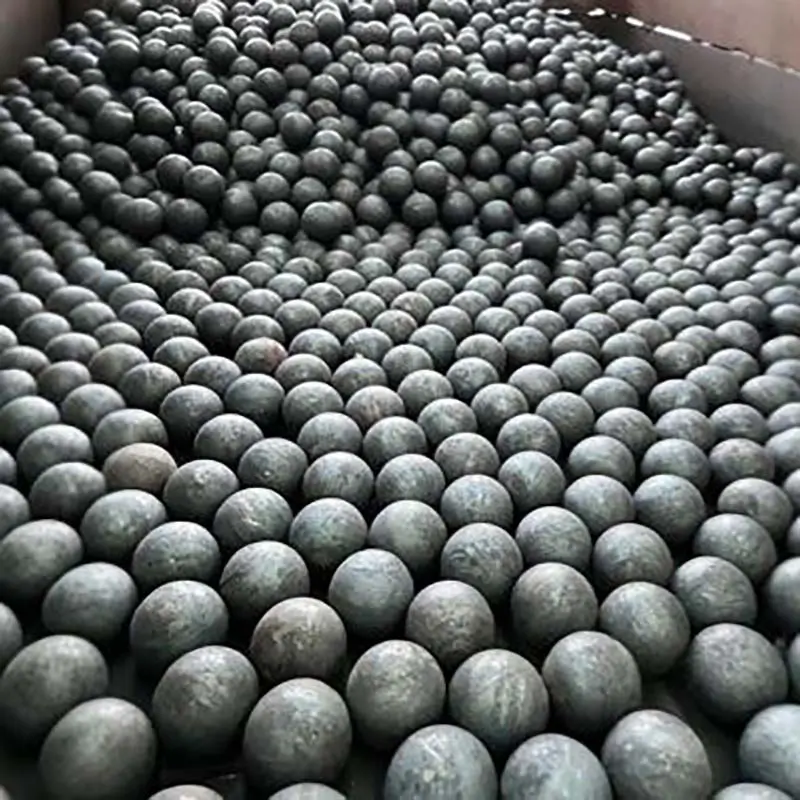
"SAG mill grinding ball" describes the intended application. "Forged steel ball" describes the manufacturing route. These terms answer different questions.
A SAG-duty ball must withstand repeated high-energy collisions while maintaining useful wear resistance. Forging alone does not establish those properties. Alloy chemistry, ball diameter, heat treatment, microstructure, and quality consistency all influence the finished product.
Published SAG-ball specifications explicitly connect wear resistance and impact-breakage resistance to the microstructure developed during heat treatment. They also caution that hardness does not completely determine performance in service.
| Selection factor | SAG-duty grinding ball | General-purpose forged steel ball |
|---|---|---|
| Product definition | Designed for a specific milling duty | Identified by manufacturing process |
| Impact suitability | Requires evidence for high-impact service | Cannot be assumed from "forged" alone |
| Hardness assessment | Surface and internal hardness matter | A surface reading is insufficient |
| Performance evidence | Relevant testing and operating results | Application-specific validation is needed |
| Purchasing priority | Reliable performance in the target circuit | Verify suitability before substitution |
The right question is not "Which name sounds stronger?" It is "Which documented specification can withstand our operating conditions at an acceptable cost per tonne?"
Grinding media act inside the SAG mill. They do not normally perform the crushing action inside a separate pebble crusher.
A representative circuit screens the mill discharge, directs suitable oversized material toward pebble crushing, and returns crushed material to the selected grinding stage. The actual routing depends on the plant flowsheet. Metso describes pebble-crusher adjustments and alternative discharge routing as ways to address circuit bottlenecks. [metso]
This distinction matters because grinding-media changes affect pebble crushing indirectly. They may alter the material leaving the mill, but they cannot independently correct a restricted crusher, unsuitable screen arrangement, or downstream capacity limitation.
Magnetite processing also requires liberation: separating valuable magnetite from its surrounding mineral matrix. Some fine-grained deposits require very fine final grinding, so successful coarse breakage is only one stage of the overall beneficiation task.
Our engineering perspective is to evaluate the whole circuit before attributing a production problem to the balls.
A media comparison should begin with three questions:
- Is the SAG mill limiting production?
- Is pebble crushing or material transport limiting production?
- Can downstream grinding and separation handle additional throughput?
Metso identifies equipment, operating conditions, and ore characteristics as possible causes of comminution bottlenecks. Consequently, a stronger ball is not automatically the highest-value intervention.
High-impact milling demands two properties that must work together: resistance to abrasive wear and resistance to ball damage.
A ball that wears too rapidly loses its original size. A ball that fractures may leave service before its remaining steel has delivered useful grinding work. Selection should therefore examine the relationship between hardness, toughness, and the intended operating environment.
Surface hardness is useful, but it is not a complete purchasing specification. Buyers should request an internal hardness assessment and understand how the supplier controls heat treatment for the selected diameter.
For context, Molycop's 2023 SAG technical sheet lists average surface and volumetric hardness of 55–61 HRC for several nominal sizes between 94 and 140 mm, and 53–61 HRC for 150 and 160 mm balls. These are supplier-specific published ranges—not universal targets or ALLSTAR specifications.
The lesson is not to copy another supplier's numbers. It is to demand comparable clarity from every quotation.
Published industrial applications use different ball sizes and charge conditions. A historical iron-ore pellet-plant study, for example, reported 127 mm steel balls at approximately 3–5% of mill volume. That operating example does not establish a recommended charge for another plant.
A defensible selection should consider:
1. Feed characteristics and ore variability.
2. Mill dimensions and operating conditions.
3. Existing charge composition and wear history.
4. Liner and discharge arrangements.
5. Downstream capacity and required product size.
Avoid specifying larger balls simply because the ore appears hard. Diameter changes should be evaluated alongside the rest of the operating envelope.
Magnetite circuits introduce a material-handling consideration that generic grinding-media articles often overlook: distinguishing steel media from magnetite during coarse magnetic separation.
Metso identifies the elimination of steel-media costs—and the need to distinguish steel from magnetite ahead of pebble crushing—as benefits of fully autogenous grinding. This reinforces why media selection and magnetic separation cannot be treated as unrelated decisions.
Where steel media are used, the plant review should document:
- Where worn balls and steel fragments leave the mill.
- How the circuit identifies and removes unwanted metallic material.
- Whether magnetic separation changes the pebble stream.
- How crusher-feed protection is verified.
- Whether rejected material contains valuable mineral.
These are proposed inspection questions, not a claim that every magnetite plant experiences the same problem. The goal is to understand the actual material pathway before approving a media change.
A useful trial separates supplier claims from measurable plant performance. The following framework is a proposed evaluation method, not an ALLSTAR customer case study.
Record throughput, product size, power consumption, media additions, pebble flow, crusher operating conditions, and relevant downtime.
Also document ore source and operating changes. A comparison becomes difficult to interpret when one media campaign processes substantially different feed.
Define success before introducing the candidate media.
Possible criteria include lower inventory-adjusted media consumption, acceptable breakage observations, stable product quality, and improved cost per tonne without compromising downstream performance.
Do not allow a single attractive metric to conceal a disadvantage elsewhere in the circuit.
Check the delivered product against the agreed specification:
- Nominal diameter and tolerance.
- Chemical composition.
- Surface and internal hardness.
- Agreed impact-test method.
- Sampling and acceptance rules.
- Batch identification and supporting records.
Any laboratory comparison should use a consistent method. Results from different test arrangements should not be treated as directly interchangeable.
Existing media remain in the mill when a new product is introduced. Early operating results therefore reflect a changing mixture rather than an entirely new charge.
Choose the evaluation period according to media turnover and operating stability, not an arbitrary calendar deadline.
Compare results at an equivalent product-quality target. Review pebble-crusher behaviour, downstream grinding demand, and concentrate performance—not just SAG throughput.
Metso's magnetite flowsheet study illustrates why this matters: circuit configuration, magnetic separation, energy demand, and media consumption interact economically.
A lower delivered price does not necessarily produce a lower operating cost.
Use consistent boundaries and units. If in-mill inventory cannot be measured reliably, distinguish the observed addition rate from an estimated consumption rate.
Direct media cost per tonne then equals media consumption multiplied by delivered media price per kilogram.
A broader comparison should also examine:
- Electricity use.
- Liner and other wear costs.
- Handling and maintenance requirements.
- Relevant downtime.
- Product-quality consequences.
Research summarized by the Coalition for Eco Efficient Comminution highlights the importance of including ancillary equipment energy and the embodied energy associated with media wear when comparing circuits.
This approach gives procurement and plant teams a common decision framework rather than separate price and production arguments.
Historical operating evidence shows that pebble crushing can change the economics of a grinding circuit.
A 1992 Society for Mining, Metallurgy & Exploration paper describes testing at the National Steel Pellet Plant in Minnesota. Its abstract reports that a fully autogenous circuit incorporating pebble crushing achieved higher primary-mill throughput than the existing SAG circuits during the reported trials.
That is not evidence that AG milling will outperform SAG milling at every magnetite operation. It demonstrates that circuit design can matter more than a simple media comparison.
Similarly, Metso's magnetite assessment compares several flowsheets rather than declaring one grinding-media product universally superior. Its economic estimates used first-quarter 2009 costs, so they should not be presented as current purchasing benchmarks.
For buyers, the transferable insight is the evaluation method: use relevant evidence, identify its limitations, and validate the selected option locally.
SHANDONG ALLSTAR GRINDING BALL CO., LTD.'s stated product range and OEM services provide the starting point for a technical sourcing discussion.
For overseas brands, wholesalers, and manufacturers, we recommend defining the target application before finalizing a private-label product specification.
A useful enquiry package includes:
| Information to provide | Purpose |
|---|---|
| Mill and circuit description | Establish the intended application |
| Current media specification | Create a comparison baseline |
| Ore and feed information | Describe operating variability |
| Wear and breakage observations | Identify the purchasing problem |
| Required documentation | Define verification expectations |
| Packaging and shipment requirements | Clarify OEM supply needs |
Any requested testing, inspection, traceability, or packaging arrangement should be confirmed in the quotation and supply agreement. Do not imply that an unverified service or certification is already included.
Customer testimonials should also remain specific and traceable. A credible testimonial identifies the application, evaluation period, and measurable outcome. No customer quotation is included here because none was supplied.
Contact SHANDONG ALLSTAR GRINDING BALL CO., LTD. with your mill dimensions, current ball specification, feed characteristics, pebble-crushing arrangement, and OEM requirements.
Request a quotation that clearly states the proposed product specification, available verification documents, packaging terms, and trial acceptance criteria.
The objective is a grinding-media decision supported by evidence—not a promise of maximum impact based on product naming alone.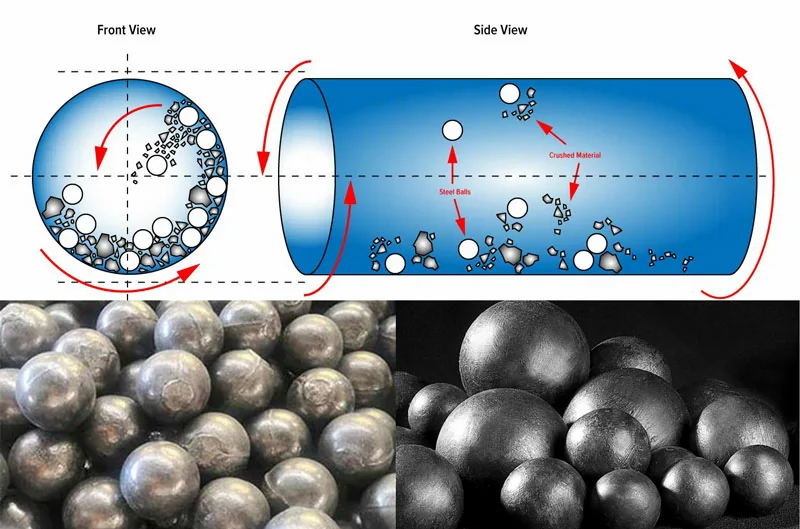
Not necessarily. "SAG" identifies the application, while "forged" identifies the manufacturing process. A forged ball can be designed specifically for SAG service. Verify its documented duty rather than treating the terms as competing material categories.
Normally, the media work inside the mill. Pebble crushing is a separate circuit operation. Media changes may influence the material reaching that operation, but crusher performance also depends on equipment settings, feed, and circuit routing.
No universal hardness number proves superior performance. Published SAG specifications relate performance to microstructure and heat treatment and explicitly note that hardness does not completely determine application results. Evaluate wear and impact resistance together.
There is no single diameter established for all magnetite circuits. Published examples are operating references, not universal recommendations. Select the candidate size using plant conditions and validate it against throughput, wear, breakage, and product-quality requirements.
That conclusion requires circuit-specific evidence. Pebble crushing can address a grinding bottleneck independently of media selection. Historical iron-ore testing also shows that changing the circuit can materially alter performance.
Use the same application description and acceptance criteria for every quotation. Compare documented chemistry, hardness assessment, agreed testing, dimensional control, batch records, commercial terms, and trial results. Treat unsupported performance percentages as claims requiring verification.
Hot Tags: China, Global, OEM, private label, manufacturers, factory, suppliers, manufacturing company


