
Views: 270 Author: shandong Allstar Grinding Ball Publish Time: 2026-10-30 Origin: Site


Content Menu
● What Is a Grinding Steel Ball, and Why Does Selection Matter?
● Forged vs. Cast Grinding Steel Ball: Which Fits Your Application?
>> Forged Steel Grinding Balls for Impact and Wear Resistance
>> Cast Grinding Balls for Application-Specific Wear Control
● How to Select Grinding Steel Balls for Different Industries
>> Grinding Steel Balls for Mining
>> Grinding Media for Cement Mills
>> Grinding Media for Power Generation
● Five Specifications to Confirm Before Requesting a Quote
>> 1. Mill Type and Operating Conditions
>> 2. Feed Material and Product Target
>> 3. Ball Diameter and Charging Strategy
>> 4. Hardness Profile and Toughness Requirements
>> 5. Batch Documentation and Acceptance Rules
● Why Hardness Alone Cannot Predict Grinding Ball Performance
● Compare Grinding Steel Ball Cost per Tonne Processed
● A Practical Grinding Media Trial: From Baseline to Decision
>> Step 1: Record the Baseline
>> Step 2: Define Success Before Starting
>> Step 3: Introduce the Trial Media Carefully
>> Step 4: Track Operating Changes
>> Step 5: Review the Whole Result
● OEM Grinding Steel Ball Supply: Build a Repeatable Specification
● Incoming Inspection: Check More Than Appearance
● Work with SHANDONG ALLSTAR on Your Next Grinding Media Requirement
● Frequently Asked Questions About Grinding Steel Balls
>> What is the difference between grinding balls and grinding rods?
>> Are forged grinding balls always better than cast balls?
>> What hardness should a grinding steel ball have?
>> Can high-chromium cast media be used in wet grinding?
>> How can buyers reduce grinding media costs?
>> Does SHANDONG ALLSTAR offer OEM grinding media?
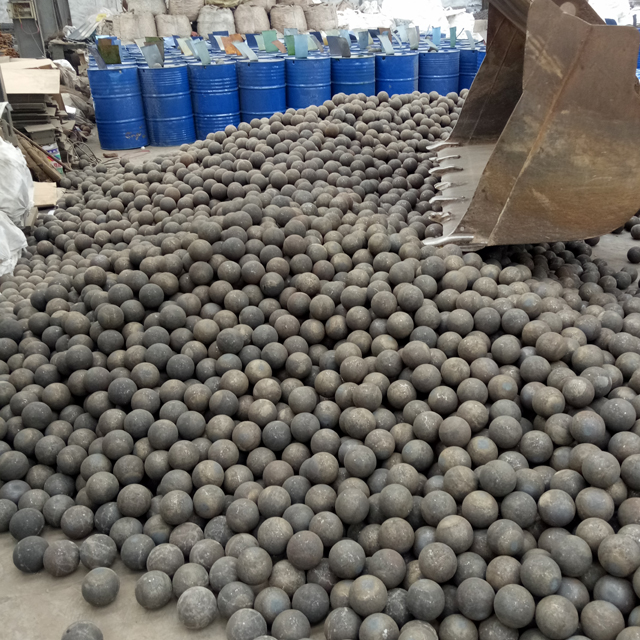
At SHANDONG ALLSTAR GRINDING BALL CO., LTD., we manufacture grinding media for mining, cement and power generation applications. Our product range includes grinding steel balls, forged steel balls, cast grinding balls, grinding rods and cylpebs. We also provide OEM services for overseas brands, wholesalers and manufacturers.
Choosing a grinding steel ball should begin with your mill, material and operating conditions—not simply the lowest price per tonne. The right choice balances wear resistance, impact toughness, grinding performance and supply consistency.
This guide explains how to compare grinding media, evaluate supplier proposals and build an OEM specification around measurable requirements.

What Is a Grinding Steel Ball, and Why Does Selection Matter?
A grinding steel ball is a spherical grinding medium used inside a mill to reduce material size through impact and abrasion. As the mill operates, the media interact with the feed, breaking particles and supporting the required product fineness.
However, "grinding steel ball" is often used as a broad purchasing term. Buyers should distinguish forged steel media from cast alloy media, including high-chromium cast products. These categories do not necessarily share the same metallurgy or operating characteristics.
Media selection matters because purchasing decisions influence more than replacement frequency. They can also affect mill stability, product size distribution and operating costs.
Our purchasing principle is straightforward: define the application first, then agree on the material and acceptance criteria.
Forged vs. Cast Grinding Steel Ball: Which Fits Your Application?
Neither forged nor cast grinding media is universally superior. Each should be evaluated against the actual grinding environment.
Forged Steel Grinding Balls for Impact and Wear Resistance
Forged grinding balls are produced from steel stock through heating, forming and heat treatment. Their performance depends on steel chemistry, manufacturing control and the resulting microstructure.
They are commonly considered where impact resistance and wear resistance must work together, including mineral-processing applications.
When reviewing a forged grinding ball proposal, ask about:
- Material chemistry and grade identification.
- Surface and internal hardness.
- Heat-treatment consistency.
- Impact-test procedures.
- Batch traceability and dimensional tolerances.
A hardness number alone cannot establish whether a ball will resist breakage under your operating conditions.
Cast Grinding Balls for Application-Specific Wear Control
Cast grinding media are manufactured by melting an alloy, pouring it into molds and applying the relevant finishing and heat-treatment processes.
High-chromium cast media combine a metallic matrix with hard chromium carbides. This structure can provide useful abrasion and corrosion resistance in suitable grinding environments.
However, "cast" does not automatically mean high chromium, and a higher chromium percentage does not guarantee better results in every mill.
Confirm the alloy grade, application suitability and testing requirements before comparing prices.
Selection factor | Forged grinding balls | Cast grinding media |
|---|---|---|
Manufacturing route | Heated steel stock is formed and heat-treated | Molten alloy is cast and processed |
Main evaluation focus | Wear resistance balanced with impact toughness | Alloy-specific wear behavior and impact suitability |
Important documentation | Chemistry, hardness profile and impact testing | Chemistry, microstructure and relevant mechanical testing |
Purchasing mistake to avoid | Choosing only by surface hardness | Assuming every cast alloy performs alike |
Final validation | Representative operating trial | Representative operating trial |
How to Select Grinding Steel Balls for Different Industries
The industry name provides a starting point, but it does not replace a mill-specific assessment.
Grinding Steel Balls for Mining
Mining applications vary substantially. Ore abrasiveness, feed size, mill configuration and wet-process chemistry can change the balance between abrasion, impact and corrosion.
A media grade that performs well with one ore may not deliver the same results with another.
Before requesting a recommendation, provide your mill type, feed characteristics, target product size and current media consumption. Include any history of broken balls, spalling or unstable grinding performance.
For SAG applications, evaluate impact resistance explicitly rather than transferring a secondary ball-mill specification without review.
Grinding Media for Cement Mills
Cement grinding requires attention to mill configuration and chamber duties. In a compartment mill, the conditions associated with coarser grinding differ from those involved in later-stage fine grinding.
Ball size distribution and alloy selection should therefore match the intended duty.
When replacing an existing media grade, compare wear, product fineness and throughput together. A lower wear rate is not a complete success if the required cement quality or production rate is lost.
Grinding Media for Power Generation
Power-generation procurement should begin by identifying the installed milling system. Not every pulverizer uses loose grinding balls.
Where ball-based grinding is used, specify the processed material, mill design and required product characteristics. Confirm compatibility with the equipment requirements before changing media dimensions or material.
The objective is an application-matched specification, not a generic "power plant grinding ball."
Five Specifications to Confirm Before Requesting a Quote
A useful quotation starts with a clear technical brief.
1. Mill Type and Operating Conditions
Identify whether the application involves a ball mill, SAG mill or another compatible grinding system. Include wet or dry operation and relevant operating constraints.
2. Feed Material and Product Target
Describe the material being processed, approximate feed size and required finished size. Where available, provide information about abrasiveness and changes in feed composition.
3. Ball Diameter and Charging Strategy
Specify the required diameter, dimensional tolerance and whether the order is for an initial charge or routine replenishment.
Avoid assuming that larger balls always improve grinding. Media size must suit the grinding duty.
4. Hardness Profile and Toughness Requirements
Request the test method and sampling locations. Surface hardness, core hardness and a cross-sectional profile provide different information.
Also define how impact performance will be assessed where that requirement is relevant.
5. Batch Documentation and Acceptance Rules
Agree on inspection records, sample selection, identification and handling of nonconforming material before production begins.
This makes supplier comparison more objective and reduces disputes after delivery.
Why Hardness Alone Cannot Predict Grinding Ball Performance
Hardness is useful, but it is not a complete performance specification.
Grinding media must withstand the wear and loading conditions inside the mill. Alloy chemistry, microstructure, heat treatment and internal integrity all influence that response.
A purchasing comparison based only on the highest HRC value can overlook important differences between products.
Ask three practical questions:
1. Where was hardness measured?
2. How consistent are the readings across the ball and production batch?
3. What additional evidence supports suitability for the intended mill?
The strongest proposal connects laboratory measurements with application requirements. It does not treat one impressive number as proof of universal superiority.
Compare Grinding Steel Ball Cost per Tonne Processed
Price per tonne of media is easy to compare. Cost per tonne of processed material is usually more useful for evaluating media consumption.
Use this starting calculation:
Media cost per tonne processed = delivered media price per kilogram × media consumption in kilograms per tonne processed.
Consider a hypothetical comparison:
Item | Media A | Media B |
|---|---|---|
Delivered media price | US$1.00/kg | US$1.10/kg |
Measured media consumption | 0.80 kg/t | 0.65 kg/t |
Media cost per tonne processed | US$0.80/t | US$0.715/t |
In this illustrative example, Media B costs more to purchase but less per tonne processed.
These figures are not SHANDONG ALLSTAR product results or a savings promise. They demonstrate a purchasing method.
A complete evaluation should also consider throughput, energy use, product quality, handling and operational disruption. Do not attribute every improvement to the media if other process conditions changed during the comparison.
A Practical Grinding Media Trial: From Baseline to Decision
A controlled trial provides stronger evidence than an isolated sample or an unsupported service-life claim.
Document current media additions, processed tonnage, product size, throughput and available energy data. Note visible breakage or other recurring concerns.
Step 2: Define Success Before Starting
Agree on the primary measure, such as media consumption at an acceptable product size. Set limits for breakage, throughput changes and product-quality variation.
Step 3: Introduce the Trial Media Carefully
Record delivery batches, addition dates and quantities. Account for the existing charge: new media normally operate alongside incumbent media during a transition.
An immediate change in results may not represent the trial product's long-term performance.
Step 4: Track Operating Changes
Record changes in feed, water addition, mill settings, liners and maintenance. These factors can complicate interpretation.
Use comparable operating periods rather than selecting only favorable days.
Step 5: Review the Whole Result
Compare wear-related consumption, grinding outcomes and operational observations together.
If the evidence is inconclusive, extend or redesign the trial rather than declaring success from insufficient data.
OEM Grinding Steel Ball Supply: Build a Repeatable Specification
SHANDONG ALLSTAR provides OEM services for overseas brands, wholesalers and manufacturers. For these buyers, consistency matters as much as the first shipment.
A useful OEM agreement separates product requirements from branding and logistics requirements.
OEM area | Details to agree before ordering |
|---|---|
Product identification | Product category, alloy designation and nominal dimensions |
Technical requirements | Chemistry, tolerances, hardness testing and relevant performance tests |
Quality records | Inspection documents and batch-identification requirements |
Branding | Approved labeling, marks and packaging artwork |
Logistics | Packaging format, shipment terms and receiving instructions |
Change control | Approval procedure for specification or packaging changes |
Claims handling | Evidence required, investigation process and agreed remedies |
Treat these as discussion points, not assumed capabilities or automatic inclusions.
Clear approval records help protect both parties, especially when a distributor supplies the same branded product to several markets.
Incoming Inspection: Check More Than Appearance
A receiving inspection should confirm that the shipment matches the approved order and documentation.
A practical checklist includes:
- Verify product identification and batch references.
- Check packaging condition and shipment quantities.
- Sample dimensions using the agreed procedure.
- Examine sampled balls for visible surface abnormalities.
- Review chemistry and hardness records.
- Arrange additional testing when the purchase agreement requires it.
- Keep inspection results linked to the shipment.
Similarly, a photograph of a hardness test does not demonstrate batch consistency. Buyers need identifiable samples, recorded methods and traceable results.
We supply grinding balls, forged steel balls, cast grinding balls, grinding rods and cylpebs for industrial grinding applications, with OEM services for international business customers.
To request an application-focused quotation, send:
1. Your industry, material and mill type.
2. Required media category, diameter and quantity.
3. Wet or dry operating conditions.
4. Current specification and performance concerns.
5. Inspection, packaging and OEM requirements.
6. Destination and preferred shipment terms.
Ask SHANDONG ALLSTAR for a grinding steel ball quotation and a proposed technical specification. Where application data are limited, begin with a clearly defined evaluation rather than an unsupported performance guarantee.
Grinding balls are spherical media. Grinding rods are elongated media used in rod mills. They are not interchangeable purchasing items; the correct choice depends on the mill design and grinding duty.
No. Suitability depends on impact conditions, abrasion, corrosion, alloy design and manufacturing quality. Compare products against the intended application and validate important performance claims through representative testing.
There is no universal hardness requirement for every application. Specify the product grade, measurement method and sampling locations. Assess hardness alongside toughness, internal quality and operating performance.
Yes, suitable high-chromium cast products are available for wet grinding. However, compatibility depends on the specific alloy, grinding environment and operating requirements. Wet operation alone does not determine the best choice.
Start by measuring media consumption per tonne processed. Then evaluate suitable grades, charging practices and operating stability. Confirm that any reduction in consumption does not compromise throughput or product quality.
Yes. SHANDONG ALLSTAR provides OEM services for overseas brands, wholesalers and manufacturers. Product specifications, branding, inspection documents, packaging and commercial terms should be confirmed for each order.
Hot Tags: China, Global, OEM, private label, manufacturers, factory, suppliers, manufacturing company


