
Views: 247 Author: shandong Allstar Grinding Ball Publish Time: 2026-10-09 Origin: Site


Content Menu
● Why Multi-Stage Copper Grinding Requires Different Media Strategies
>> Primary Grinding: Manage Impact Before Optimizing Wear
>> Secondary Ball Milling: Balance Liberation and Consumption
>> Regrinding: Check Equipment Compatibility First
● Forged vs Cast Grinding Balls: Understand the Material Difference
>> Interpret Specifications Without Overgeneralizing
● The Overlooked Issue: Grinding Media Can Change Copper Flotation
>> Measure Chemistry Alongside Particle Size
● Industry Case: What Northparkes Reveals About High-Chrome Media
● A Six-Step Plant Trial for Copper Ore Grinding Media
>> 1. Establish a Representative Baseline
>> 2. Define the Candidate Specification
>> 3. Control Confounding Variables
>> 4. Allow for Charge Turnover
>> 5. Evaluate Grinding and Flotation Together
>> 6. Apply Predefined Acceptance Criteria
● Calculate Media Cost per Tonne, Not Just Price per Tonne
● OEM Grinding Media Procurement with ALLSTAR
● Request a Stage-Specific Grinding Media Evaluation
● FAQs: Ball Mill Grinding Media for Copper Ore
>> 1. Are forged balls always better than cast balls for copper mining?
>> 2. Can high-chrome media improve copper flotation recovery?
>> 3. How should we choose the grinding ball diameter?
>> 4. Does a higher hardness guarantee longer service life?
>> 5. Can the same balls serve SAG, ball-mill, and stirred-mill stages?
>> 6. What should an overseas OEM buyer request before ordering?
SHANDONG ALLSTAR GRINDING BALL CO., LTD. manufactures grinding media for mining, cement, and power applications, supplying forged steel balls, cast balls, grinding rods, and grinding segments. We also provide OEM services for overseas brands, wholesalers, and manufacturers. In this guide to ball mill grinding media: forged vs cast balls for multi-stage copper ore comminution, we explain how to evaluate media by grinding duty, metallurgical response, and total operating cost.
Our central recommendation is straightforward: select media for each stage, not simply for the lowest purchase price. Forged balls deserve consideration where impact resistance dominates. High-chrome cast media deserves testing where abrasive wear, corrosion, and flotation chemistry affect profitability. Neither option wins every copper circuit.
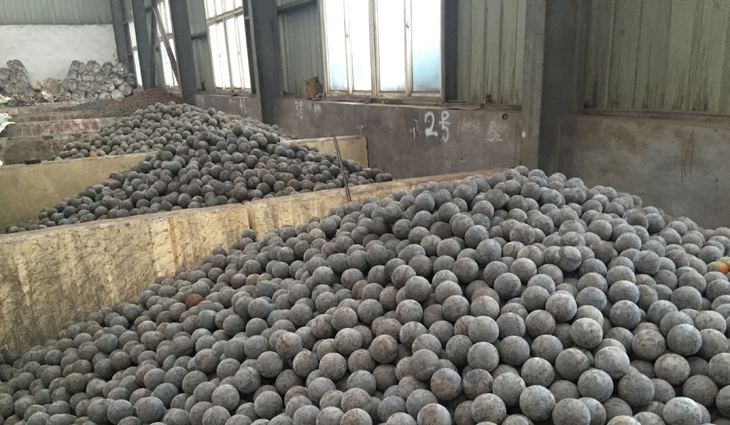
Copper comminution prepares ore for mineral separation. The objective is sufficient liberation, not the smallest achievable particle size. Grinding too little leaves copper minerals locked in gangue. Grinding unnecessarily fine consumes energy and can complicate flotation.
A circuit may combine primary crushing, SAG milling, secondary ball milling, and concentrate regrinding. Other flowsheets use different equipment sequences. Media selection must follow the actual flowsheet rather than a generic product recommendation.
SAG mills contain ore and steel balls. Their operating environment can impose demanding impact loads. Ball integrity therefore matters alongside abrasion resistance.
Forged steel is a strong candidate for this duty, but manufacturing route alone does not prove performance. Alloy design, heat treatment, ball diameter, and operating conditions determine whether a product resists breakage and spalling.
Secondary ball mills generally receive finer feed than primary grinding equipment. Their media must provide adequate breakage while maintaining an effective distribution of ball sizes.
Both forged steel and suitable high-chrome cast media can enter the evaluation. Compare consumption, product size distribution, and downstream recovery under comparable operating conditions.
Concentrate regrinding targets remaining mineral associations before further flotation. Some plants use ball mills; others use stirred mills.
Stirred-mill designs differ in acceptable media materials and sizes. Certain applications use steel media, while others require ceramic media. Never transfer a conventional ball-mill specification into a stirred mill without equipment-specific approval.
Forged balls are formed from steel and heat treated to develop the required microstructure. Suitable products balance wear resistance with impact resistance.
"Cast balls" describes a manufacturing route, not one uniform material. Commercial terminology can include cast steel and alloyed white cast iron. Many high-chrome grinding balls are high-chromium white cast iron rather than cast steel. Buyers should request the actual alloy designation.
High-chrome media uses hard chromium carbides within a heat-treated matrix. This structure can offer useful abrasion and corrosion resistance, but suitability still depends on alloy grade, impact conditions, and ore chemistry.
| Selection factor | Forged steel balls | High-chrome cast balls |
|---|---|---|
| Main evaluation priority | Impact integrity and wear resistance | Abrasion, corrosion, and metallurgical response |
| Demanding impact duty | Strong candidate; confirm by testing | Verify the specific grade and duty limits |
| Wet copper sulfide milling | Assess wear and pulp chemistry | Assess corrosion resistance and flotation effects |
| Procurement evidence | Chemistry, hardness profile, impact tests | Alloy designation, carbide structure, hardness, integrity |
| Economic comparison | Cost per tonne processed | Cost per tonne plus downstream value |
Avoid the shortcut "forged is always better" or "cast lasts longer." Both statements ignore the operating environment and the quality of the specific product.
A supplier's hardness range is not a universal industry standard. Check whether the value represents surface hardness, core hardness, or a calculated volumetric measure. Also establish where samples are taken and how acceptance is determined.
For example, a technical sheet for a particular SAG ball series should not become the default specification for smaller secondary-mill balls. Diameter and alloy design influence hardenability. Procurement teams should compare like-for-like products and test procedures, then connect those results to actual operating performance.
Media does more than break particles. In wet sulfide grinding, interactions between metallic media and minerals can change the chemical environment of the slurry.
Galvanic interactions can accelerate media corrosion. Associated iron species and changes in oxidation conditions can influence mineral surfaces and flotation response. Consequently, two media types producing similar particle sizes may deliver different metallurgical results.
A meaningful evaluation should track:
- Slurry pH and oxidation-reduction potential, or Eh.
- Dissolved oxygen and process-water conditions.
- Appropriate indicators of iron contamination.
- Copper recovery and concentrate grade.
- Recovery by particle-size fraction.
High-chrome media can change these conditions relative to forged steel. However, a favorable response on one sulfide ore does not guarantee the same response elsewhere. Mineralogy, water quality, reagents, and operating practice all matter.
Our decision framework therefore treats media selection as a comminution-and-flotation question, not an isolated purchasing exercise.
A published Northparkes concentrator study offers a useful example. Laboratory testing and a subsequent plant trial compared forged steel with high-chrome media.
The study reported more oxidizing pulp potentials and less EDTA-extractable iron after the transition. Statistical analysis identified reported recovery improvements of 1.0 percent for copper and 1.3 percent for gold. Final copper concentrate grade improved by at least 0.7 percent.
The abstract reports these changes as "percent"; it does not clearly distinguish relative percentages from percentage-point increases. They should not be converted into production forecasts without reviewing the full methodology.
Importantly, the copper recovery improvement occurred in intermediate particle sizes between 10 and 90 micrometres. Coarse and very fine fractions remained important loss pathways.
This is an independent industry case, not an ALLSTAR customer testimonial or performance guarantee. Its practical lesson is that particle size and surface chemistry should be evaluated together.
Record throughput, feed mineralogy, feed size, mill power, media additions, cyclone performance, and flotation results. Include operating variation rather than choosing one unusually favorable shift.
Agree on ball diameter, alloy chemistry, hardness measurement method, dimensional tolerance, and integrity criteria. Surface hardness alone cannot describe the complete ball.
Request representative hardness profiles and relevant impact or wear evidence. Compare test methods before comparing numerical results from different suppliers.
Keep operating conditions as comparable as practical. Document changes in ore blend, liner condition, mill speed, slurry density, water chemistry, and reagent dosage.
If several variables change simultaneously, attributing the result to grinding media becomes difficult.
Replacing media additions does not instantly replace the mill charge. Existing balls remain until they wear down or are removed.
Account for the mixed-charge transition. Premature sampling can conceal benefits or produce misleading comparisons.
Compare media consumption, throughput, energy intensity, particle size distribution, recovery, and concentrate grade. Investigate unexpected results by size fraction rather than relying only on overall averages.
Set acceptance thresholds before examining trial results. Include breakage, consumption, metallurgical performance, and commercial value.
A successful trial demonstrates a repeatable benefit within the plant's normal operating range, not merely a better result on one sampling day.
Purchase price matters, but consumption determines the direct media cost attached to each tonne of ore.
Direct media cost per tonne of ore = delivered media price per tonne × media consumption in kilograms per tonne of ore ÷ 1,000.
Consider this hypothetical comparison:
| Item | Forged option | High-chrome option |
|---|---|---|
| Delivered media price | $1,000/t | $1,400/t |
| Assumed consumption | 0.80 kg/t ore | 0.55 kg/t ore |
| Direct media cost | $0.80/t ore | $0.77/t ore |
These figures are illustrative, not market quotations, ALLSTAR prices, or predicted wear rates. They show why a higher-priced product can have a lower direct operating cost.
The complete evaluation should also consider energy, downtime, throughput, and payable metal. Avoid double-counting benefits. Increased recovered copper does not automatically equal additional profit before treatment charges and other commercial adjustments.
SHANDONG ALLSTAR GRINDING BALL CO., LTD. supplies grinding media and OEM services for international B2B customers. To turn a general inquiry into a useful specification, share the mill duty and operating constraints early.
A practical inquiry package includes:
- Mill type, dimensions, speed, and installed power.
- Ore mineralogy, feed size, and target product size.
- Current media diameters, consumption, and failure observations.
- Process-water characteristics and flotation concerns.
- Required quantities, destination, packaging, and OEM labeling needs.
Agree on documentation requirements before ordering. These may include batch chemistry, hardness results, inspection procedures, sample retention, and traceability records. Confirm which documents and tests are available for the proposed product rather than assuming every service is standard.
For brands and wholesalers, define labeling, acceptance procedures, and shipment inspection responsibilities in writing. Consistent specifications make repeat orders easier to evaluate and reduce disputes over what "equivalent quality" means.
Contact SHANDONG ALLSTAR GRINDING BALL CO., LTD. with your circuit flowsheet, current media specification, and performance priorities. Request a quotation and discuss a trial plan for forged balls, cast media, or other compatible grinding products.
Ask for proposed specifications, supporting documentation, packaging options, and commercial terms. The strongest starting point is a measurable requirement: lower media cost, improved integrity, or better metallurgical performance under defined conditions.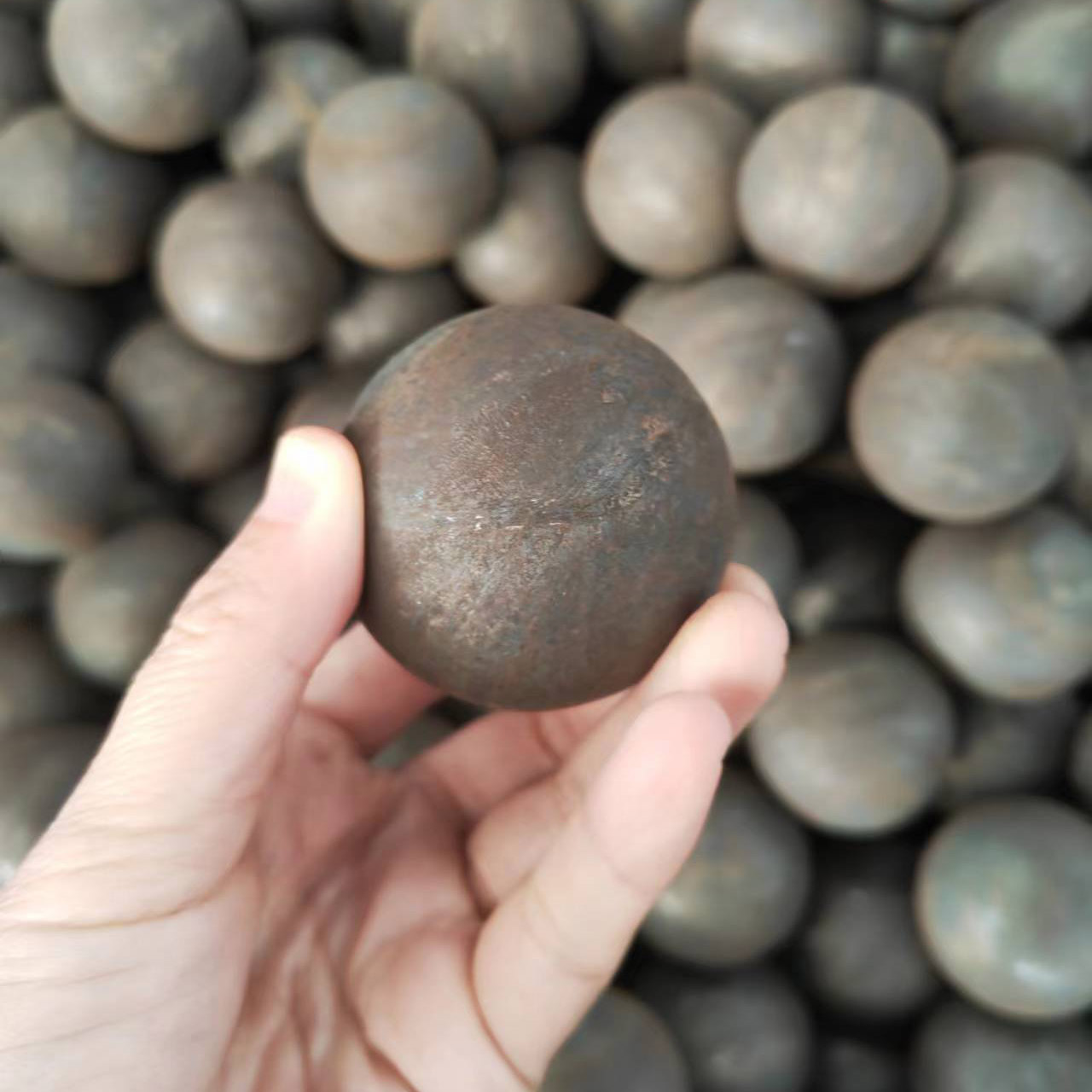
No. Forged steel deserves consideration in demanding impact environments. High-chrome cast media may offer benefits in suitable abrasion- and corrosion-sensitive duties. Evaluate the specific material and circuit.
It can in some circuits by changing grinding chemistry. The Northparkes study demonstrates this possibility, but ore-specific laboratory and plant testing remain necessary.
Evaluate feed size, ore breakage characteristics, mill dimensions, operating conditions, and target product size. Select a suitable charge distribution rather than choosing diameter from the ore name alone.
No. Hardness is one quality indicator. Microstructure, toughness, corrosion behavior, and heat-treatment consistency also influence wear and breakage. Request the measurement method and hardness profile.
Not automatically. Each stage has different impact, size, and equipment requirements. Stirred-mill media must meet the equipment manufacturer's specifications.
Request an agreed product specification, available batch documentation, inspection terms, packaging requirements, lead time, and shipment responsibilities. For new duties, discuss representative samples and a controlled trial before committing to large volumes.
Hot Tags: China, Global, OEM, private label, manufacturers, factory, suppliers, manufacturing company


